Physical Address
304 North Cardinal St.
Dorchester Center, MA 02124
Physical Address
304 North Cardinal St.
Dorchester Center, MA 02124

If you have ever tried to knock two wooden pieces together without leaving a dent or a crack, you already know why rubber mallet uses matter so much to builders, hobbyists, and homeowners alike. This humble tool sits quietly in almost every toolbox, yet it solves a problem that a regular hammer simply cannot handle: applying force without damaging the surface. Whether you are assembling flat-pack furniture, laying tiles, or working on a woodworking project, understanding the many rubber mallet uses can save you time, money, and a lot of frustration.
In this guide, we will walk through everything you need to know, from what a rubber mallet actually is to how you can use one safely and choose the right one for your next project.
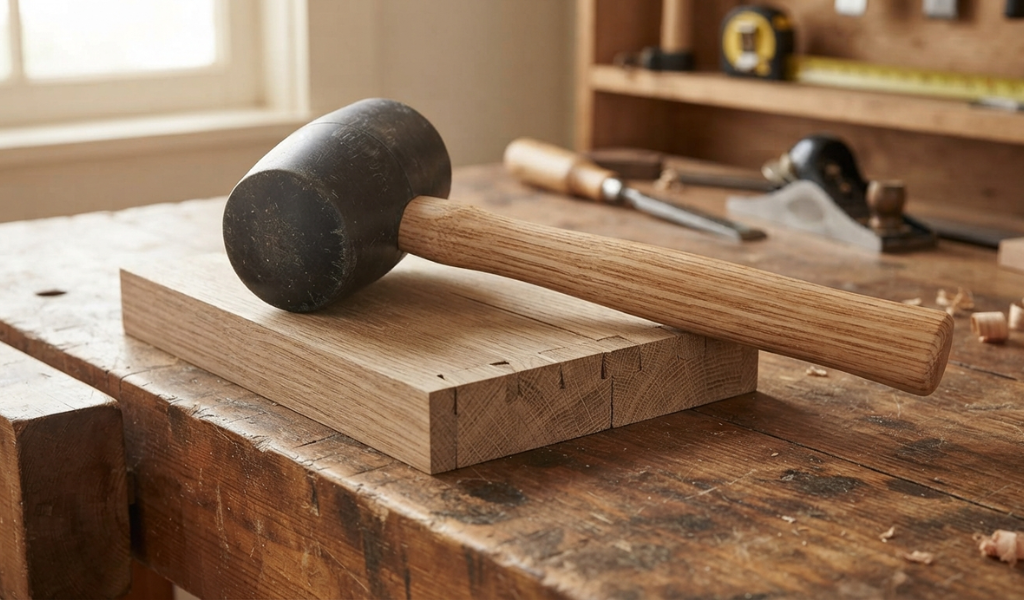
A rubber mallet is a striking tool made up of a wooden, fiberglass, or metal handle attached to a head crafted from solid or hollow rubber. Unlike a steel hammer, which is built to drive nails and handle heavy impact, a mallet is designed to spread out the force of a hit over a wider area. This means it delivers a firm blow without marking, splitting, or denting the surface it touches.
So what is a mallet, exactly, in a broader sense? A mallet is any hammer-like tool that has a large, often soft, striking head. Mallets have been around for centuries in different forms, made from wood, leather, and later rubber, once manufacturers realized how useful a softer striking surface could be. The rubber version became popular because it offered the perfect mix of control, grip, and gentleness, making it a staple for anyone who works with delicate or finished materials.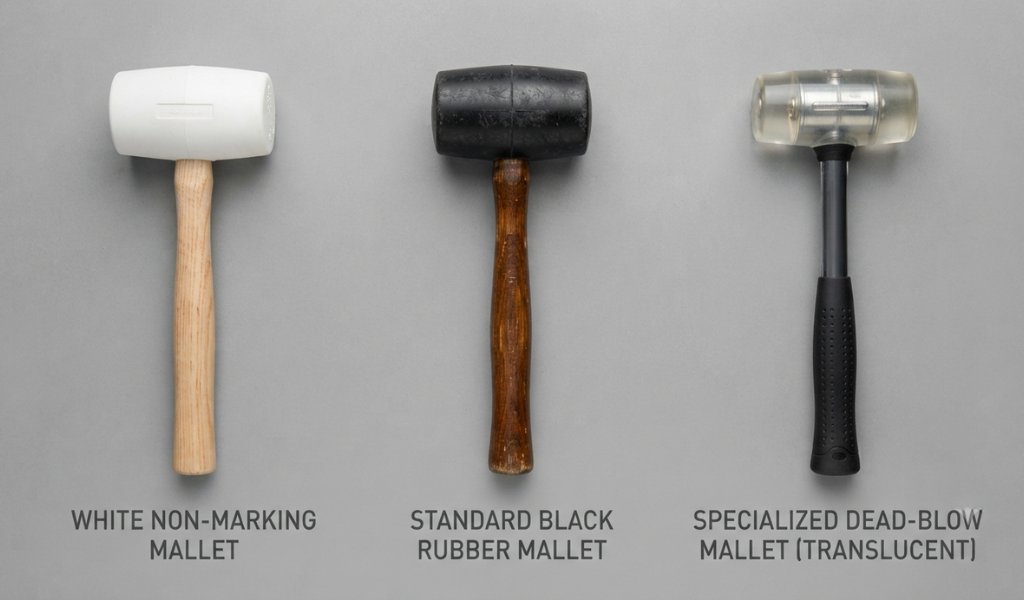
Today, rubber mallets are common in workshops, construction sites, garages, and even camping gear, because they get the job done without the risk of ruining your work.
Every rubber mallet is built from three basic parts, and each one plays a role in how the tool performs.
The head is the most obvious part, and it is what actually strikes the surface. It is usually molded from natural or synthetic rubber and can vary in hardness depending on the intended use. The handle connects to the head and is typically made from hickory wood, fiberglass, or steel wrapped in a rubber grip. A good handle absorbs shock and gives you better control during use. Finally, the neck or collar is the section where the handle meets the head. This area needs to be sturdy, since it takes the most stress with every swing.
Together, these parts determine how comfortable the mallet feels in your hand and how effectively it transfers energy into each strike.
Not all rubber mallet heads are created equal, and picking the right type can make a real difference in your results.
White rubber mallets are softer and are often used on surfaces where marking is a real concern, such as light-colored wood or vinyl flooring. Black rubber mallets are firmer and deliver a bit more striking power, making them a good choice for general assembly work and rougher materials. Some mallets come with a split head design, featuring one rubber side and one softer or harder material on the opposite side, giving users flexibility for two different jobs with a single tool.
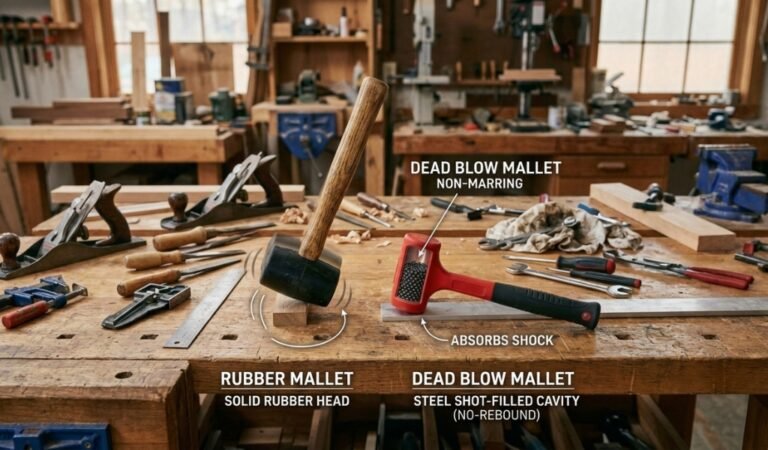
There are also dead blow mallets, which have a hollow head filled with sand or steel shot. This design reduces bounce back after impact, giving you more controlled, focused blows, which is especially useful in metalworking or automotive tasks.
The science behind a rubber mallet is fairly simple. When you swing the tool, the soft rubber head compresses slightly on contact, which spreads the force across a wider surface area instead of concentrating it into a single point like a metal hammer would. This cushioning effect reduces the risk of cracking, chipping, or leaving marks.
Because rubber also absorbs some of the shock, less energy bounces back into your hand and wrist, which makes repeated use more comfortable. This is one of the main reasons carpenters and tile setters can work for long stretches without the fatigue that often comes with using heavier tools.
A traditional hammer is built for driving nails and handling tough, high-impact tasks, thanks to its rigid steel head. A rubber mallet takes the opposite approach, trading raw striking power for control and surface protection.
If you need to drive a nail into a wall stud, a steel hammer wins every time. But if you are trying to knock a wooden joint into place or set a tile without cracking it, a mallet is the smarter pick. Many professionals actually keep both tools nearby, switching between them depending on whether the task calls for brute force or a gentler touch. Knowing when to reach for each one is part of what separates a rushed job from a clean, professional finish.
Woodworking is one of the areas where a rubber mallet truly shines, since wood is a material that scars and dents easily under sharp impact.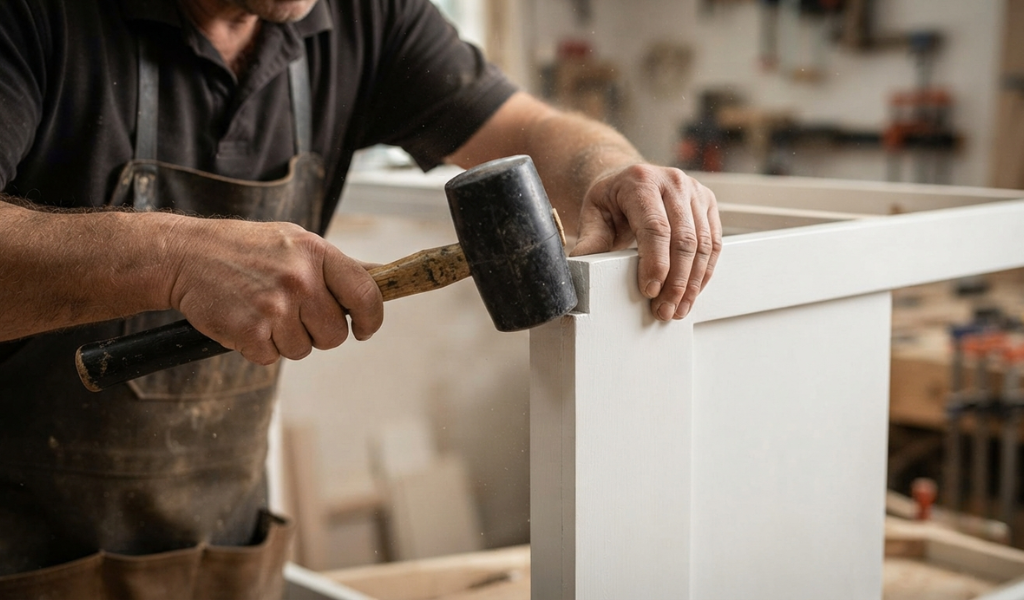
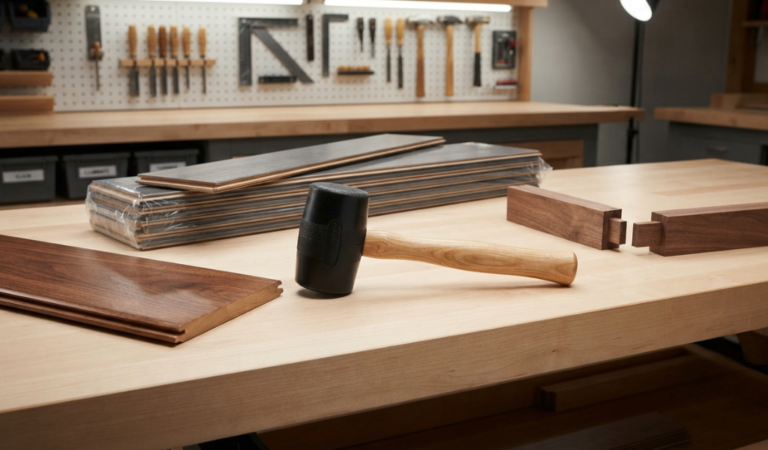
When joining two pieces of wood, such as in mortise and tenon joints or dowel connections, a rubber mallet helps push the pieces together firmly without splitting the grain. A few controlled taps are often all it takes to get a snug, secure fit.
Flat-pack furniture and custom cabinetry often require panels to be tapped into place. A rubber mallet lets you apply just enough pressure to seat the pieces correctly, without leaving ugly hammer marks on a finished surface that someone will see every day.
Sometimes a board or panel needs a small nudge to line up correctly. Instead of forcing it by hand or risking damage with a metal tool, a light tap from a rubber mallet gives you precise control over small adjustments.
Construction work involves a wide range of materials, many of which cannot handle the sharp force of a steel hammer.
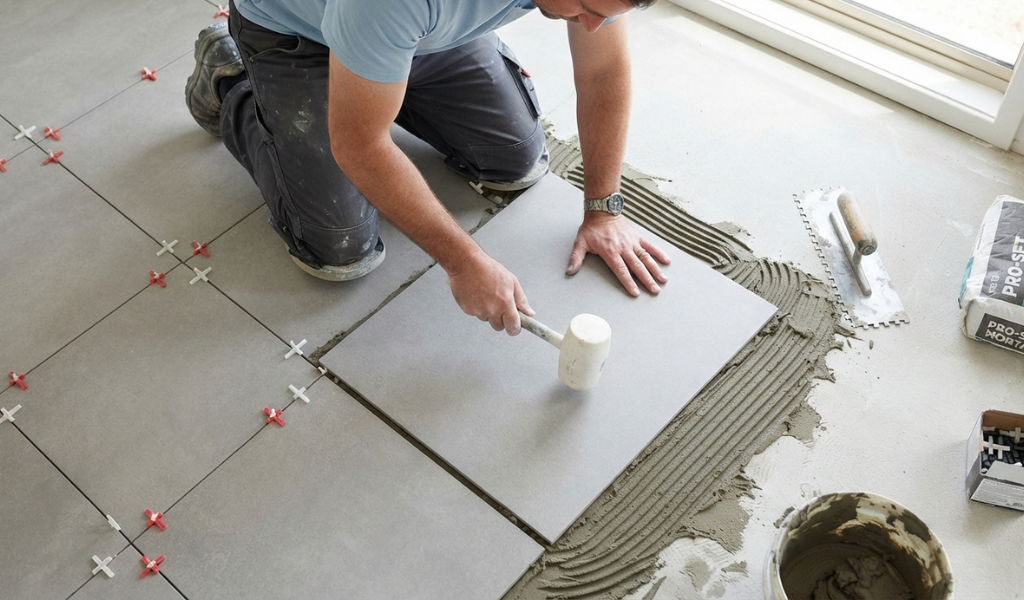
When setting floor or wall tiles, workers use a rubber mallet to gently tap each tile into the adhesive bed. This helps remove air bubbles and ensures a level surface, all without cracking the tile itself.
Laminate and hardwood flooring often needs to be tapped into place along the tongue and groove edges. A rubber mallet, sometimes paired with a tapping block, allows installers to close gaps between planks without damaging the finish.
From vinyl siding to plastic fixtures, many construction materials are sensitive to scratches and dents. A rubber mallet lets contractors position these materials firmly and accurately while keeping the surface looking clean and professional.
The soft head is not just a design choice, it is the entire point of the tool. Rubber naturally absorbs and disperses impact energy rather than concentrating it, which is why it protects delicate surfaces so well. This softness also reduces noise, which matters in workshops or job sites where a constant metallic banging would be tiring and disruptive.
Beyond protecting the work surface, a soft head reduces wear on the tool itself. Metal-on-metal or metal-on-hard-material contact tends to chip and degrade over time, while rubber flexes and holds up remarkably well through repeated use, especially when stored properly and kept away from extreme heat.
As useful as it is, a rubber mallet is not the right choice for every task. It should not be used to drive nails, since the soft head cannot deliver the sharp, concentrated force needed to sink a nail properly. It is also a poor choice for breaking apart concrete, masonry, or heavy metal, tasks better suited to a sledgehammer or a chisel and steel hammer combination.
Using a rubber mallet on extremely hard or rough surfaces can also wear down the head faster than normal, leading to cracking or chunks breaking off over time. If a job calls for serious demolition force, it is best to reach for a tool actually designed for that kind of impact.
Outside of woodworking and construction, rubber mallets show up in a surprising number of everyday situations. Campers use them to drive tent stakes into the ground without bending the metal. Gardeners rely on them to set fence posts or edging without cracking material. Mechanics use rubber mallets to loosen stuck parts, seat hubcaps, or align components during repairs.
Even in home improvement projects like hanging drywall anchors or adjusting cabinet hinges, a rubber mallet often becomes the go-to tool because it offers just the right balance of force and gentleness.
The biggest advantage of a rubber mallet is surface protection. It lets you apply real force without leaving dents, scratches, or cracks behind, which is especially valuable when working with finished or delicate materials.
It also offers better control for precision tasks, since the softer head naturally encourages lighter, more measured strikes compared to a heavy steel hammer. On top of that, rubber mallets tend to be quieter, more comfortable to grip for long periods, and generally more affordable than specialized tools designed for narrow use cases.
Good technique makes a big difference in both results and safety. Always grip the handle near the end rather than close to the head, since this gives you better leverage and control. Swing with your wrist and forearm rather than your whole arm, allowing gravity and a relaxed motion to do most of the work instead of brute strength.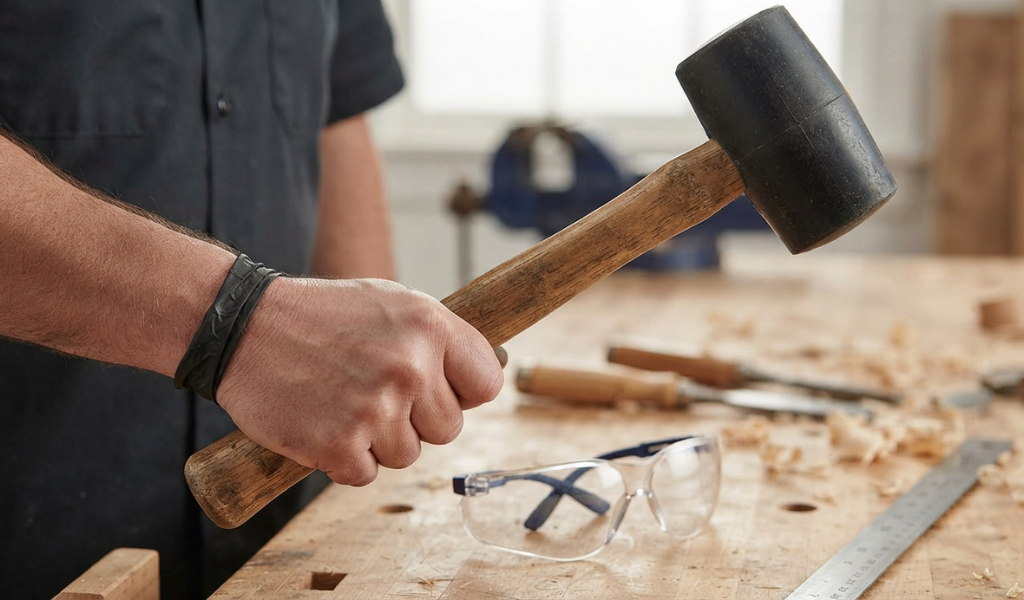
It also helps to inspect the mallet before use, checking that the head is securely attached to the handle and that there are no visible cracks. Wearing safety glasses is a smart habit too, especially when working with materials that could chip or splinter on contact, even from a soft strike.
Picking the right rubber mallet comes down to matching the tool to your typical projects. For general home use, a medium-weight mallet with a black rubber head handles most everyday tasks well. If you frequently work with lighter materials like vinyl or soft wood, a white rubber head is gentler and less likely to leave any residue or marks.
Handling material matters too. Wooden handles feel natural and absorb some shock, while fiberglass handles tend to be more durable and resistant to breaking under repeated use. If you often work in tight or awkward spaces, a mallet with a shorter handle can offer better control, while longer handles provide more leverage for bigger tasks.
One common mistake is using a rubber mallet for tasks that truly require a hard hammer, such as driving nails or breaking apart hard materials, which can quickly wear out the rubber head. Another frequent error is gripping the mallet too close to the head, which reduces swing power and increases the risk of the tool slipping out of your hand.
People also tend to overlook regular maintenance, letting a cracked or loose head go unnoticed until it fails mid-task. Storing a rubber mallet in extreme heat or direct sunlight for long periods can cause the rubber to dry out and lose its flexibility, so keeping it in a moderate, dry environment will help it last much longer.
A rubber mallet might look simple, but its value comes from the balance it strikes between force and protection. From fitting wood joints and laying tiles to setting tent stakes and adjusting car parts, the many rubber mallet uses make it one of the most practical tools you can own. By understanding its parts, choosing the right type for your needs, and using proper technique, you can get years of reliable service out of a single mallet.
If your toolbox does not already have one, it might be time to add a rubber mallet to your collection. It is an inexpensive investment that can protect your projects and save you from costly mistakes down the road.
Can a rubber mallet be used on concrete?
Light taps on concrete are usually fine for tasks like positioning pavers, but a rubber mallet should not be used for breaking or heavily impacting concrete, since it lacks the force needed and can wear out quickly.
Is a rubber mallet good for car repairs?
Yes, mechanics often use rubber mallets to loosen stuck components, seat hubcaps, or gently adjust body panels without scratching the paint or denting the metal.
How long does a rubber mallet head last?
With normal use and proper storage, a quality rubber mallet head can last several years. Heavy use on rough surfaces or exposure to extreme temperatures can shorten its lifespan.
Can I use a rubber mallet instead of a hammer for nails?
No, a rubber mallet cannot drive nails effectively because its soft head absorbs too much force. A traditional hammer is needed for that kind of precise, sharp impact.
What is the difference between a rubber mallet and a dead blow mallet?
A standard rubber mallet has a solid rubber head, while a dead blow mallet has a hollow head filled with sand or shot to reduce bounce back, offering more controlled strikes for tasks like metalworking.
Are rubber mallets safe for tile installation?
Yes, rubber mallets are actually recommended for tile work because they help seat tiles firmly in adhesive without the risk of cracking them.
What size rubber mallet should I buy for home use?
A medium-sized mallet, generally between 16 and 24 ounces, works well for most household and light assembly tasks, offering enough power without being too bulky to control.