Physical Address
304 North Cardinal St.
Dorchester Center, MA 02124
Physical Address
304 North Cardinal St.
Dorchester Center, MA 02124

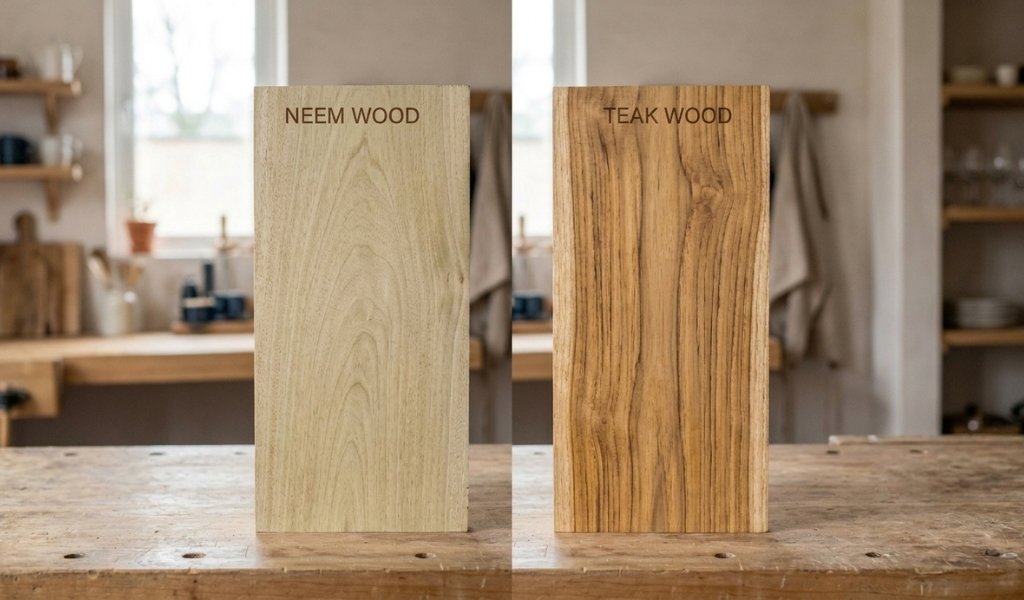
Hardwood selection is one of the most consequential decisions in furniture buying and yet most homeowners make it with surprisingly little information. Two species that repeatedly come up in discussions about Indian furniture, affordable hardwoods, and long-lasting timber are neem wood (Azadirachta indica) and teak wood (Tectona grandis). Each has a distinct place in the world of woodworking, and confusing the two can lead to costly mistakes.
Neem has long been a trusted material in Indian homes, valued for its natural pest resistance and eco-friendly credentials. Teak, on the other hand, is the globally recognized gold standard for outdoor furniture and premium cabinetry. But which wood type actually delivers better value for your specific needs? That depends on how you weigh factors like durability, moisture content, aesthetic appeal, affordability, and intended application.
If you have also been considering alternatives like acacia wood or teak wood, you already know that choosing the right wood for furniture is never a one-size-fits-all answer. The same principle applies here. Neem and teak occupy very different positions on the spectrum of types of wood for furniture, and understanding their core differences gives you the foundation to make a confident, informed choice.
This guide covers everything from structural density and grain patterns to workability, maintenance, cost comparison, and the best applications for each wood type. By the end, you will know precisely when neem makes sense and when only teak will do.
Before diving into a head-to-head comparison, it helps to understand what each species actually is and why its natural biology shapes its performance as timber.
Neem (Azadirachta indica) is a fast-growing hardwood native to the Indian subcontinent and widely cultivated across South and Southeast Asia. It is technically classified as a hardwood, though it sits at the softer end of the hardwood spectrum compared to species like sheesham, teak, or oak wood. Neem trees reach harvestable maturity in roughly 10 to 15 years, which makes neem wood one of the more sustainable and renewable timber options available for furniture in India.
What makes neem particularly interesting from a woodworking standpoint is its natural chemical composition. The wood contains limonoids the same bioactive compounds found in neem oil which function as a natural insecticide and fungal growth inhibitor. This intrinsic pest resistance means neem wood resists termite infestation without relying on external chemical treatments, a property that has made it a go-to material for bed frames, kitchen cabinets, and storage furniture in Indian homes for generations.
Structurally, neem has a moderately dense grain with a reddish-brown to yellowish-gray heartwood. The grain pattern can range from straight to slightly wavy, and the wood machines reasonably well when kiln-dried properly. Moisture content management during drying is important: neem that is not kiln-dried correctly tends to warp or develop surface checks over time.
Teak (Tectona grandis) is widely regarded as the most durable and weather-resistant hardwood commercially available. Native to Myanmar, Thailand, Laos, and India, old-growth teak takes decades to mature, often 80 to 100 years before it reaches the structural density and oil content that defines premium genuine teak wood. Plantation teak, grown in Central America and parts of Africa, matures faster but generally carries lower natural oil content than its old-growth Burmese teak counterpart.
The defining feature of teak is its exceptionally high natural oil content. These oils function as a built-in moisture barrier, making teak wood naturally resistant to water absorption, fungal growth, and decay without any chemical treatment. The heartwood of mature teak is a rich golden-brown color with tight, straight grain patterns and occasional wavy grain variations. Over time, teak that is left untreated outdoors develops a distinguished silver-gray patina if left untreated, a characteristic that many collectors and designers actively seek.
Teak’s sapwood is pale and far less durable than its heartwood. High-quality teak furniture uses predominantly heartwood, which is the source of its superior strength, insect resistance, and long-lasting reputation. Understanding the heartwood-to-sapwood ratio in a piece of teak furniture is one of the primary indicators of genuine quality.
When comparing durability across types of wood, density and structural integrity under load are the two most relevant metrics. Teak wood consistently scores around 2,330 lbf on the Janka hardness scale a standard measurement of resistance to denting and surface wear. Neem wood typically registers between 1,200 and 1,600 lbf depending on growth conditions and kiln-dried processing quality.
This means teak is the harder and more structurally robust material of the two. For fine furniture that needs to support sustained weight dining tables, outdoor seating, structural cabinetry teak’s superior strength gives it a clear edge. Neem is adequately durable for most indoor applications, including bed frames and light cabinetry, but it is not positioned to compete with teak’s long-term structural performance.
It is also worth noting that teak’s dimensional stability is exceptional. The wood resists warping, shrinkage, and swelling even under fluctuating humidity, a critical advantage in climates with distinct wet and dry seasons. Neem, particularly if not properly kiln-dried, is more susceptible to warp and surface checking when moisture content fluctuates significantly.
Both woods offer meaningful pest resistance, but through different mechanisms and to different degrees.
Neem’s limonoid content makes it naturally unappealing to termites and wood-boring insects. This is not folklore, it is a measurable chemical property that has been documented in Indian furniture manufacturing for centuries. The wood resists decay from insect activity effectively when used in dry, indoor environments. However, neem’s pest resistance does not extend robustly to fungal attack in persistently damp conditions.
Teak’s resistance profile is broader and more durable. Its high oil content creates a hostile environment for both insects and fungi. Teak actively resists rot, fungal growth, and termite infestation even when continuously exposed to moisture and soil contact. This is why teak has historically been used in shipbuilding and marine applications environments where no other hardwood can maintain structural integrity over long periods without chemical treatments.
This is arguably the most important distinction between the two wood types for most buyers.
Neem wood performs well in dry, climate-controlled indoor environments. It is not designed for outdoor use. Prolonged exposure to rain, direct sunlight, and soil moisture will accelerate decay in neem, regardless of surface finishing. Its moderate moisture resistance makes it suitable for indoor furniture in India’s drier regions, but it should not be used for patio furniture, garden seating, or any application involving sustained weather exposure.
Teak wood’s weather resistance is in a different category entirely. The combination of high oil content, dense grain, and low porosity allows teak to withstand rain, humidity, UV radiation, and temperature extremes over decades. Teak outdoor furniture patio sets, garden benches, deck chairs can last 50 years or more with minimal maintenance.
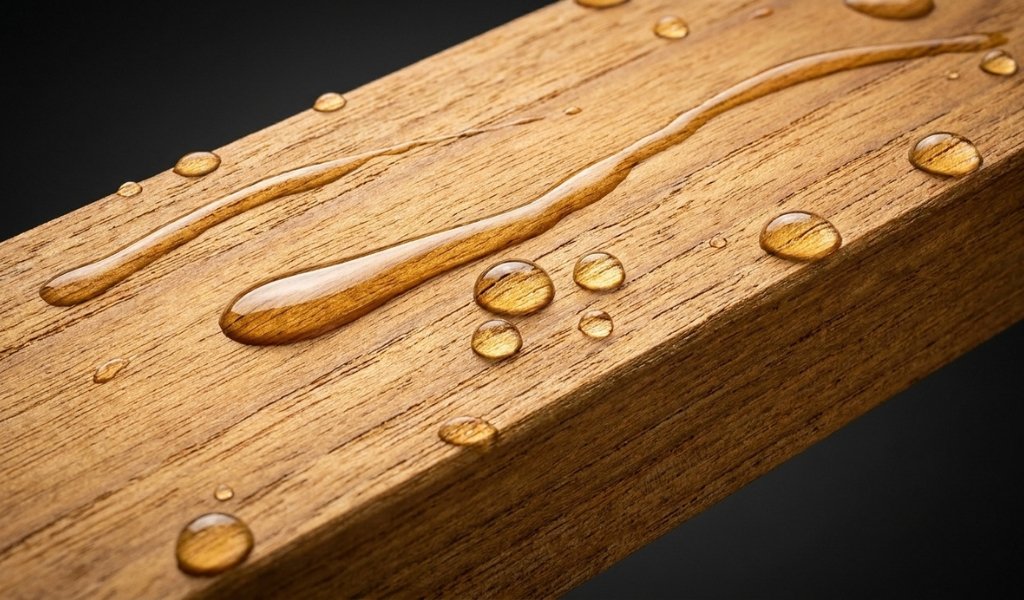
Even plantation teak, while inferior to old-growth varieties in oil density, significantly outperforms most other hardwoods in outdoor use.
Neem’s aesthetic is functional rather than luxurious. The wood features a moderately varied grain pattern sometimes straight, sometimes wavy and a reddish-brown to grayish-yellow color. It takes stains and paints well, which makes it a versatile base material for painted or lacquered furniture. Its grain pattern lacks the refined elegance of teak but contributes a warm, natural aesthetic appeal suited to traditional Indian home interiors.
Teak’s grain elegance is one of the most recognized qualities in premium furniture worldwide. Its tight grain, consistent golden-brown color, and subtle wavy grain details create a visual richness that improves with age. The patina that develops on untreated outdoor teak is one of the most aesthetically coveted natural transformations in fine furniture. For luxury carved furniture and statement dining tables, no wood matches teak’s visual authority.
Neem wood is genuinely one of the most affordable hardwood options for furniture in India. Because neem trees are fast-growing and widely available across the subcontinent, the timber supply chain is short, local, and cost-efficient. A solid neem wood bed frame or set of kitchen cabinets can cost a fraction of what equivalent sheesham or teak furniture would command.
This affordability makes neem wood an excellent entry point for homeowners furnishing Indian homes on a practical budget. You are not compromising on structural adequacy for indoor use you are simply choosing a wood that prioritizes cost-effectiveness over luxury positioning.
Teak furniture carries a significant price premium, and for well-documented reasons. Old-growth Burmese teak, which represents the benchmark for genuine teak wood quality, takes decades to mature and is subject to strict export regulations. Even plantation teak, grown under managed forestry in Central America and Africa, requires substantial time and investment to produce.
Teak is graded by quality typically Grade A (heartwood only, dense oil content), Grade B (mix of heartwood and sapwood), and Grade C (predominantly sapwood). Grade A teak commands the highest prices and delivers the best long-term durability. Beyond initial cost, high-quality teak furniture retains and often appreciates in value over time, making it a legitimate long-term investment rather than a depreciating asset.
For outdoor furniture, the math is straightforward: teak’s longevity means its total cost of ownership over 30 years is often lower than cheaper alternatives that require frequent replacement or intensive maintenance.
Neem wood is the right choice when your priorities are affordability, natural pest resistance, and indoor functionality. It is particularly well-suited to:
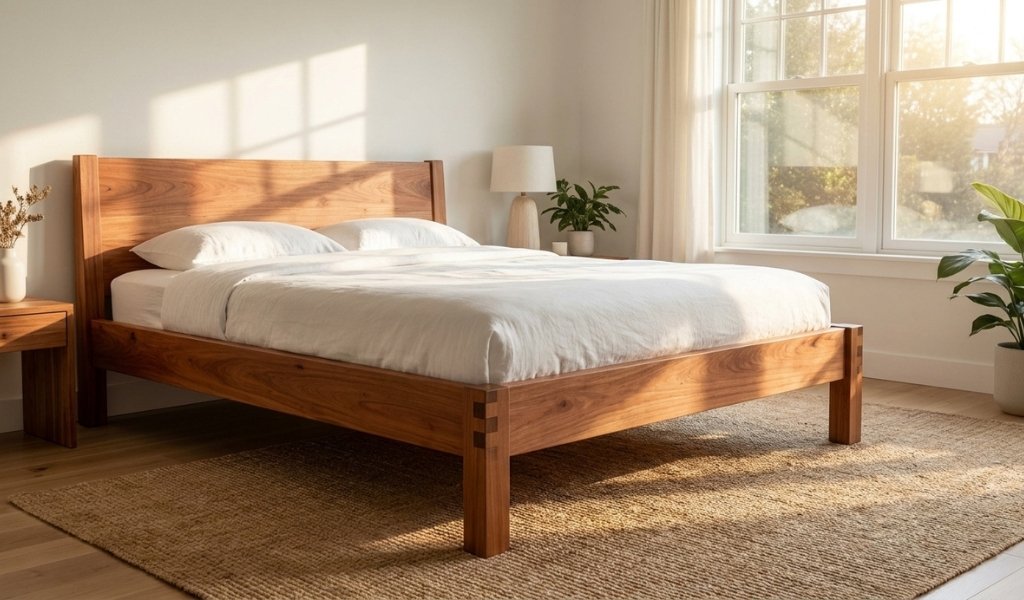
For buyers choosing between wood types for furniture in India with a moderate budget, neem offers excellent value for indoor applications.
Teak is the best wood for any application involving weather exposure, moisture, or long-term investment. It excels in:
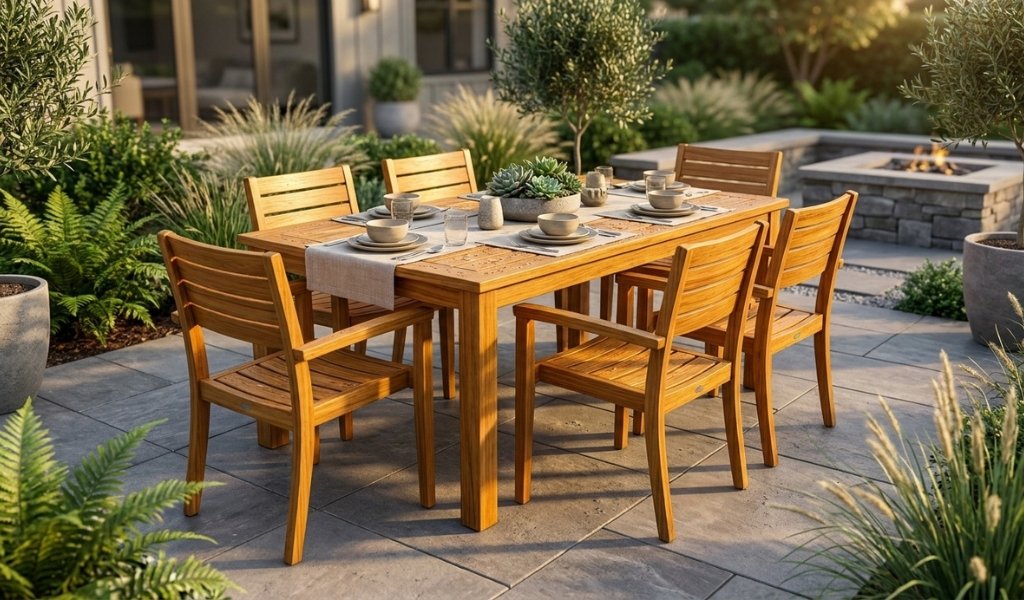
When outdoor use is a requirement, there is no practical substitute for teak among commonly available hardwoods. Even premium alternatives like mango wood, oak wood, or mahogany do not replicate teak’s combination of natural oil protection and dimensional stability.
Neem is relatively easy to work with standard woodworking tools. It cuts cleanly when kiln-dried to the appropriate moisture content and responds well to hand tools, power saws, and routers. The wood accepts glue, paint, and lacquer without significant surface preparation challenges. One area of caution: neem’s wavy grain sections can produce tear-out if cutting direction is not aligned carefully.
Teak presents more challenges in the workshop. Its silica content, a fine mineral deposit embedded in the wood’s cellular structure, dulls cutting tools faster than almost any other hardwood. Woodworkers and carpenters working with teak routinely use carbide-tipped saw blades and router bits to maintain cutting quality. The wood’s natural oil content can also interfere with adhesive bonding and certain finishes, requiring surface degreasing before application. That said, teak’s workability challenges are well-understood and manageable with proper tooling and the finished result justifies the extra preparation.
Neem wood furniture requires moderate maintenance to preserve both its appearance and structural integrity. The key practices include:
Teak furniture requires considerably less intervention. For indoor teak, a light application of teak oil once or twice a year maintains the wood’s golden-brown color and prevents surface drying. Outdoor teak can be left without treatment if you prefer the natural silver-gray patina that develops over time. If you want to preserve the original golden color, annual cleaning and oiling with a dedicated teak oil product will do the job. Teak does not require sealing, painting, or chemical protection under normal circumstances, a significant maintenance advantage over most other outdoor timber options.
For most indoor furniture applications in Indian homes, neem wood is a practical and cost-effective choice. It offers adequate structural durability, natural termite resistance, and good workability at a significantly lower price point than teak. Teak is the better option for indoor furniture where longevity, luxury aesthetics, or exposure to moisture are primary concerns such as high-end dining tables or bathroom cabinetry.
Yes. Neem wood contains limonoids, natural bioactive compounds derived from the same source as neem oil which deter termites and wood-boring insects without requiring chemical treatment. This natural insect resistance makes neem a preferred material for bed frames, wardrobes, and storage furniture in India, where termite activity is a genuine concern in many regions.
Neem wood is not recommended for outdoor use. Unlike teak, neem lacks the high natural oil content needed to resist sustained moisture, UV exposure, and biological decay. Extended outdoor exposure will cause neem to warp, develop fungal growth, and deteriorate structurally over time. For outdoor patio furniture, teak remains the most durable and low-maintenance hardwood available.
High-quality teak furniture, particularly Grade A teak made from dense heartwood can last 75 to 100 years or more with minimal maintenance, both indoors and outdoors. Neem wood furniture used indoors under appropriate conditions typically has a lifespan of 20 to 30 years, depending on maintenance quality and environmental conditions. The longevity gap is primarily attributable to teak’s superior natural oil content and dimensional stability.
Yes. Neem is widely considered one of the more eco-friendly hardwood options available, particularly for furniture in India. Because neem trees are fast-growing, reaching harvestable maturity in 10 to 15 years neem timber can be produced through sustainable plantation forestry without depleting old-growth forest resources. Its natural pest resistance also reduces the need for chemical treatments during both production and use, further lowering its environmental footprint.
Neem and teak are not competing for the same market; they serve genuinely different purposes, and the better choice depends entirely on your specific application, budget, and environment.
Neem wood is the smart choice for indoor furniture in Indian homes where budget, sustainability, and natural pest resistance are priorities. It is a capable, eco-friendly hardwood that performs reliably in dry, climate-controlled environments and its affordability makes it accessible to a wide range of buyers.
Teak wood is the definitive choice when permanence, outdoor performance, or luxury aesthetics are non-negotiable. Its exceptional weather resistance, superior strength, and timeless grain elegance justify the premium price for outdoor furniture, high-moisture applications, and heirloom-quality pieces designed to last generations.
Understanding the distinction between these two wood types along with how they compare to other hardwoods like sheesham, acacia, mango wood, and Indian rosewood gives you the complete picture you need when choosing the right wood for any furniture project.