Physical Address
304 North Cardinal St.
Dorchester Center, MA 02124
Physical Address
304 North Cardinal St.
Dorchester Center, MA 02124

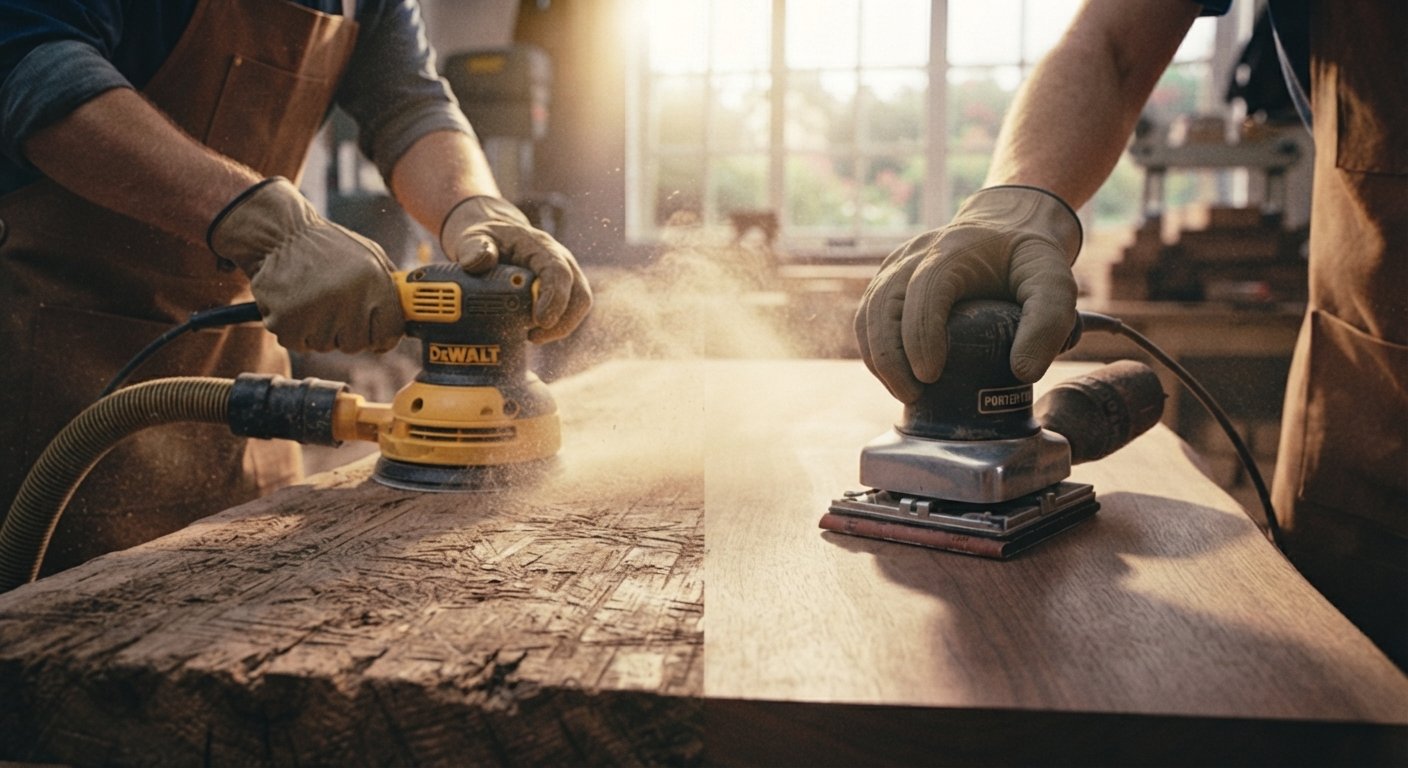
Picking the right power tool can make or break your woodworking project, and the orbital sander vs. palm sander debate confuses even experienced DIYers. Both tools smooth wood surfaces, remove old finishes, and prep materials for paint or stain, but they work in different ways and serve different purposes. If you’ve ever stood in the tool aisle wondering which one to grab, this guide will clear things up.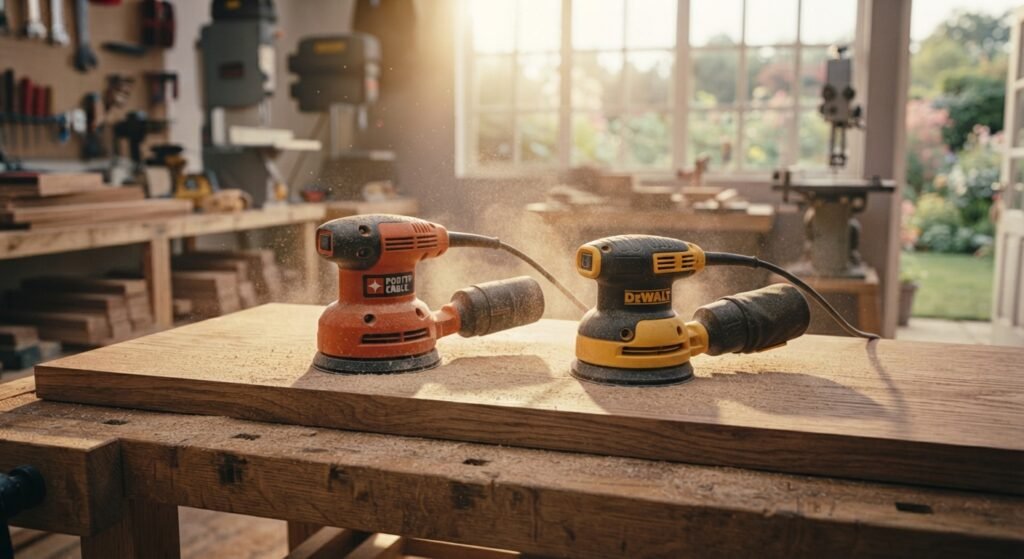
Think of this as your Palm Sander: Complete Guide for Woodworking and DIY Projects, paired with everything you need to know about orbital sanders too. By the end, you’ll know exactly which tool fits your next project, your skill level, and your budget. We’ll break down how each sander works, where they shine, and which one makes more sense if you’re just starting out.
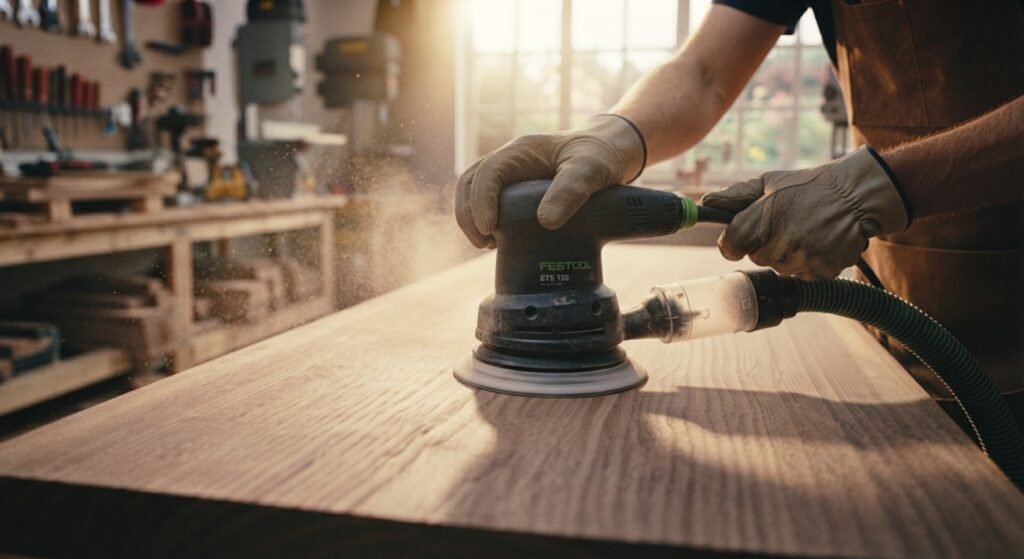
An orbital sander is a power tool that moves its sanding pad in small, overlapping circles. This motion, often called a random orbit pattern in higher-end models, helps prevent the swirl marks that can show up when sanding wood by hand or with simpler tools. The pad spins while also moving in tiny circular loops, so no single spot gets rubbed the same way twice.
Random orbital sanders are the most common type found in home workshops and professional shops alike. They use round sanding discs that attach with hook-and-loop fastening, making pad changes quick and simple. Because the sanding pattern is random, these tools work well with the wood grain, across the grain, or even at odd angles without leaving visible scratch patterns.
Orbital sanders typically come in two sizes: 5-inch and 6-inch pads, with the 5-inch version being more popular for general use. Most models run on electric motors, though cordless versions have become widely available as battery technology has improved. Brands like DEWALT, Makita, and Bosch all manufacture reliable orbital sanders that range from budget-friendly options to professional-grade tools.
A palm sander, also called a sheet sander or finish sander, gets its name from the way it fits comfortably in the palm of your hand. Unlike the orbital sander’s circular pad, a palm sander uses a square or rectangular base that moves in a tight, vibrating pattern, sometimes orbital and sometimes a simple back-and-forth motion depending on the model.
Palm sanders typically use quarter sheets of standard sandpaper, which you clip or clamp onto the base. This makes them an economical choice since sandpaper sheets cost less than specialty discs, and you can cut your own sheets from larger rolls if needed. 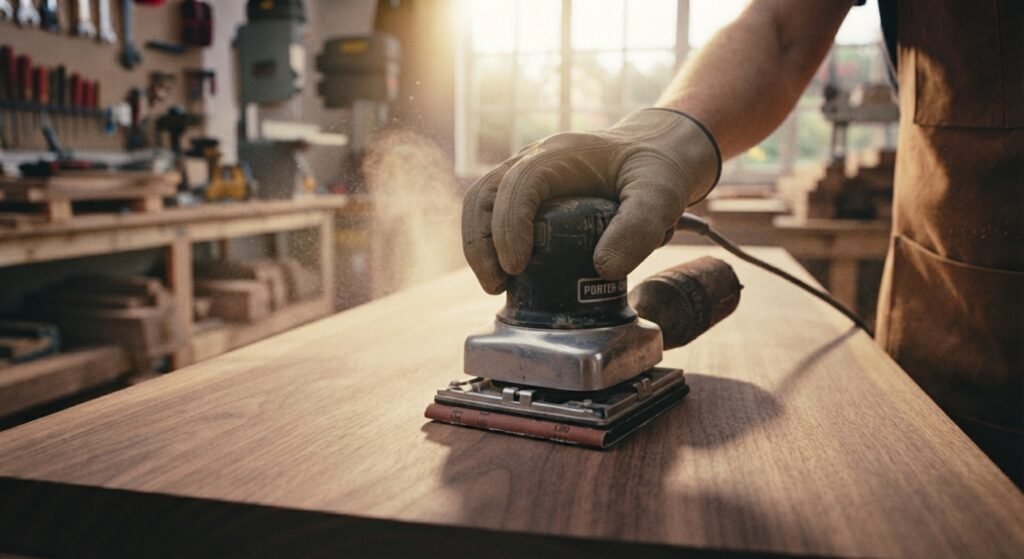 The compact size and light weight make palm sanders easy to maneuver into corners and along edges where bulkier tools struggle to reach.
Because of their gentler sanding action, palm sanders are often the go-to tool for finish work, final smoothing before staining, and touch-up jobs on furniture or trim. They won’t remove material as quickly as an orbital sander, but that slower pace gives you more control, which matters a lot when you’re working on a project where mistakes are hard to undo.
While both tools fall under the sander category, the differences between them affect how well they perform depending on the task. Let’s look at three areas where orbital sanders and palm sanders really set themselves apart.
Orbital sanders generally sand faster than palm sanders because of their larger pads and more aggressive random orbit motion. This makes them a better fit for big jobs, like refinishing a deck, sanding down a tabletop, or stripping paint off a large surface. You’ll cover more ground in less time, which matters when you’re working against a deadline or tackling a sizable project.
Palm sanders move at a gentler pace. Their smaller pads and lighter sanding action mean they take longer to remove material, but that slower speed is exactly what makes them useful for detailed work. If you need to sand quickly and don’t mind a bit less precision, the orbital sander wins this round. If speed isn’t your top priority, a palm sander still gets the job done without rushing.
This is where palm sanders often pull ahead, especially for final touches. Their gentle vibrating motion produces an extremely smooth surface, which is ideal for prepping wood before applying stain, paint, or varnish. Furniture makers and hobbyists who care about a flawless finish often reach for a palm sander during the last stages of a project.
Orbital sanders, particularly random orbit models, also produce a clean finish, but they’re generally used for the heavier lifting before switching to finer grits or a palm sander for the final pass. Many professional woodworkers actually use both tools in sequence: an orbital sander to remove material quickly, followed by a palm sander to perfect the surface.
Orbital sanders typically pack more power thanks to larger motors and bigger sanding pads. This extra power allows them to remove old paint, varnish, and even light rust from metal surfaces with relative ease. They’re built to handle tougher jobs without burning out the motor or overheating.
Palm sanders, on the other hand, are designed for lighter work. Their smaller motors and reduced sanding area mean they’re not meant for heavy stock removal or stripping thick layers of finish. Trying to use a palm sander for a job that calls for serious power usually ends in frustration and a lot of wasted time.
Knowing the technical differences is helpful, but understanding real-world applications makes the choice even clearer.
Orbital sanders work best for:
Palm sanders work best for:
A real-life example makes this easier to picture. Say you’re refinishing an old dining table. You’d start with an orbital sander fitted with coarse grit sandpaper, maybe 80-grit, to strip away the old finish and smooth out any rough patches. Once the surface is level, you’d switch to a palm sander with fine grit, around 220-grit, to get that silky smooth finish before applying a fresh coat of stain. Using the right tool at the right stage saves time and produces much better results than trying to force one sander to do everything.
An orbital sander makes sense when your project involves larger surfaces or when you’re working with multiple layers of old finish that need to come off quickly. If you’re flipping furniture, restoring hardwood floors, or working on an outdoor project like a deck or fence, this tool will save you hours of manual labor.
It’s also the better choice if you plan on using the sander for a variety of tasks beyond woodworking. Many DIYers use orbital sanders to prep walls before painting, smooth drywall patches, or even remove rust from metal surfaces. The versatility and power make it a solid investment for anyone who tackles a wide range of home improvement projects.
If your budget allows for only one sander and you expect to work on bigger jobs more often than small detail work, the orbital sander is generally the more practical pick. Its speed and power handle most sanding tasks reasonably well, even if it’s not always the ideal tool for fine finishing.
A palm sander shines when precision matters more than speed. If you’re building furniture, working on trim and molding, or finishing smaller wood projects like cutting boards or shelves, this tool gives you the control needed to avoid over-sanding or gouging the wood.
It’s also a smart pick for anyone working in tight spaces. The compact size fits into corners and along edges that an orbital sander’s larger pad simply can’t reach. Cabinet makers, hobbyists, and anyone doing detailed trim work will appreciate how easily a palm sander maneuvers around obstacles.
Budget-conscious buyers might also lean toward a palm sander since they tend to be less expensive than orbital sanders, and the sandpaper sheets they use typically cost less than specialty sanding discs. If your projects are mostly small-scale and finish-focused, a palm sander could be all you need.
For beginners, a palm sander is often the easier tool to start with. Its lighter weight, simpler controls, and gentler sanding action make it less intimidating, and the lower risk of damaging your workpiece means you can practice without worrying too much about mistakes. Palm sanders also tend to be more affordable, which matters if you’re not yet sure how often you’ll use a power sander.
That said, orbital sanders aren’t difficult to learn either. Most random orbit models are designed with user-friendly features like variable speed controls and comfortable grips, making them approachable even for first-time users. If your projects are likely to involve larger surfaces or furniture refinishing right from the start, learning to use an orbital sander might be worth the slightly steeper learning curve.
A good middle ground for beginners who aren’t sure which direction to go is to start with a palm sander for small practice projects, then add an orbital sander to your toolkit once you’re comfortable and ready to tackle bigger jobs. Many home workshops eventually end up with both tools anyway, since they complement each other so well.
Choosing between an orbital sander and a palm sander really comes down to the scope and detail of your projects. Orbital sanders handle large surfaces and heavy material removal with speed and power, while palm sanders excel at precision work, tight spaces, and achieving that final smooth finish. Neither tool is objectively better. They simply serve different purposes, and many serious woodworkers keep both on hand for exactly that reason.
If you’re just getting started and only plan to buy one tool, think about the type of projects you’ll be working on most often. Big refinishing jobs call for an orbital sander, while detail-oriented furniture work favors a palm sander. Whichever you choose, investing in a quality tool from a trusted brand will make your sanding tasks faster, easier, and far more satisfying.
Can I use a palm sander for heavy sanding jobs?
Palm sanders aren’t designed for heavy material removal. Their smaller motors and gentler sanding action work best for finish work and light touch-ups rather than stripping paint or smoothing rough lumber.
Is a random orbital sander the same as an orbital sander?
Not exactly. A random orbital sander combines spinning and circular movement to create a less predictable pattern, which helps avoid swirl marks. A standard orbital sander moves in a simpler circular motion and can sometimes leave visible patterns on softer woods.
What grit sandpaper should I use with each tool?
For orbital sanders, start with a coarser grit like 60 or 80 for heavy material removal, then move to 120 or 150 for smoothing. For palm sanders, finer grits like 180 to 220 work best since the tool is typically used for finish work.
Can I use regular sandpaper with an orbital sander?
Orbital sanders generally require round sanding discs with hook-and-loop backing rather than standard sheets. Palm sanders, on the other hand, typically use quarter sheets of regular sandpaper that attach with clips.
Do I need both an orbital sander and a palm sander?
Many woodworkers eventually own both since they serve different purposes. An orbital sander handles larger surfaces and faster material removal, while a palm sander is better suited for detail work and achieving a smooth final finish.
Which sander is quieter to use?
Palm sanders tend to run quieter than orbital sanders due to their smaller motors and gentler sanding action. This makes them a more comfortable choice for extended use, especially in smaller workshop spaces.
How much should I expect to spend on each tool?
Palm sanders are generally more affordable, with basic models starting around twenty to thirty dollars. Orbital sanders cost a bit more due to their larger motors and added power, with quality models typically ranging from forty to over a hundred dollars depending on the brand and features.