Physical Address
304 North Cardinal St.
Dorchester Center, MA 02124
Physical Address
304 North Cardinal St.
Dorchester Center, MA 02124

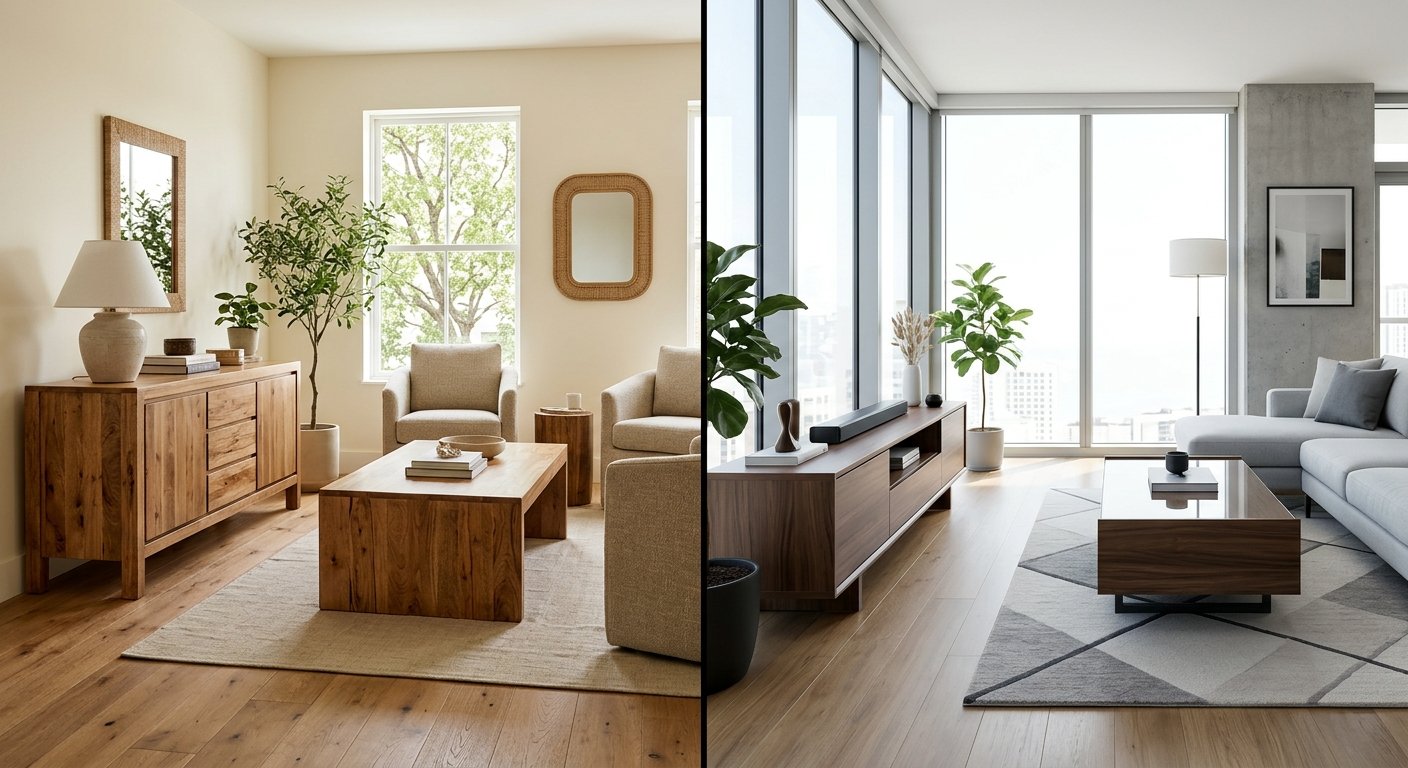
You are standing in a furniture store and two tables look almost the same. One tag says rubberwood. The other says engineered wood. The price gap is clear but the reason behind it is not. This is where most buyers freeze, and it is a fair reaction. The rubberwood vs. engineered wood question comes up for everyone who buys a bed, a dining set, or a bookshelf, and a wrong choice can mean a wobbly piece that falls apart in three years.
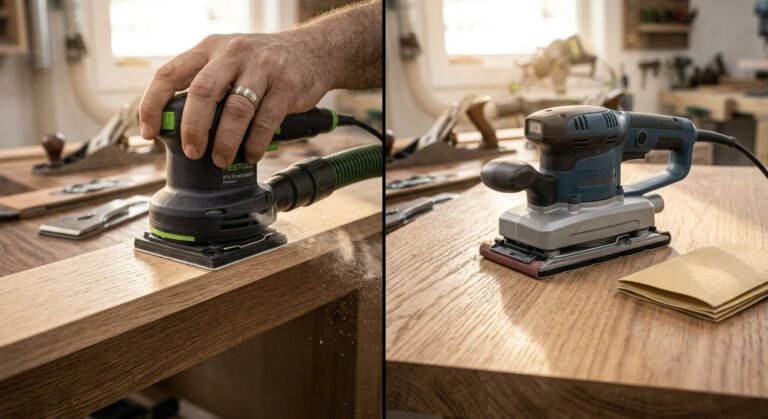
The good news is that the answer is not complicated once you know what each material really is. Think of it like choosing between a Palm Sander vs Sheet Sander for a weekend project. Neither tool is better on its own. The right pick depends on the job, the budget, and how long you want the result to last. Furniture works the same way. This guide breaks down both materials in plain words, compares them side by side, and helps you pick the one that fits your home.
Before comparing anything, it helps to know what you are looking at. People often mix these two up because both can look like wood, both are common in budget friendly furniture, and both show up in the same store aisles. But they come from very different places and behave very differently once they are in your living room.
One is real wood cut from a tree. The other is a made product built from wood pieces, fibers, and glue. That single difference explains most of what you will read below.
Rubberwood comes from the rubber tree, known to scientists as Hevea brasiliensis. These trees grow on large plantations in Thailand, Malaysia, Indonesia, and Vietnam. For about twenty five to thirty years, farmers tap the tree for latex, which is the sap used to make rubber gloves, tires, and many other goods. When the tree stops giving enough latex, it is cut down and replaced with a young one. In the past that old tree was burned or left to rot. Today the trunk is turned into solid timber.
This is a true hardwood, though it sits on the softer side of that group. It has a pale cream to light tan color and a fairly even grain. It takes stain well, which means a maker can darken it to look like oak, walnut, or teak. It is also easy to cut and shape, so it shows up in chairs, tables, cribs, cabinets, and kitchen items like cutting boards.
Rubberwood needs good drying and treatment before use. Fresh cut rubber trees are full of sugar, and that attracts bugs and mold. Makers soak the lumber in a protective solution and dry it in a kiln. When this step is done right, the wood is stable and lasts for many years. When it is rushed, the wood can warp or get insect damage. That is why the brand and the quality of the maker matter.
Engineered wood is a family of products made by pressing wood parts together with glue and heat. There are three types you will meet most often.
MDF stands for medium density fiberboard. It is made from very fine wood fibers mixed with resin and pressed into smooth, flat sheets. It has no grain at all, so it paints beautifully and is often used for cabinet doors, shelves, and decorative panels.
Plywood is made from thin layers of real wood called veneers. Each layer is glued with the grain turned a different way, which makes the sheet strong and less likely to bend. It is a favorite for drawer boxes, bed bases, and sturdy cabinets.
Particle board is made from small chips and sawdust held together with glue. It is the lightest and cheapest of the three, and you see it in flat pack desks and entertainment units.
Most engineered furniture is covered with a thin layer of real wood veneer, plastic laminate, or a printed paper film so it looks like solid wood. That outer skin is what you see and touch, while the core hides underneath.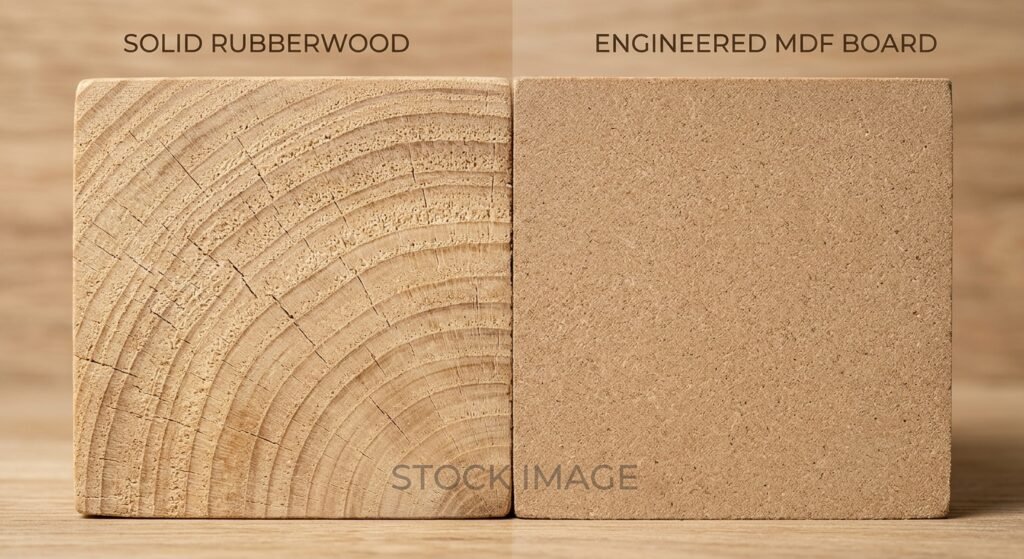
Now comes the heart of the matter. These two materials differ in strength, looks, and how they age. Looking at each point helps you match the material to the way you actually live.
Rubberwood is a solid hardwood with a medium hardness. It handles daily use well. A dining table or a bed frame made from it can carry heavy loads and survive years of kids, pets, and moving around. Because the wood is solid all the way through, screws and joints grip firmly, and the pieces can often be taken apart and put back together without much trouble.
Engineered wood is more mixed. Good quality plywood can be very strong. It resists bending and cracking and holds screws well, which is why it is used in better cabinets and bed bases. MDF and particle board are weaker. They hold up fine under light loads, like a small shelf or a desk used for a laptop. But they sag under heavy weight over time, and screws in the edges can pull loose after a few uses. That is a real problem if you move house often or like to rearrange furniture.
Water is the biggest enemy of engineered boards. If a glass of water or a leaking pipe soaks MDF or particle board, it swells like a sponge and cannot go back to its old shape. 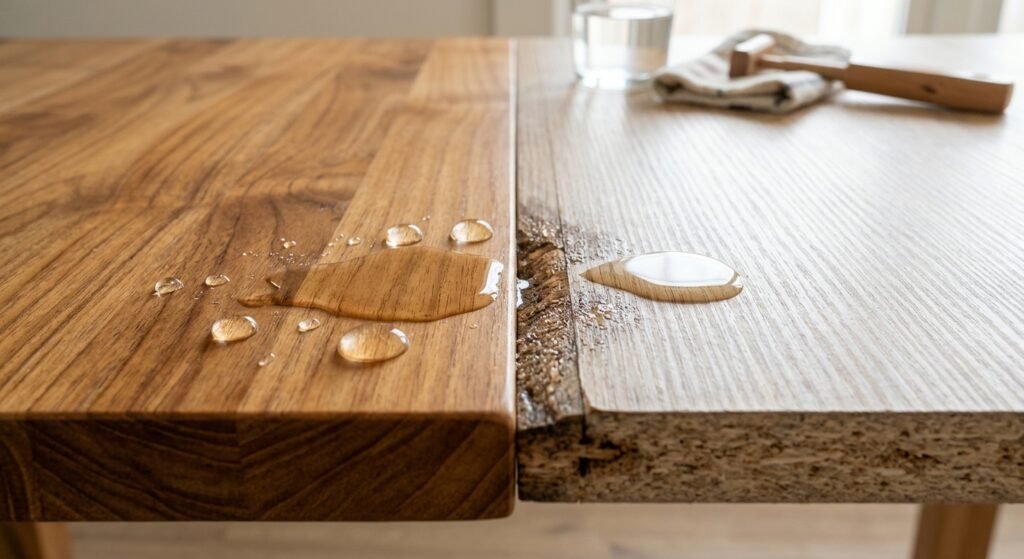 Rubberwood can also be hurt by water, but a spill wiped up fast rarely does lasting harm, and a good finish adds extra protection.
Here is a simple example. A friend of mine bought a particle board wardrobe for his first apartment. It looked great for a year. After one move the doors sagged and a side panel split near a screw. His sister bought a rubberwood wardrobe at about the same time, and it has been through two moves without a single loose joint.
Looks are where many buyers make their choice. Rubberwood has real grain. Every board has small differences in pattern and shade, which gives each piece a warm and natural feel. You can run your hand across it and feel the texture. It also takes stain and varnish nicely, so you can pick a light, natural tone or a deep, rich one.
One small thing to know is that rubberwood can show color differences between boards. Makers handle this by matching pieces carefully, or by using a stain that evens things out. A good stained piece looks smooth and consistent.
Engineered wood gives you a different kind of look. An MDF door painted in white or navy has a clean, flawless surface because there is no grain to show through. This suits modern and minimal rooms very well. When engineered boards are covered with real wood veneer, they can look close to solid wood from a few feet away. Cheaper laminate and printed film versions often repeat the same pattern, and the pattern can look flat when you look closely.
The feel is also different. Solid wood feels warm and slightly textured. Laminate surfaces can feel slick or plasticky. If you love the look and touch of real wood, rubberwood has the edge. If you want a bold painted finish or a perfectly smooth panel, MDF may suit you better.
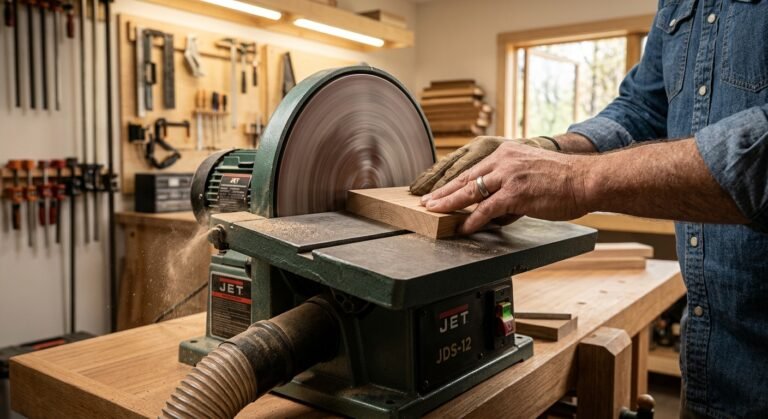
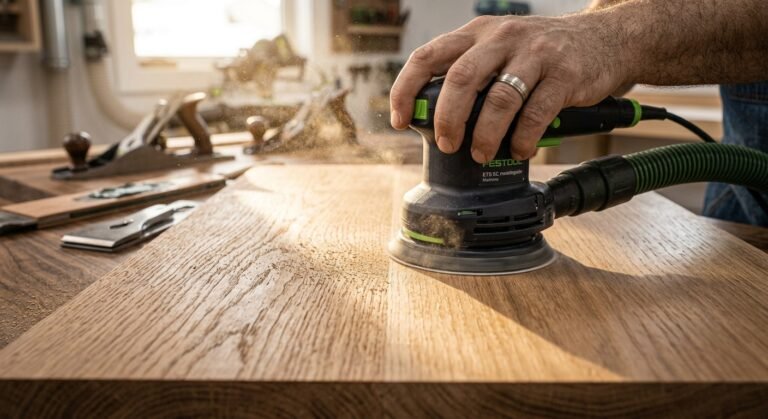
This is where the two materials split apart the most. Rubberwood can last for decades with basic care. When it gets scratched or dented, you can sand the area, touch it up with stain, and add fresh finish. Even a full refinish is possible. If you have ever debated a Palm Sander vs Sheet Sander for a refinishing job, you already know the fun part. A small palm sander works for tight spots and light scuffs, while a larger sheet sander covers a flat tabletop faster. 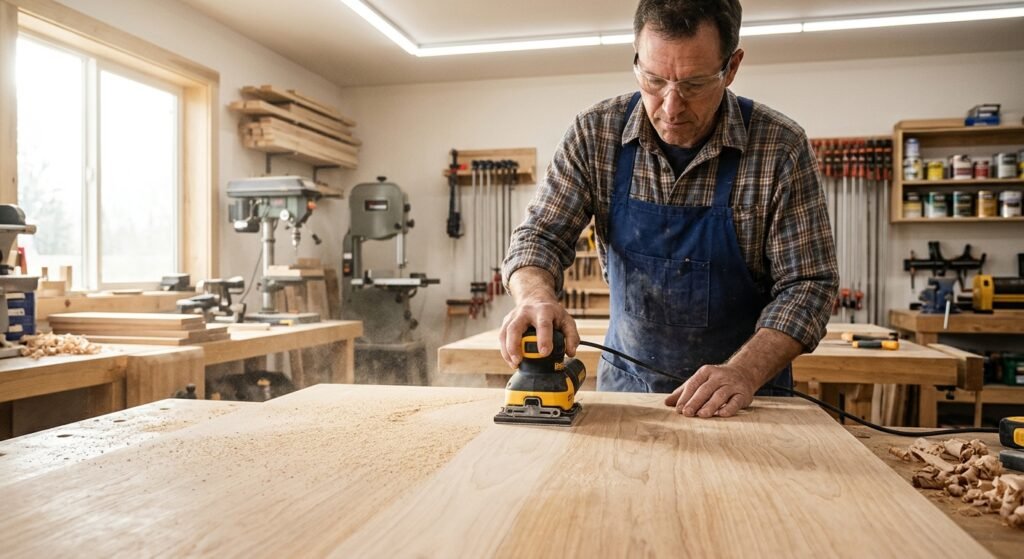 The wood is thick enough to take that kind of work many times.
Engineered wood is much harder to fix. The surface layer is often as thin as a sheet of paper, so sanding can cut right through it and show the core. A chipped corner on a laminate desk is difficult to hide. A swollen edge on MDF cannot be shaved back down. Instead of repairing, most people end up replacing the piece.
That said, plywood sits in the middle. A good plywood piece with thick veneer can be lightly sanded and refinished. And in dry rooms with gentle use, engineered furniture can last quite a while. A bedroom dresser that stays dry and is rarely moved can last ten or fifteen years without trouble.
The pattern is clear. Rubberwood is the long term material, while engineered wood is often the short to medium term material.
Price is a big part of any furniture choice, and this is where engineered wood shines. Particle board and MDF pieces are the most affordable because the raw material is cheap and factories can make them in large amounts. Flat pack bookshelves, TV stands, and starter desks often cost a fraction of the price of solid wood. For a student, a renter, or someone furnishing a first home, that low cost can be a real help.
Rubberwood sits in the middle of the price range. It costs more than particle board but usually less than oak, walnut, teak, or maple. Because it comes from plantation trees that were going to be removed anyway, the material is easy to source and priced fairly. You can often find a full rubberwood dining set for the price of a mid range engineered one, and the rubberwood version may last far longer.
The real question is value, not just price. Think about cost per year of use. A particle board table that costs half as much but lasts four years costs more per year than a rubberwood table that lasts fifteen. Add the cost of replacing and hauling away the old piece, and the cheap option can get pricey.
There are times when cheaper is the smarter buy. If you are in a rental for one year, if the piece is for a child who will outgrow it soon, or if the item will hold only light things, engineered wood makes sense. For pieces you touch and use every day, like beds, dining tables, and chairs, spending a bit more on rubberwood usually pays off.
A quick tip for shoppers is to check the weight. Solid wood feels heavy and dense. Particle board and MDF can also be heavy, but the weight feels different, almost like a brick, and the edges may look uniform and crumbly. Ask where the piece was made, ask what the core material is, and look at the back and the underside of the furniture. Makers usually do not finish those parts as carefully, so you will see the truth there.
Many people now care about where their furniture comes from, and both materials have a story to tell. Rubberwood has a strong reputation because it is a byproduct. The rubber tree was grown for latex, and the timber comes only at the end of that life. Using it means fewer trees are cut for lumber, and a material that was once burned now finds a second use.  Rubberwood also grows fast on plantations, so new trees replace old ones in a steady cycle. To be sure the wood is responsibly sourced, look for a certification such as FSC, which stands for Forest Stewardship Council.
There are a few things to watch. Plantations can replace natural forest in some regions, and the treatment used to protect rubberwood from insects should be low in harmful chemicals. Ask the seller how the wood was treated and dried.
Engineered wood has some green points too. It uses wood chips, sawdust, and scraps that would otherwise be thrown away, which means less waste and more use from each tree. Plywood can make good use of fast growing trees.
The glue is the concern. Many boards use resins that contain formaldehyde, a chemical that can slowly release into the air inside your home. This is called off gassing, and it is a worry for small rooms, nurseries, and anyone with allergies or asthma. Look for products with labels like CARB Phase 2, E0, or E1, which show lower formaldehyde levels. Some makers now offer boards with no added formaldehyde.
End of life is another point. Solid rubberwood can be reused, repaired, or even burned as clean fuel. Engineered boards are hard to recycle because of the glue and coatings, so most of them end up in a landfill. Because rubberwood lasts longer, fewer pieces need to be thrown away over time, and that adds to its green score.
In short, rubberwood has a slight advantage for most buyers who want a lasting, lower waste choice. Engineered wood can still be a decent option when you pick certified, low emission products and keep them for as long as you can.
There is no single winner, but there is a clear best fit for each situation. Here is how to decide.
Choose rubberwood if you want furniture that lasts and that you can repair. It is the better pick for dining tables, chairs, beds, cribs, and anything that gets heavy daily use. It gives you real wood grain, takes stain well, and holds screws firmly. It costs more than particle board but gives you far better value over the years. It is also a good choice if you care about sustainability and want to avoid heavy glue.
Choose engineered wood if your budget is tight, if the piece is temporary, or if it will only hold light things. A plywood cabinet or a painted MDF shelf can look sharp and work well in a dry room. If you go this route, pick plywood over particle board when you can. Look for low formaldehyde labels. Keep it away from water and avoid moving it too often.
A smart mix is also possible. Many people buy solid rubberwood for the pieces that matter most, like the bed and the dining table, and use engineered wood for low stress items like a TV stand or a storage cabinet. That way you spend where it counts and save where it does not.
Before you buy, run a quick check. Lift one corner to feel the weight. Look at the edges and back for the core material. Open a drawer and see how it slides. Press on a shelf to test for bending. Ask about the warranty. A seller who stands behind a piece will usually say so with confidence.
In the end, the rubberwood vs. engineered wood choice comes down to how long you want your furniture to last and how much you want to spend today. Take your time, trust your hands and eyes, and pick the one that fits your life. Ready to shop? Make a short list of the pieces you need, mark which ones will see heavy use, and use the tips above to choose with confidence. If this guide helped, share it with a friend who is furnishing a new place.
Is rubberwood real wood or engineered wood?
Rubberwood is real, solid hardwood. It is cut straight from the rubber tree and does not need glue to hold it together as one piece, although boards may be joined to make wide panels like tabletops. Engineered wood is made from fibers, chips, or thin layers pressed with resin.
Is rubberwood furniture good quality?
Yes, when it is dried and treated properly. It is strong enough for daily use and takes finishes well. Quality depends on the maker, so check for smooth joints, even stain, and no cracks or warping.
Which lasts longer, rubberwood or engineered wood?
Rubberwood usually lasts longer. With care it can serve you for decades and can be repaired and refinished. Engineered wood often lasts a few years to a decade, depending on the type and how dry and gentle its use is. Plywood tends to outlast MDF and particle board.
Does rubberwood get damaged by water?
It can, like any wood. Standing water can stain, swell, or promote mold. A good sealed finish and quick wiping of spills keep it safe. It still handles moisture better than MDF or particle board, which can be ruined by a single leak.
Is engineered wood safe for a baby’s room?
It can be if you pick the right product. Look for low emission labels such as CARB Phase 2, E0, or E1, and let new pieces air out in a ventilated space for a few days. For cribs and items a child will chew on, solid wood like rubberwood is often the preferred choice.
Can you refinish rubberwood furniture?
Yes. You can sand it, restain it, and add a new topcoat. A palm sander handles small areas and edges, while a sheet sander works well on large flat surfaces like tabletops. Sand lightly with the grain and wipe away dust before you apply the new finish.
Is rubberwood eco-friendly?
For the most part, yes. It is a byproduct of the latex industry, so it gives old trees a second use. For extra peace of mind, choose pieces with a recognized forestry certification and ask how the wood was treated.