Physical Address
304 North Cardinal St.
Dorchester Center, MA 02124
Physical Address
304 North Cardinal St.
Dorchester Center, MA 02124

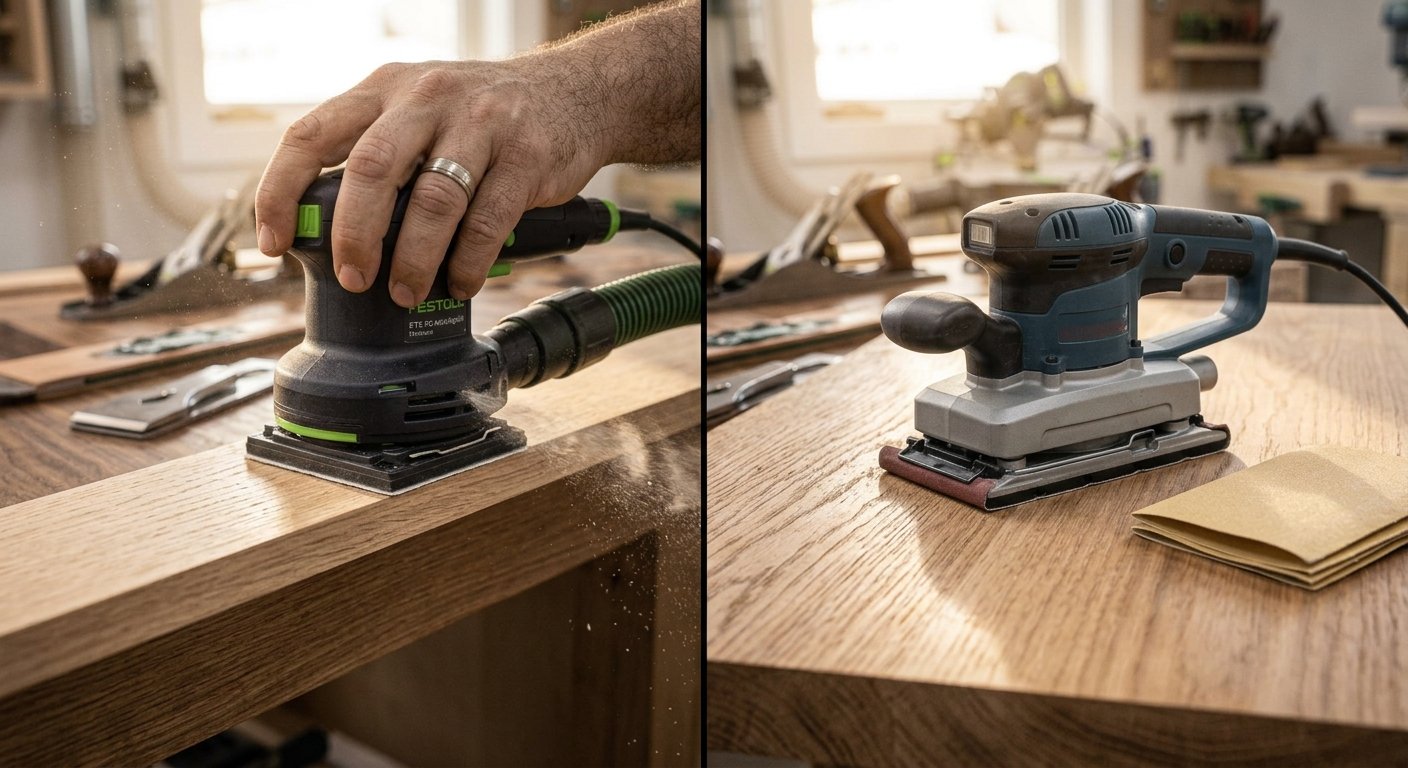
Walk into any hardware store and ask for a sander, and you will get a dozen questions back. Do you want a palm sander or a sheet sander? Orbital or random orbital? Corded or battery? If those names all sound the same to you, you are not alone. The palm sander vs sheet sander question confuses beginners and plenty of experienced DIYers too, mostly because the two names overlap so much.
The good news is that the answer is simple once you see how the words are used. In this guide I will break down what each name really means, show how the tools differ in size and power, and explain how much you will spend on paper over time. If you came here looking for Orbital Sander vs Sheet Sander: Key Differences Explained, you will find that too, because the orbital family is a big part of the story. By the end you will know which type of sander belongs in your workshop and which one you can skip.
Here is the honest truth. There is no strict rule, and brands do not always agree. Still, most shops use the words in a fairly steady way.
A palm sander is a small power sander that fits in one hand. It has a flat rectangular pad that shakes in tiny circles, and you hold it like a computer mouse. It is also called a finishing sander because it works best at the end of a job, when you want to smooth the wood before stain or paint.
A sheet sander is the bigger family name. It means any sander that holds a flat sheet of sandpaper on a rectangular pad. A palm sander is one kind of sheet sander, so every palm sander is a sheet sander, but not every sheet sander is a palm sander. When someone says sheet sander on its own, they often mean a larger half sheet model that needs two hands. That is where most of the mix up starts.
Both tools are different from a random orbital sander, which uses a round disc that spins and shakes at the same time. We will compare those in a moment, since many people end up choosing between them.
The quarter sheet is the classic palm sander. It uses one fourth of a standard sandpaper sheet, so the pad is about 4.5 by 5.5 inches. It weighs only two or three pounds, which means your hand does not get tired during a long job.
This size is great for furniture, cabinet doors, trim, small shelves, and craft projects. Because the pad is square, it reaches into the corner of a drawer or the edge of a frame much better than a round disc ever could. It is also easy to guide, so beginners rarely gouge the wood.
Here is a real example. A friend of mine rebuilt a set of kitchen cabinet doors last spring. He bought a basic 2 amp quarter sheet sander and finished all eighteen doors in two weekends. The pad was small enough to sand the inside edges of the door frames without rounding them. A bigger tool would have been awkward there.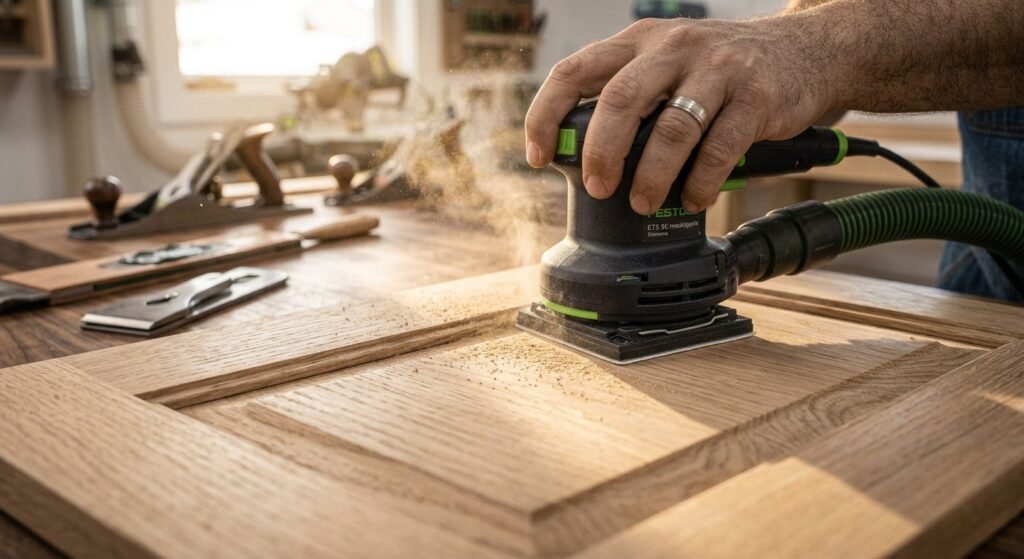
The downside is speed. A small pad covers a small area, so a large tabletop can take a long time. Think of it as a tool for finishing work, not for heavy removal.
The half sheet sander is the big brother. It uses half of a standard sheet, so the pad is about 5.5 by 9 inches, and it often has a strong motor to match. You hold it with two hands, one on the top knob and one on the rear handle.
This tool was built for large flat surfaces. Cabinet shops, deck builders, and refinishing crews use it on doors, big tabletops, plywood panels, and long boards. The longer pad also bridges small dips better, so the surface comes out flatter than it would with a small sander that follows every little bump.
The trade off is weight and price. A half sheet model can weigh six to eight pounds, and your arms will feel it after a while. It also makes more noise and costs more. If you only build a few small things a year, you will probably never need one. But if you sand big panels every week, it can save you hours.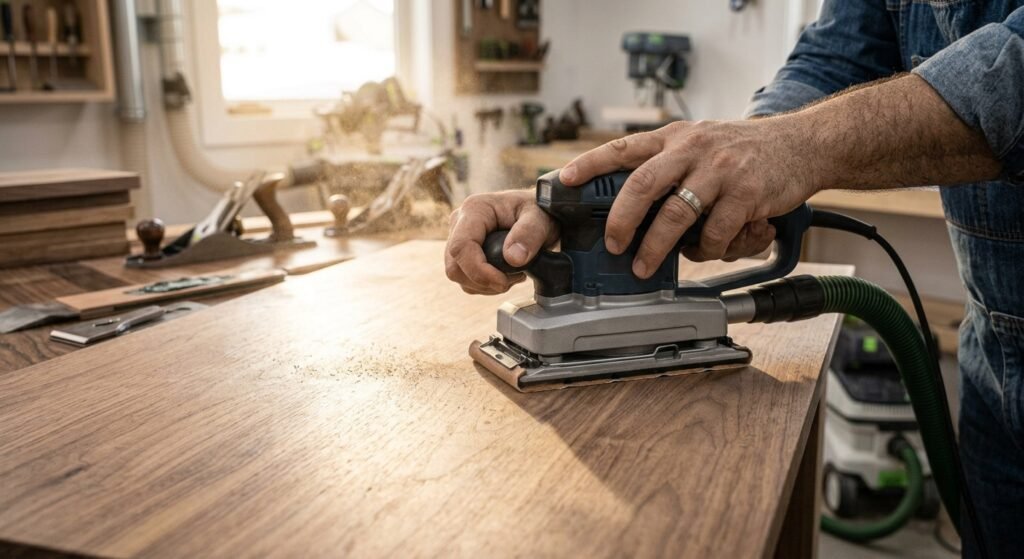
Now that you know the names, let us look at how the tools truly compare. The main differences come down to pad size, motor strength, and weight. These three things decide how the sander feels and what jobs it can do well.
Pad size is the biggest difference you will notice right away. A quarter sheet pad covers about 25 square inches. A half sheet pad covers around 50, which is twice as much wood on every pass. On a large table, that can cut your sanding time nearly in half.
But more coverage is not always better. A large pad cannot get into tight spots, and it can tip over an edge more easily if you are not careful. Rounded edges, a common mistake, usually come from a pad that hangs too far off the board. The small quarter sheet pad stays safer near edges, since you can keep most of it on the wood.
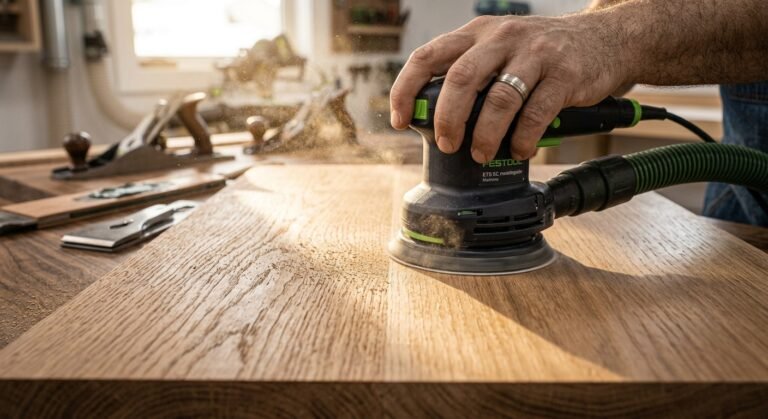
Then there is the shape. Both types of sheet sanders have a rectangular pad, which gives you straight edges and square corners. A random orbital sander has a round disc, usually five inches wide, and it cannot reach into a sharp inside corner. That is why many woodworkers keep one of each. The round tool handles open surfaces and the rectangular tool cleans up the corners.
If you need to get into really tight areas, a detail sander with a pointed pad is a good third option. It is not a main tool, but it makes work on chairs and window frames much easier.
Motor power shows up in amps for corded models and in volts for battery ones. A quarter sheet sander commonly uses a 1.5 to 2 amp motor, while a half sheet may run 3 amps or more. More power helps the tool keep its speed under pressure, which matters on hard woods like oak or maple.
OPM tells you how many tiny orbits the pad makes each minute. Most palm sanders run between 10,000 and 14,000 OPM. Half sheet models often run a little slower, around 10,000 to 12,000, because the larger pad has more mass to move. A higher number means a faster cut but a rougher touch, and a lower number gives more control.
It is worth knowing how this compares to other power tools. A belt sander has a long loop of paper that moves in one straight direction. It removes wood very fast, but it can wreck a surface in seconds if you stop moving. A sheet sander is much gentler. A random orbital sander falls in between, because it removes material faster than a palm sander but still leaves a fine finish.
Weight also affects your results. A light tool lets you feel the wood and use less pressure, which is what you want. A heavy tool is steadier on flat work, but it tires you out. If you plan to sand overhead or on a vertical surface like a door, go with the lighter option.
One more thing to check is vibration. Cheap sanders buzz hard, and after thirty minutes your hand can feel numb. Look for rubber grips and a balanced motor. It is a small detail that makes a big difference in comfort.
People often forget that the sander is only the first cost. The paper you burn through over the years is where the real money goes, and the two tool types handle paper in different ways.
Most sheet sanders use a clamp system, where each end of the paper is locked under a lever. This lets you use plain, low cost sandpaper sheets that you cut yourself. Some newer models use hook and loop pads, where fuzzy backed sheets stick right on. Hook and loop paper is faster to change and often has dust holes already punched, but it costs more per sheet.
Random orbital sanders almost always use hook and loop discs. These discs are round, pre cut, and sold in packs. They are convenient but they cost more per piece, and you cannot make your own from a regular sheet. That is one reason a random orbital sander is more expensive than sheet sanders to run over time, even when the tool price looks similar.
It is also worth thinking about how you work. If you change grits often, hook and loop saves time and frustration. If you sand a few times a year and watch your budget, a clamp model with homemade paper is hard to beat.
A standard 9 by 11 inch sandpaper sheet is the cheapest way to run a sheet sander. A pack of fifty sheets can cost about as much as a pack of twenty pre cut pieces, and each full sheet gives you four quarter sheet pieces or two half sheet pieces. Do the math and your cost per piece drops quickly.
Cutting is easy. Fold the sheet with the rough side out, crease it, and tear it along the fold against the edge of a table or a ruler. Some people use a utility knife. Avoid scissors, because sandpaper dulls them fast. 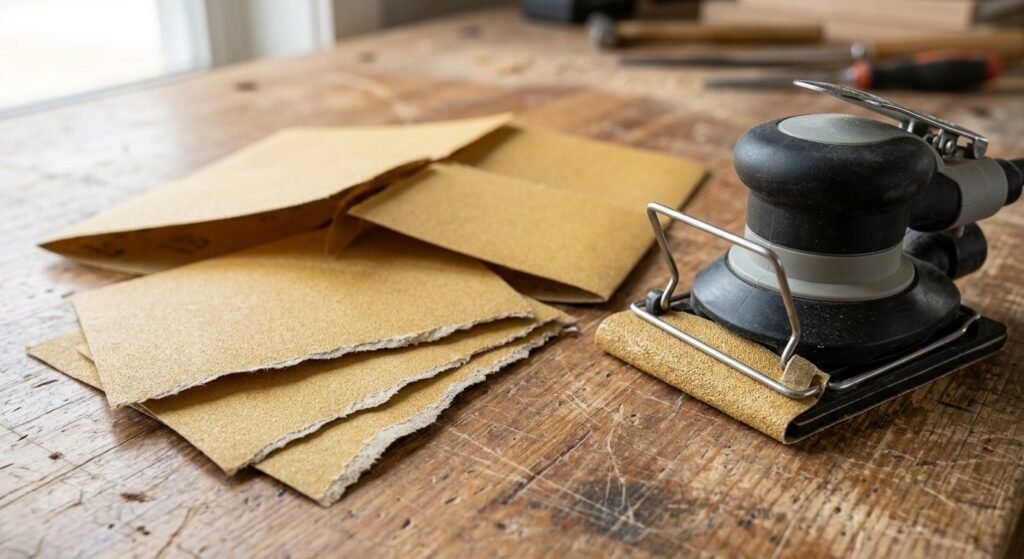 Some sanders even come with a small template to make marking easier.
There is one catch. Plain sheets have no holes, so a vacuum port will not work until you punch some. A cheap punch plate fixes this in a few minutes. If you do not want to bother, pre cut packs with holes are ready to go. They cost more, but they save time and give you good dust collection right away.
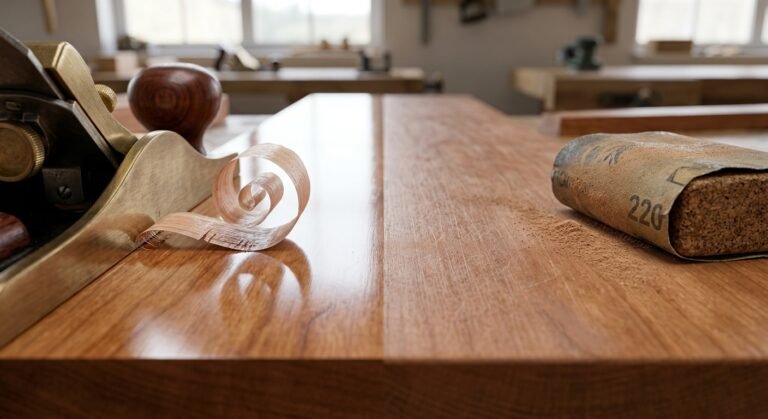
A practical middle path is this. Buy full sheets in coarse grits like 80 and 100 for rough work, where you will go through paper quickly, and buy pre cut hook and loop sheets in fine grits like 220 for final work, where you want the best dust control. It balances money and convenience.
The right sander depends on the job, so here is a simple guide to the best tool for each common task.
Use a quarter sheet palm sander for furniture, trim, small boxes, cabinet doors, and any sanding project with corners. It is also the best choice for light finishing between coats of varnish, because it is gentle and easy to control. If you are new to woodworking, start here.
Use a half sheet sander when you have large flat panels, long tabletops, doors, or plywood sheets. It covers more area per pass and keeps big surfaces flat. It also suits long hours of work, since a good half sheet model has a strong motor that does not bog down.
Use a random orbital sander when you want fast removal and a smooth result on open areas. The random motion of the disc does not repeat its path, so it leaves far fewer swirl marks than a fixed orbit tool does. That is why many people call it the best all round sander for furniture, decks, and even car work. But remember that its round shape cannot reach corners. If you choose a random orbital sander, plan to finish the corners by hand or with a palm sander.
So what about swirl marks that a sheet sander can leave? They usually show up when you press too hard, skip grits, or move across the wood grain. They are less common than with some other tools, but they do happen. Sand with the grain, change paper often, and let the tool do the work.
Use a belt sander only for rough jobs, like leveling a warped board or removing thick paint. It is not a finishing tool.
Here is a quick way to decide. If your work is mostly small and detailed, get a palm sander. If it is mostly big and flat, get a half sheet sander. If you want one tool that does a bit of everything and are willing to spend more on paper, get a random orbital sander. And if your budget allows only one, a random orbital sander is the one most woodworkers say they would pick first.
The palm sander vs sheet sander debate is really a question of size and purpose. A palm sander is a small quarter sheet tool that is light, cheap, and great for corners and finishing. A larger sheet sander covers more area and is better for big flat surfaces. A random orbital sander removes wood faster and leaves a very smooth finish on open areas, but it costs more to feed with paper and cannot reach square corners.
None of them is the single best tool for everyone. The right choice depends on what you build, how often you sand, and how much you want to spend. Many shops end up with two types, and that is a perfectly good plan.
Before you buy, think about your next three projects. Write down the biggest surface and the tightest corner. Those two details will point you to the right sander faster than any review. Then pick a model with a good dust port, a comfortable grip, and variable speed, and you are ready to sand.
Not exactly. A palm sander is a small, one handed type of sheet sander, usually a quarter sheet size. The term sheet sander is wider and also covers larger half sheet models. In casual talk, many people use the two names for the same tool, so always check the pad size before you buy.
Both work well, but a palm sander is cheaper and easy to control. A random orbital sander is faster and leaves fewer marks, which many beginners like. If you mostly work on furniture with corners, start with a palm sander. If you work on flat open surfaces, a random orbital sander is a great first buy.
Yes, for small areas. It can smooth joint compound patches and remove thin paint with coarse grit paper. For large walls, a pole sander or a dedicated drywall sander is better, and for thick paint a scraper helps first.
A regular orbital sander moves its pad in the same small circle every time. A random orbital sander spins the disc and shakes it at the same time, so the path never repeats. That random motion removes wood faster and leaves fewer swirl marks.
It is worth it if you sand large flat panels often. The bigger pad saves time and keeps surfaces flat. For small projects and hobby use, a quarter sheet model is usually enough and much easier on your arms.
For raw wood, start with 80 or 100 grit, move to 120 or 150, and finish with 180 or 220. Do not skip more than one step, or the finer paper will not remove the deeper scratches. For painted surfaces, 220 grit is often all you need.
A built in dust bag is fine for quick jobs. For longer work, connect a shop vacuum to the dust port, since it keeps the air cleaner and helps the paper last longer. Wear a dust mask in either case.