Physical Address
304 North Cardinal St.
Dorchester Center, MA 02124
Physical Address
304 North Cardinal St.
Dorchester Center, MA 02124

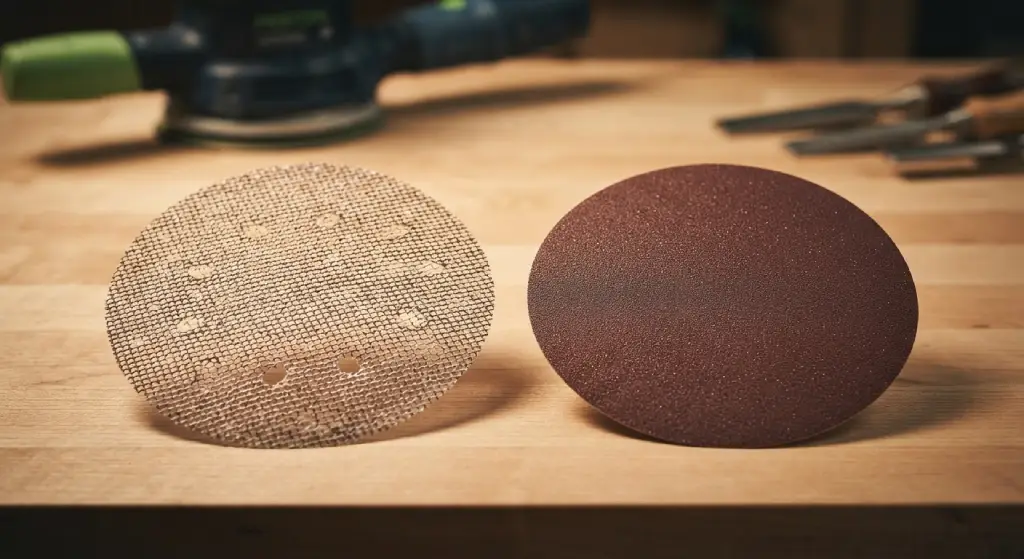
Walk into any hardware store and you’ll find two main types of sanding discs staring back at you: mesh and paper. Both promise a smooth, professional finish, but they work in completely different ways. If you’ve ever stood in the sandpaper aisle wondering whether to grab the mesh sanding discs or stick with traditional paper sanding discs, you’re not alone.
This decision matters more than you might think. The right abrasive can save you hours of work, reduce dust in your garage, and leave your project looking like it came from a professional shop. The wrong one can clog within minutes, tear apart on tough spots, or leave swirl marks that ruin an otherwise great paint job.
In this guide, we’ll break down exactly how mesh sanding discs and paper sanding discs differ, where each one shines, and which option makes sense for your next sanding job. Whether you’re tackling drywall sanding, refinishing furniture, or smoothing metal parts, you’ll walk away knowing exactly which disc belongs on your sander.
Mesh sanding discs are abrasive discs built on an open-weave mesh backing instead of solid paper. Picture a window screen coated with abrasive grains, and you’ve got a good idea of what a mesh disc looks like. This open mesh structure is the defining feature that separates it from every other sanding product on the market.
Because the mesh is woven rather than solid, it has holes running throughout the entire surface. This isn’t a design flaw. It’s the whole point.
A mesh sanding disc works by holding abrasive grains, often silicon carbide abrasive or aluminum oxide, across a web-like fabric base. As you sand, dust and debris pass straight through the holes in the mesh instead of sitting on top of the disc surface. This keeps the abrasive grains exposed and cutting, rather than buried under a pile of sanding dust.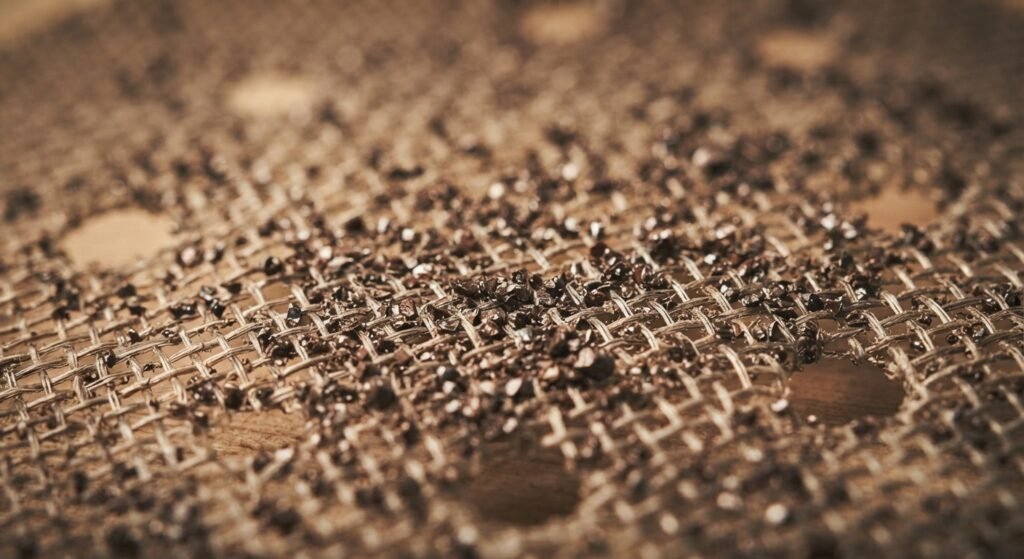
Most mesh discs attach to sanders using a hook and loop system, sometimes called a mesh hook backing, which makes swapping discs between grits quick and tool-free. Many come in an 8 hole or similarly perforated pattern that lines up with your random orbital sander’s dust extraction ports, pulling debris straight into your shop vac or dust collector.
Mesh discs are a favorite for drywall sanding, since drywall mud produces fine, powdery dust that clogs standard paper discs almost instantly. They also perform well on wood surfaces, painted furniture, and any job where dust control matters, like indoor renovations or finish sanding before staining. Many professionals who use a drywall sander exclusively reach for mesh discs because of how well they resist clogging on joint compound.
Paper sanding discs, sometimes called sand paper discs or paper-backed discs, use a solid paper or film backing coated with abrasive grit. Unlike mesh, there are no holes running through the surface. It’s a continuous, solid sheet of backing material with abrasive bonded to one side.
This paper backing vs mesh backing distinction is the core of the entire comparison, and it affects everything from durability to dust extraction.
With a paper sanding disc, abrasive grains sit on a solid backing, which means the entire surface stays in contact with your workpiece. There’s more surface area doing the sanding compared to a mesh disc, which has gaps where no abrasive touches the material. This solid paper design tends to give paper discs an edge in raw cutting power, especially at coarse grit levels like 80 grit.
Dust, however, has nowhere to escape. It builds up on the disc surface and in the paper’s pores as you work, which is the main trade-off you accept when you choose paper sanding over mesh.
Paper discs are the go-to choice for general woodworking, metal parts, and random orbital sanders used on exterior projects like decks or siding. They’re also common in auto body work and on belt sanders, where high stock removal matters more than dust control. If you’re doing heavy material removal on wood surfaces before switching to finer grits, paper sanding discs typically get the job done faster.
The paper or mesh sanding discs debate really comes down to a handful of factors: how each disc handles dust, how long it lasts, how much it costs, and the kind of finish it leaves behind.
Mesh discs excel at dust extraction and resist clogging, which makes them last longer on dusty materials like drywall mud. Paper discs offer stronger initial cutting power and tend to be cheaper per disc, which makes them appealing for jobs that use lots of sandpaper pads in a single session.
Grit range is another consideration. Both mesh and paper come in similar grit options, from coarse grit for stock removal to fine grits like 120 grit and 240 grit for finish work. However, mesh sanding discs are often described as making sanding mesh more economical over time, since fewer discs get thrown away due to clogging, even though the upfront cost per disc can be slightly higher.
Mesh sanding discs offer several clear benefits. Their open mesh design allows dust to pass through instead of collecting on the surface, which means less clogging and a more consistent cut throughout the disc’s life. This also translates to better dust extraction when paired with a vacuum-equipped sander, keeping your workspace and lungs cleaner.
Because they resist clogging, mesh discs typically last longer than paper on dusty jobs like drywall sanding or sanding old paint. Many users also find that the mesh structure sands more evenly, since the grit wears down more uniformly across the disc surface rather than wearing out in just the center.
Mesh discs aren’t perfect. They generally cost more per disc than standard paper sanding discs, which adds up on large projects. The open mesh structure also means less total abrasive surface touches the material at any given time, so some users find mesh cuts a bit slower on dense hardwoods or metal compared to a solid paper disc. Mesh discs can also feel less rigid on certain sanders, which may take some getting used to if you’re switching over from paper.
Paper sanding discs are widely available, affordable, and familiar to most people who’ve ever picked up a power sander. Their solid backing provides full surface contact, which often means faster material removal, especially at coarse grit. Paper discs also tend to hold their shape well, work great for wet sanding when using wet and dry variants, and pair nicely with belt sanders and random orbital sanders alike for heavy-duty tasks.
The biggest downside of paper sanding discs is clogging. Without anywhere for dust to escape, the disc surface quickly fills with debris, especially on soft materials like drywall mud or fresh paint. This shortens the disc’s usable life and often means buying far more discs for discs for random orbital sanders over the course of a project. Paper discs can also tear more easily on edges and corners compared to the flexible mesh material.
When people ask which sanding disc lasts longer, the honest answer depends on the material you’re sanding. On drywall mud, paint, or other dust-heavy surfaces, mesh discs almost always last longer because they resist clogging. On hardwood or metal, where clogging is less of an issue, paper discs can hold up just as well, and sometimes longer, thanks to their denser abrasive coverage.
Cost-wise, paper sanding discs usually win on price per unit. You’ll often find a bigger pack of paper discs for the same price as a smaller pack of mesh. However, value isn’t just about sticker price. If you’re constantly swapping out clogged paper discs on a drywall sanding job, you might spend more in the long run buying replacements than you would on a single set of mesh discs that keeps performing.
A good rule of thumb: choose mesh if you’re sanding drywall, joint compound, or anything that produces fine powdery dust. Choose paper if you’re working with wood or metal where dust clogging is less of a concern, and you want the lowest upfront cost.
Dust extraction is where mesh sanding discs truly separate themselves from paper. The open mesh structure lets dust fall through the disc and into your sander’s vacuum port or dust bag, rather than accumulating on the abrasive surface. This keeps the grit exposed and cutting longer, and it also means less airborne dust in your workspace, which matters a lot when sanding drywall indoors.
Paper discs, by contrast, trap dust against the backing. Over time, this buildup reduces the disc’s cutting ability and can even cause overheating on tougher materials. Some paper discs include small holes to improve dust extraction, but these still don’t match the consistent airflow you get from a true mesh design.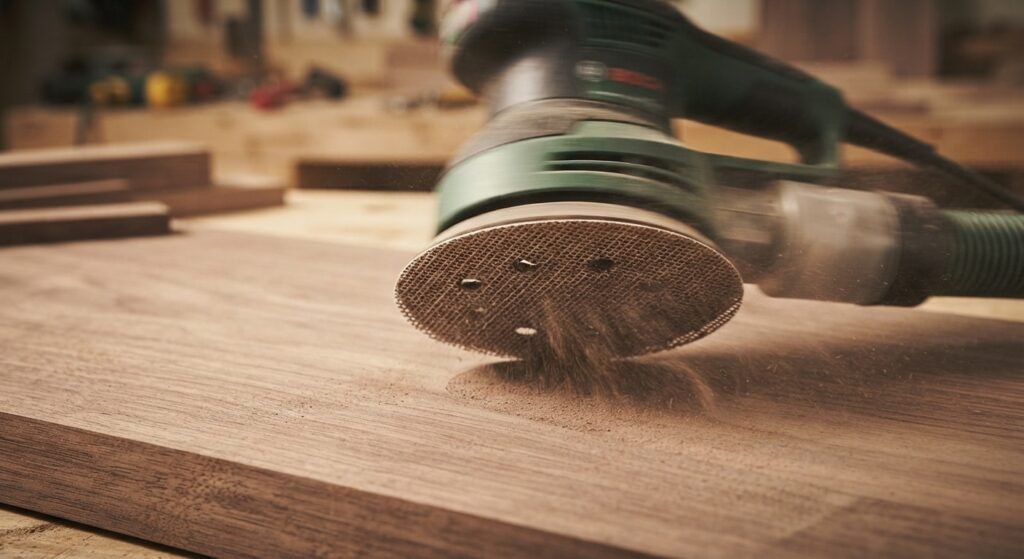
If dust control is your top priority, perhaps because you’re sanding indoors or dealing with lead paint or drywall mud, mesh is almost always the smarter choice. If you’re working outdoors or in a well-ventilated shop where clogging matters less, paper remains a solid, budget-friendly option.
Performance differences between mesh and paper show up most clearly at the extremes of the grit range. At coarse grit, like 80 grit, paper discs often cut faster thanks to their solid, continuous abrasive surface. This makes them a strong pick for aggressive material removal on wood surfaces or metal parts.
At finer grits, like 120 grit or 240 grit, the difference narrows considerably. Both mesh and paper can produce a smooth, even finish, though many users report that mesh discs feel more consistent over the life of the disc since they don’t bog down with trapped dust. For hand sanding or light touch-ups, a sanding sponge or fine mesh pad can also deliver excellent results without leaving visible scratch patterns.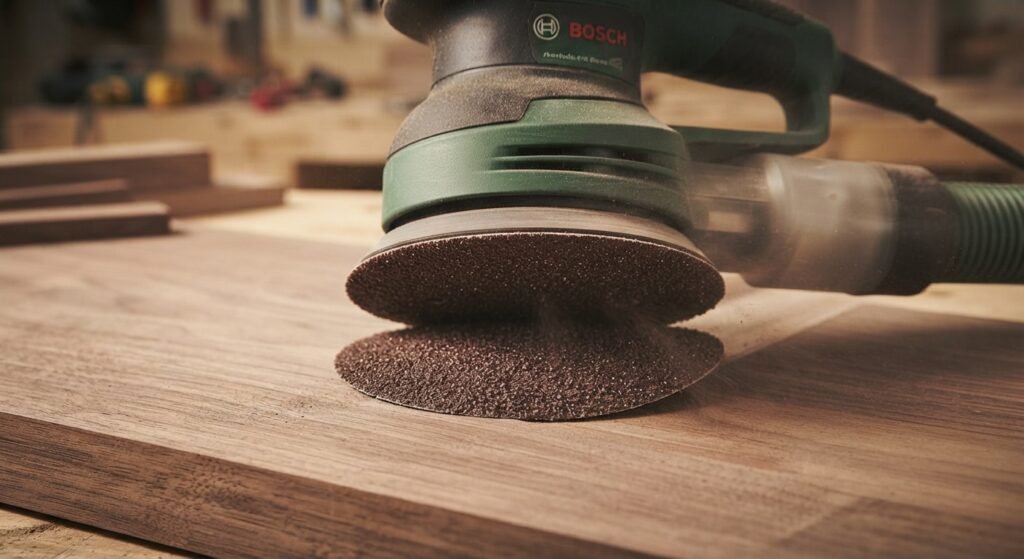
Ultimately, the finish you get depends just as much on technique and sander speed as it does on the disc itself. Using the right grit for the job, working in smooth and even passes, and switching discs before they wear out matters more than which backing material you choose.
So, paper or mesh sanding discs: which one actually deserves a spot in your toolbox? The honest answer is both, depending on the task in front of you.
Choose mesh sanding discs if you’re sanding drywall, joint compound, or other dust-producing materials, especially indoors where dust extraction matters. They’ll resist clogging, last longer, and keep your workspace cleaner.
Choose paper sanding discs if you’re working with wood or metal, need strong coarse-grit cutting power, or want to keep costs low on a big job. They’re reliable, familiar, and widely available in nearly every grit option you could need.
Many experienced DIYers and professionals actually keep both on hand. They’ll load mesh discs for drywall sanding and finish work, then switch to paper for heavy stock removal on wood or metal. There’s no rule saying you have to pick just one. The smartest approach is matching the disc to the material, not committing to one type for every job you tackle.
Before your next project, take a look at what you’re actually sanding and how much dust control you need. That one decision will tell you almost everything about which disc belongs on your sander.
Is mesh or paper better for sanding drywall?
Mesh sanding discs are better for drywall sanding because their open mesh structure lets fine dust pass through instead of clogging the surface. This keeps the disc cutting efficiently and reduces airborne dust during indoor jobs.
Do mesh sanding discs last longer than paper discs?
On dusty materials like drywall mud or paint, mesh discs typically last longer since they resist clogging. On wood or metal, paper discs can last just as long, sometimes longer, thanks to their solid abrasive coverage.
Which type of sanding disc cuts faster?
Paper sanding discs usually cut faster at coarse grit levels, like 80 grit, because their solid backing provides full abrasive contact with the surface. Mesh discs can feel slightly slower but stay consistent over time.
Can I use mesh sanding discs on a random orbital sander?
Yes, most mesh sanding discs are designed with hook and loop backing and dust extraction holes that fit standard random orbital sanders perfectly.
Are mesh sanding discs more expensive than paper?
Mesh discs often cost more per disc upfront, but they can offer better value over time since they need replacing less often on dust-heavy jobs.
What grit should I use for drywall sanding?
Most drywall sanding jobs start with 120 grit for smoothing joint compound, then move to 150 or 220 grit for a final, smooth finish before painting.
Can paper and mesh discs be used together on the same project?
Absolutely. Many professionals use paper discs for heavy material removal, then switch to mesh discs for finish work or dust-sensitive stages like drywall sanding.