Physical Address
304 North Cardinal St.
Dorchester Center, MA 02124
Physical Address
304 North Cardinal St.
Dorchester Center, MA 02124

Every professional woodworker knows that a flawless finish starts long before the final coat of varnish hits the wood. Surface preparation is the foundation of quality craftsmanship and the right sanding machine for wood makes the difference between a piece that looks hand-crafted and one that looks hand-finished. Whether you’re leveling glued-up panels, refining curves on custom furniture, or stripping paint and varnish from reclaimed lumber, the machine you reach for matters enormously.
Before diving into specific equipment, it’s worth grounding yourself in the broader principles of abrasive work. Our ultimate guide to woodworking sanding techniques covers the full spectrum from grit selection to grain direction giving you the strategic foundation to get the most from any machine in your shop.
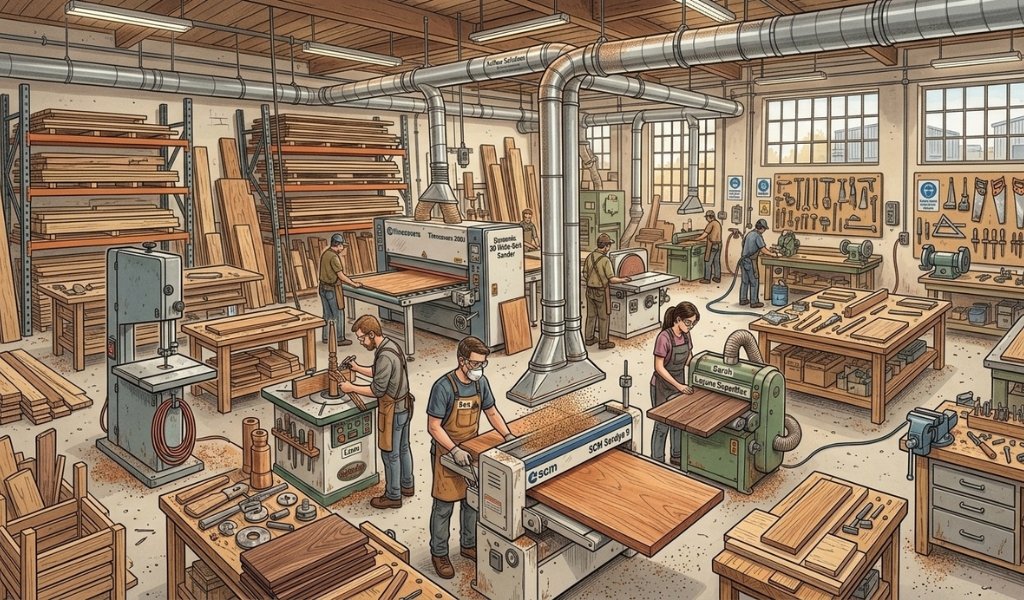
The modern market offers a full range of sanding machines, from compact benchtop units to wide industrial workhorses capable of processing sheet goods in seconds. Understanding which category of machine suits your workflow isn’t just about horsepower or price. It’s about matching the tool to the task and knowing when a stationary machine outperforms a handheld unit, or when a random orbit sander is the smarter call for detail work.
This guide breaks down every major category of heavy-duty wood sanding machine, walks through the key specs that separate capable tools from compromised ones, and shows you how to build a sanding toolkit that handles everything from aggressive stock removal to ultra-fine surface prep for finishing.
Walk into any serious shop and you’ll find both stationary machines and handheld power tools on the floor. Knowing when to use each category and why is one of the marks of an experienced woodworker.
Stationary sanding machines are built for consistency. Because the workpiece moves against a fixed abrasive surface, the operator controls feed rate and pressure without managing the tool’s movement at the same time. This separation of variables means more uniform results, especially when removing material across large, flat panels or when precise thickness reduction is required.
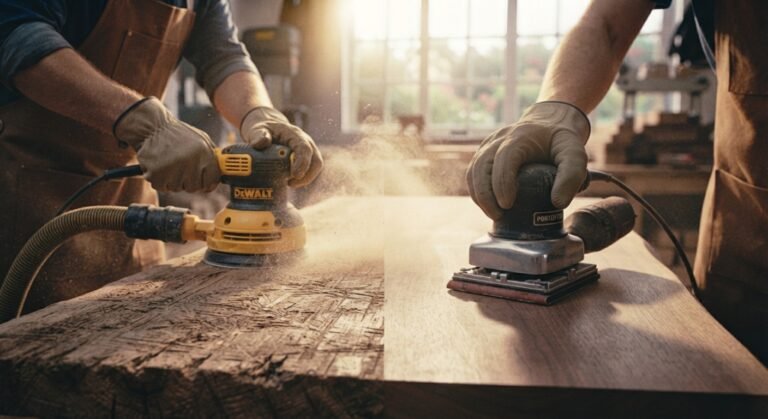
Handheld power tools including belt sanders, random orbital sanders, and detail sanders offer portability and adaptability. They’re ideal for in-place work, irregular shapes, and areas where moving the workpiece to a stationary machine is impractical. However, they demand more operator skill to achieve consistent results. Uneven pressure leads to dips; moving too slowly causes burns; moving too fast leaves scratches.
The bottom line: stationary machines excel at high-volume, repeatable stock removal. Handheld tools handle detail, portability, and finishing work where a machine can’t reach.
The tipping point usually comes down to volume and consistency. If you’re sanding more than a handful of boards per session, or if you’re consistently fighting to achieve a flat, even surface with a handheld belt sander, it’s time to look at stationary equipment. Professional results at scale require professional sanding equipment and that means machines designed for repetitive, heavy-duty use rather than occasional passes.
Not all stationary sanding machines are designed for the same sanding tasks. Here’s a breakdown of the major categories and where each one earns its keep.
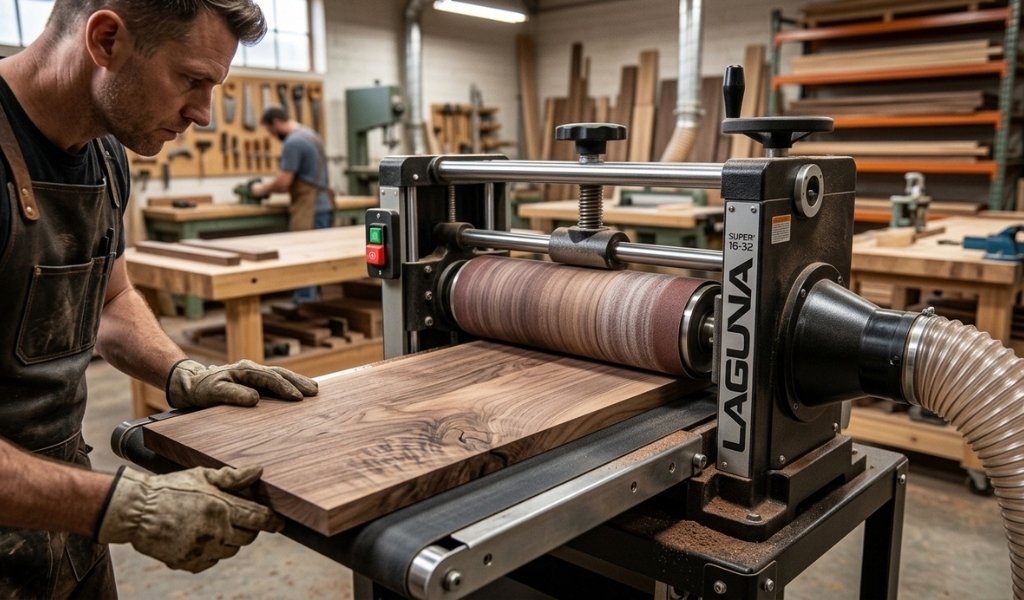
The drum sander is the workhorse of thickness-sanding. A rotating sanding drum mounted over a conveyor feed table allows boards to pass through at a controlled rate, emerging with a consistent thickness and a clean, smooth surface.
Model sizing refers to the maximum width capacity in a single pass or with two passes (using the flip-and-run technique). A 16-32 drum sander handles boards up to 32 inches wide using two passes, while a 25-50 open stand model can manage panels up to 50 inches wide large enough for most cabinet doors and wide glue-ups.
Drum sanders are especially effective for sanding large panels, flattening glued-up slabs, and removing mill marks from rough-sawn lumber. Variable speed settings on the conveyor allow operators to adjust feed rate based on hardwood density and abrasive grit. A sander delivers far more consistent results here than any handheld approach could achieve on wide stock.
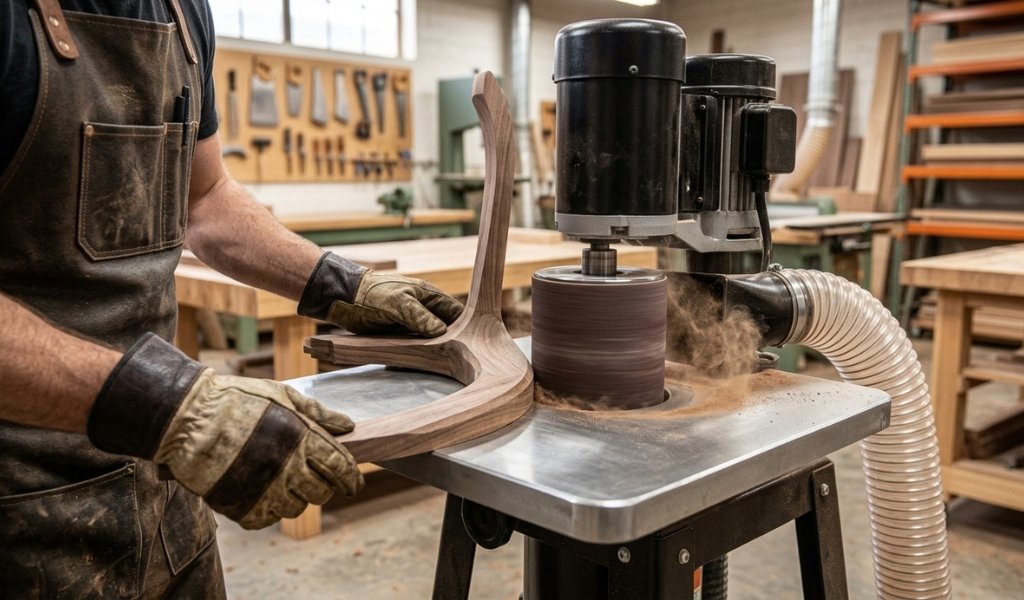
Prepping a surface with internal curves like a chair rail, a routed profile, or a scrolled panel edge calls for a spindle sander. These machines use a vertical sanding drum that simultaneously rotates and oscillates up and down, distributing wear evenly across the abrasive sleeve and reducing heat buildup.
Oscillating spindle sanders are the perfect tool for sanding curved edges without introducing flat spots. A range of abrasives in various drum diameters allows the operator to match the spindle size to the curve radius, making it ideal for removing material precisely along complex profiles.
For shops where floor space is limited, disc and belt combination machines punch well above their weight. A horizontal or tilting belt sander paired with a vertical disc sander often sharing a single motor handles everything from edge squaring to end-grain flattening to rapid stock removal on smaller workpieces.
The disc sander component uses a circular abrasive mounted on a rotating plate, ideal for removing paint and varnish from flat surfaces or cleaning up mitered ends. Combination machines from manufacturers like Bosch sanders and other industrial brands often include adjustable tables, miter gauges, and dust ports making them a surprisingly capable addition to any professional shop.
When production volume demands it, nothing competes with an industrial wide-belt sander. These machines are designed for a range of applications at scale from sanding furniture components to processing veneer panels at consistent thickness tolerances measured in thousandths of an inch.
Wide-belt sanders are sanders built for achieving a flawless finish on large flat surfaces with minimal operator input. Feed rates, pressure settings, and belt speed are typically adjustable, and some models include multiple sanding heads for simultaneous rough and finish sanding in a single pass. For cabinet shops, flooring manufacturers, and production woodworking operations, these machines represent the top of the professional wood sanding equipment hierarchy.
Wood floor sanding is a discipline of its own with machinery designed specifically for the demands of refinishing wood furniture and structural hardwood flooring at floor level.
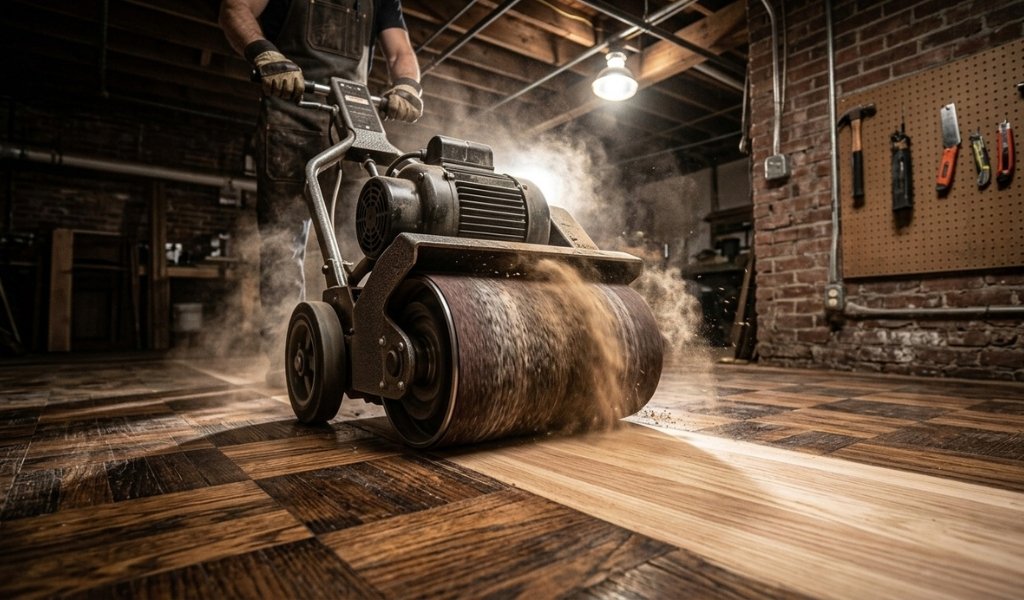
The electric walk-behind drum floor sander is the standard tool for wood floor sanding. It uses a large sanding drum driven by a powerful electric motor to aggressively remove old finishes, surface damage, and oxidation from hardwood floors. Contractors and DIY enthusiasts both use this equipment, though the learning curve is steep an unattended drum sander left stationary for even a second will cut a visible groove into the floor.
Best practices for the best floor results include using coarse grits to remove the existing finish and level the surface, followed by progressively finer grits to refine the wood underneath before applying a fresh coat of paint or varnish. Walk-behind drum floor sanders are the best sander for refinishing large, open floor areas nothing else achieves the same combination of material removal rate and final surface quality.
Multi-disc floor buffers complement drum sanders by handling the edges, transitions, and surface refinement that a walk-behind machine can’t reach. An orbital floor buffer uses a circular motion to blend the field of the floor with the edges eliminating the sanding marks that a drum sander can leave behind.
For hardwood floor refinishing, the final passes with a multi-disc buffer and fine-grit abrasives are what separate a truly professional result from an amateur one. The sanding process at this stage is less about removing material and more about achieving a uniform surface ready for staining or finishing.
Choosing the right machine goes beyond brand names. These are the specifications that determine long-term performance and reliability.
Motor horsepower is the primary determinant of how a machine handles dense hardwoods and heavy stock removal. Underpowered machines bog down under load burning abrasives faster, producing uneven surfaces, and wearing out motors prematurely. For drum sanders handling hardwoods, look for a minimum of 1.5 HP; industrial wide-belt sanders typically run 5 HP or higher.
Variable speed settings matter equally. Different species, grit sequences, and finishing stages require different feed rates and drum speeds. A machine without speed control locks you into a one-size-fits-all approach that compromises results across the sanding process.
Fine wood dust is both a health hazard and a fire risk. Sanders are designed with varying levels of integrated dust collectionsome include fabric bags, others require connection to a dedicated dust collector via a vacuum port.
For professional shop use, vacuum port adaptability is non-negotiable. Machines that accept standard 4-inch or 2.5-inch dust collection hose connections allow integration into a centralized system, keeping the shop safe and the abrasives clean. Dust-laden abrasives load faster, cut slower, and leave scratches on finished surfaces.
Brushless motor technology is increasingly appearing across professional woodworking tools and for good reason. Brushless motors run cooler, draw power more efficiently, and last significantly longer than brushed equivalents because there are no carbon brushes to wear down.
For stationary machines that run continuously through production cycles, the ergonomic and operational advantages of brushless engineering translate directly into lower maintenance costs and more consistent performance over time. When comparing machines at similar price points, brushless motor construction is a meaningful differentiator.
No single machine handles every sanding task. A well-equipped shop uses stationary units and handheld power tools in combination each covering the ground the other can’t.
For a complete breakdown of recommended tools across every sanding category from industrial machines to finishing sanders our wood sanding tools resource covers the full range of machines and accessories that professional shops rely on.
A drum sander or wide-belt machine handles thickness and flatness at scale. Your handheld belt sander steps in for edge work, in-place material removal, and pieces too large or awkward for a stationary feed table. Detail sanders access corners and profiles that no stationary machine can reach. The key is understanding that these tools don’t compete they complement each other, each covering the work the other can’t.
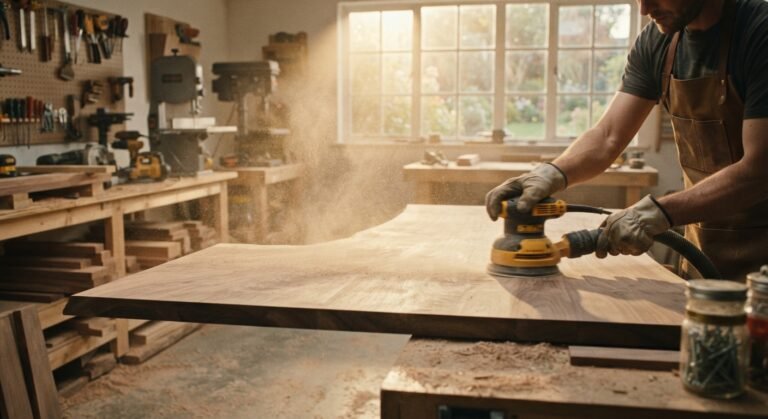
After heavy stock removal on a stationary machine, the sanding process shifts toward surface refinement and that’s where a random orbital sander earns its place. A random orbit sander uses a circular disc that simultaneously rotates and orbits in a random pattern, eliminating the cross-grain scratches that a straight orbital or belt sander leaves behind.
For furniture refinishing, final prep before staining, or achieving a smooth surface ready for a coat of paint or clear finish, a quality random orbital sander is the right tool. Finding the right sander for this stage of the process makes a measurable difference in how well the finish adheres and how uniform it looks. Our dedicated article on random orbit sanders covers model comparisons, grit progression strategies, and technique guidance in full detail worth reading before making a purchase.
An angle grinder fitted with a sanding disc or flap disc offers an aggressive material removal option that falls outside the traditional sanding equipment category but fills an important niche. For removing paint from wood, shaping rough stock quickly, or contouring curved surfaces where a belt sander would be awkward, the angle grinder with the right abrasive attachment is a capable and fast solution.
The tradeoff is control: angle grinder sanding discs remove material quickly and require a steady hand to avoid gouging. Used correctly on appropriate tasks, this tool bridges the gap between grinding and sanding in ways that traditional woodworking sanders can’t match.
The main categories of stationary wood sanding machines include drum sanders, oscillating spindle sanders, disc and belt combination machines, and industrial wide-belt sanders. Each is designed for specific sanding tasks: drum sanders handle thickness and flatness on wide boards, spindle sanders work curved edges, combination machines offer benchtop versatility, and wide-belt sanders process large panels at production scale. Handheld power tools including belt sanders, random orbital sanders, and detail sanders complement stationary machines for portable and fine prep work.
A drum sander uses a single cylindrical sanding drum above a conveyor feed table and is best suited for small to mid-size shops handling boards up to 50 inches wide. A wide-belt sander uses a continuous abrasive belt stretched between rollers, typically with a larger contact area and higher throughput. Wide-belt machines are designed for industrial use, offering greater speed, precision, and the ability to process large panels and veneer at consistent thickness tolerances. Drum sanders are more affordable and practical for professional shops that don’t require full production-line output.
Prioritize motor horsepower, variable speed controls, dust containment systems, and vacuum port adaptability. For drum and wide-belt sanders, also evaluate maximum width capacity, conveyor feed rate range, and table build quality. Brushless motor engineering is a meaningful advantage in machines intended for heavy daily use. Avoid underpowered machines they struggle with dense hardwoods, load abrasives faster, and produce inconsistent results.
Yes. Industrial sanding machines, particularly drum sanders and wide-belt sanders, are specifically designed for heavy-duty stock removal and surface leveling. With the correct abrasive grit (typically 36 to 80 for initial passes) and appropriate feed rate settings, these machines can flatten glued-up panels, remove mill marks from rough-sawn lumber, and bring oversized stock to precise thickness. The key is matching grit to the task and not overloading the machine by taking too aggressive a cut in a single pass.
Always keep the machine moving when the drum is in contact with the floor, stopping with the drum engaged will immediately cut a groove into the hardwood surface. Begin with a coarse grit (36 or 40) at a 45-degree angle to the grain to level the floor, then switch to progressively finer grits (60, 80, 100) sanding with the grain for the final passes. Wear a respirator and hearing protection, ensure adequate ventilation, and connect the machine to the dust bag system before starting. For edges and corners, switch to an edge sander or multi-disc buffer before applying any finish.