Physical Address
304 North Cardinal St.
Dorchester Center, MA 02124
Physical Address
304 North Cardinal St.
Dorchester Center, MA 02124

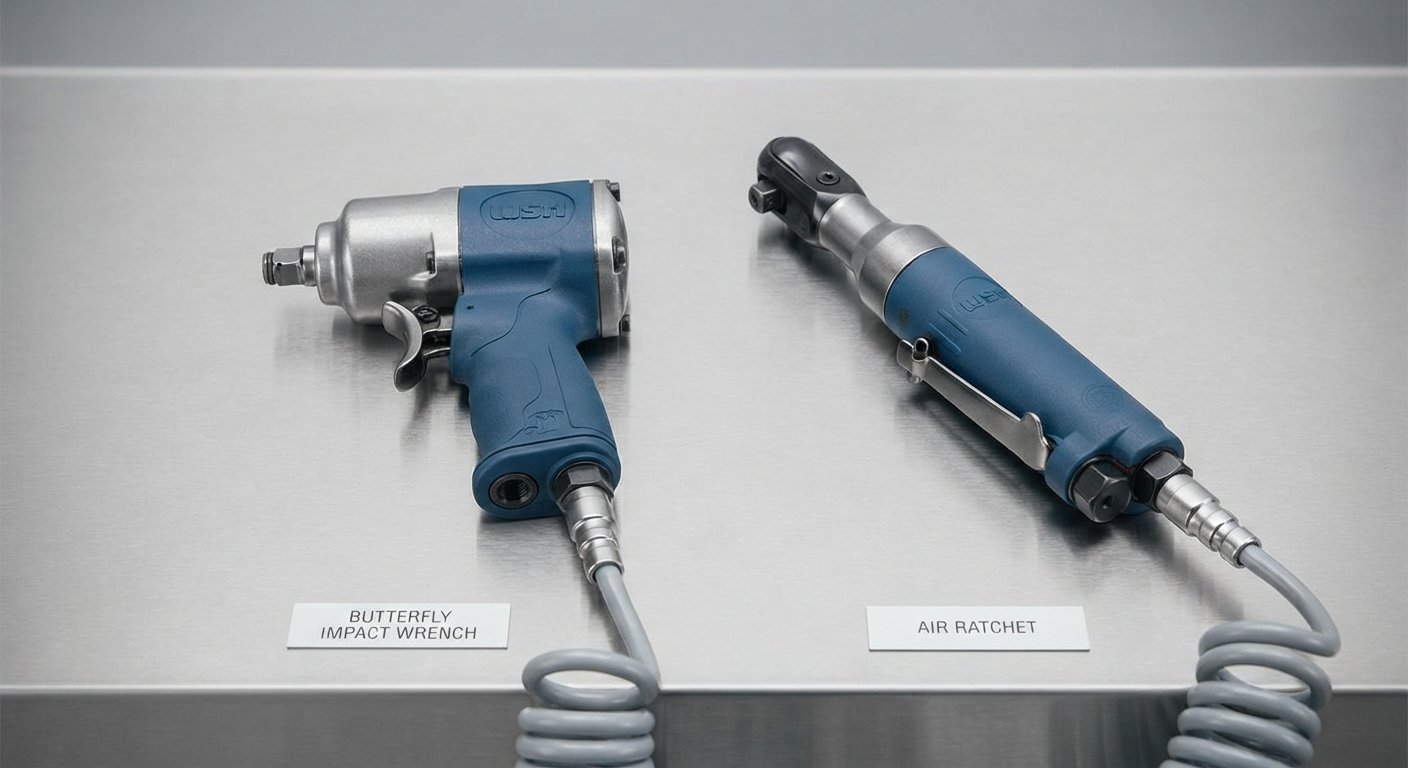
If you have ever stood in the tool aisle at Harbor Freight or Home Depot, staring at a wall of pneumatic tools, you already know how confusing it can be to pick between a butterfly impact wrench and an air ratchet. Both run on compressed air, both loosen and tighten fasteners, and both show up in nearly every mechanic’s toolbox. But they are not interchangeable, and choosing the wrong one for the job can cost you time, money, and a few skinned knuckles.
This guide breaks down exactly what separates a butterfly impact wrench from an air ratchet, how each tool works, and which one deserves a spot in your garage. Think of this as the ultimate guide to wrenches you will actually use, not just read once and forget. Whether you are rebuilding an engine, swapping a tire, or working in tight spaces under a tractor, understanding these two air tools will save you a lot of frustration down the road.
By the end, you will know exactly when to reach for an impact wrench and when a plain ratchet or air ratchet is the smarter choice. Let’s get into it.
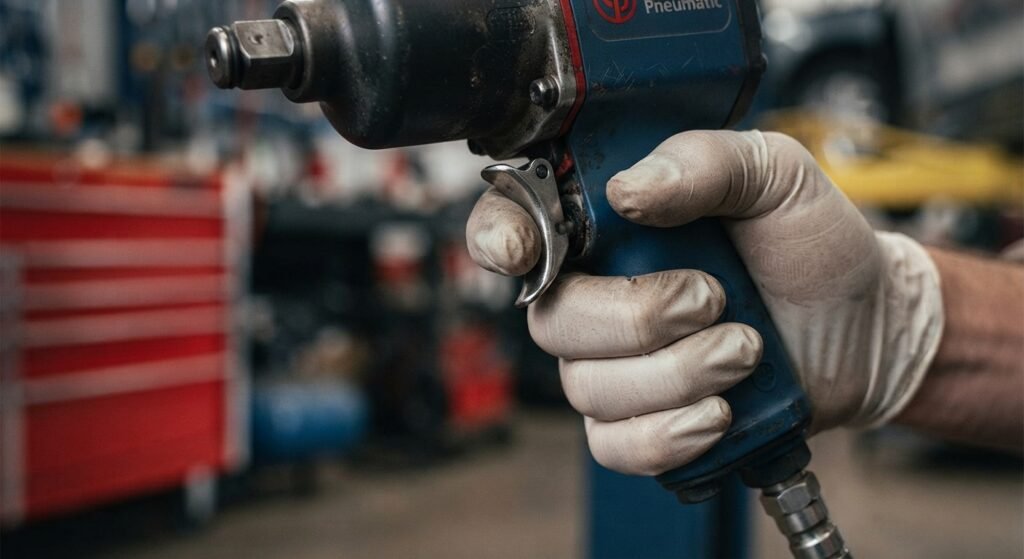
A butterfly impact wrench is a compact, lightweight air impact tool named for its distinctive butterfly-shaped trigger. Unlike a pistol-grip impact wrench, this trigger wraps around the body of the tool, which makes it easier to control with one or two fingers, even when you are wearing thick work gloves.
Despite its small size, a butterfly impact wrench packs a surprising amount of torque. Brands like Aircat and Ingersoll Rand have built a reputation around these tools, offering models that rival larger impact guns in raw power while staying light enough to use overhead or in cramped engine bays.
A butterfly impact wrench connects to an air compressor through an air line and uses compressed air to drive an internal hammer mechanism. This hammer repeatedly strikes an anvil, delivering short, powerful bursts of rotational force to the socket. That hammering action is what generates the high torque output impact wrenches are known for, and it is also why these tools make a lot of noise when they are running.
The butterfly trigger design gives you more precise control over that hammering. Instead of squeezing a pistol-style trigger, you pinch the butterfly lever, which many mechanics find reduces hand fatigue during long jobs.
Butterfly impact wrenches shine in automotive work. Mechanics use them to remove and tighten lug nuts at a tire shop, break loose rusted bolts, and work on suspension components where space is tight. Because they are so compact, they are also popular for reaching fasteners buried deep in an engine bay or tractor undercarriage, places a full-size impact gun simply cannot fit.
If you have ever watched someone at a quick-lube shop spin off a wheel in seconds, there is a good chance they were using a butterfly impact wrench.
An air ratchet, sometimes just called a rachet by folks at the shop, looks and functions a lot like a hand ratchet, except it is powered by compressed air instead of your wrist. It uses a socket drive, typically 1/4 inch or 3/8 inch, and ratchets back and forth to turn a bolt or nut without the hammering impact you get from an impact wrench.
Craftsman, Aircat, and Ingersoll Rand all make solid air ratchet options, and prices vary widely depending on build quality and torque spec.
An air ratchet uses a rotary vane motor powered by your air compressor. Instead of hammering like an impact wrench, it spins a gear mechanism that drives the socket in a continuous rotation, just like a hand ratchet but much faster. There is no striking action, which means less torque overall, but also less wear on the fastener and a quieter, smoother operation.
This smoother motion gives you finer control, which matters when you are working with delicate fasteners or need to avoid stripping a bolt.
Air ratchets are the go-to tool for jobs that need speed without brute force. Think interior trim panels, intake manifolds, or any fastener where using a plain ratchet by hand would take forever but an impact wrench would be overkill or risk damaging the part. Mechanics often reach for an air ratchet when working on smaller nuts and bolts around an engine, where access is tight but the fastener does not need high torque to loosen.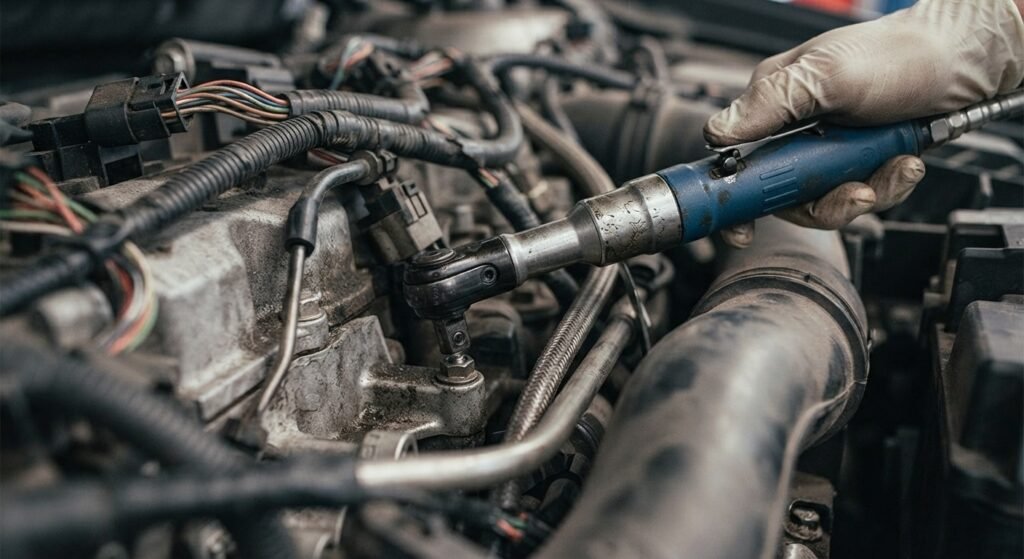
They are also popular for general automotive maintenance, light assembly work, and any task where a breaker bar would be too aggressive but hand tools would be too slow.
Now that you understand what each tool does on its own, let’s compare them directly across the factors that matter most when deciding which one to buy or grab off the shelf.
This is where the butterfly impact wrench clearly wins. Thanks to its hammering mechanism, it delivers significantly higher torque, often measured in ft lbs, which makes it the right choice for breaking loose stubborn, rusted, or over-tightened fasteners. An air ratchet simply cannot match that output because it relies on continuous rotation rather than repeated impacts.
If you are dealing with a seized bolt or a lug nut that has not budged since the Clinton administration, the impact wrench is your tool.
Air ratchets take the win here. Because they spin continuously rather than hammering, you get smoother, more predictable control over how fast a fastener tightens or loosens. This matters when you are working with soft metal threads, plastic housings, or any part that could get damaged by too much sudden force.
A butterfly impact wrench is powerful, but that power comes with less finesse. It is built for speed and force, not precision.
Butterfly impact wrenches are generally more compact than standard impact guns, but air ratchets still tend to have a slimmer profile overall, especially around the head. This makes air ratchets better suited for extremely tight spaces, like behind an intake manifold or inside a dashboard, where even a small impact wrench cannot fit.
That said, the butterfly design was specifically created to close this gap, so if accessibility and torque both matter, a quality butterfly impact wrench often strikes a good middle ground.
The honest answer is that neither tool is universally better. It depends entirely on the task.
For tire shops, suspension work, and anything involving large, heavily torqued bolts, a butterfly impact wrench gets the job done faster and with less physical effort. For detail work, smaller fasteners, or situations where you need to avoid over-tightening, an air ratchet is the smarter pick.
Many professional mechanics keep both in their tool box for exactly this reason. They will use the impact wrench to break loose and remove bigger bolts, then switch to the air ratchet for final adjustments or smaller hardware nearby. If your work is limited to oil changes and tire rotations, a single butterfly impact wrench might cover most of your needs. If you spend more time doing interior or engine assembly work, an air ratchet earns its spot in the box.
Butterfly Impact Wrench
Pros:
Cons:
Air Ratchet
Pros:
Cons:
Picking between a butterfly impact wrench and an air ratchet comes down to three practical questions.
First, consider the torque spec you actually need. If you regularly deal with rusted bolts, lug nuts, or anything torqued down tight from the factory, go with the impact wrench. If your work involves lighter fasteners that just need speed, the air ratchet will serve you better.
Second, think about your air compressor. Impact wrenches typically demand more air volume and pressure to perform well, so check your compressor’s CFM rating before investing in a higher-torque model. An underpowered compressor will leave even the best impact wrench feeling sluggish.
Third, factor in your budget and how often you will use the tool. Brands like Aircat, Craftsman, and Ingersoll Rand offer tools across a range of prices, and spending more generally gets you better build quality, a stronger warranty, and more consistent performance. If you are a weekend mechanic working on one car, a mid-range option at a reasonable price point is probably plenty. If you are running a shop, investing in a higher-end model from a trusted brand will pay off through durability and fewer repairs.
Many experienced mechanics recommend owning both tools rather than trying to make one do everything. They are not competitors so much as teammates, each one covering a gap the other leaves behind.
There is no single winner in the butterfly impact wrench vs air ratchet debate because they are built to solve different problems. The impact wrench brings the torque and speed you need for heavy-duty fastener removal, while the air ratchet brings the control and access you need for detailed work in tight spaces.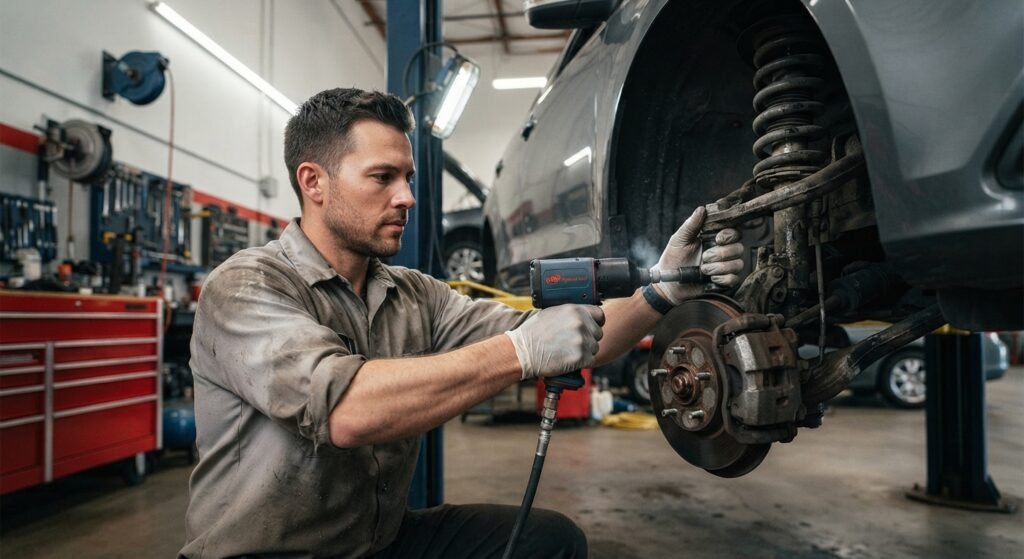
If you only buy one tool right now, think about the jobs you do most often. Tire shops and heavy automotive work lean toward the impact wrench. Detail-oriented mechanical work leans toward the air ratchet. And if your garage sees a mix of both, saving up for the pair will make nearly every job faster and easier.
Before you buy, double check your air compressor’s output, read a few reviews from other users, and inspect the warranty terms, since pneumatic tools take a beating over time. A little research now saves you from buying a tool that cannot keep up with your work later.
Is a butterfly impact wrench more powerful than an air ratchet?
Yes. A butterfly impact wrench uses a hammering mechanism that delivers significantly more torque than an air ratchet, making it better suited for breaking loose tight or rusted fasteners.
Can an air ratchet replace an impact wrench?
Not for heavy-duty work. An air ratchet is great for smaller fasteners and tight spaces, but it lacks the torque to handle stubborn bolts the way an impact wrench can.
What size air compressor do I need for a butterfly impact wrench?
It depends on the specific model, but most butterfly impact wrenches need a compressor with a solid CFM rating to maintain consistent power. Check the manufacturer’s spec sheet before buying.
Are Aircat tools good for beginners?
Aircat is a well-regarded brand known for durable, reasonably priced pneumatic tools, including both butterfly impact wrenches and air ratchets. They are a solid option for beginners and professionals alike.
Why is my air ratchet losing power?
This is often caused by a worn air line, low compressor pressure, or a buildup of debris inside the tool. Regular maintenance and a clean air supply usually solve the issue.
Do I need both a butterfly impact wrench and an air ratchet?
If you do a variety of automotive or mechanical work, yes. Many mechanics use the impact wrench for heavy fasteners and the air ratchet for smaller, harder-to-reach hardware, since the two tools complement each other well.
Is a cordless impact wrench a good alternative to a pneumatic one?
Cordless impact wrenches from brands like DeWalt offer convenience without needing an air compressor, but pneumatic models generally deliver more consistent torque for heavy, repeated use in a shop setting.