Physical Address
304 North Cardinal St.
Dorchester Center, MA 02124
Physical Address
304 North Cardinal St.
Dorchester Center, MA 02124

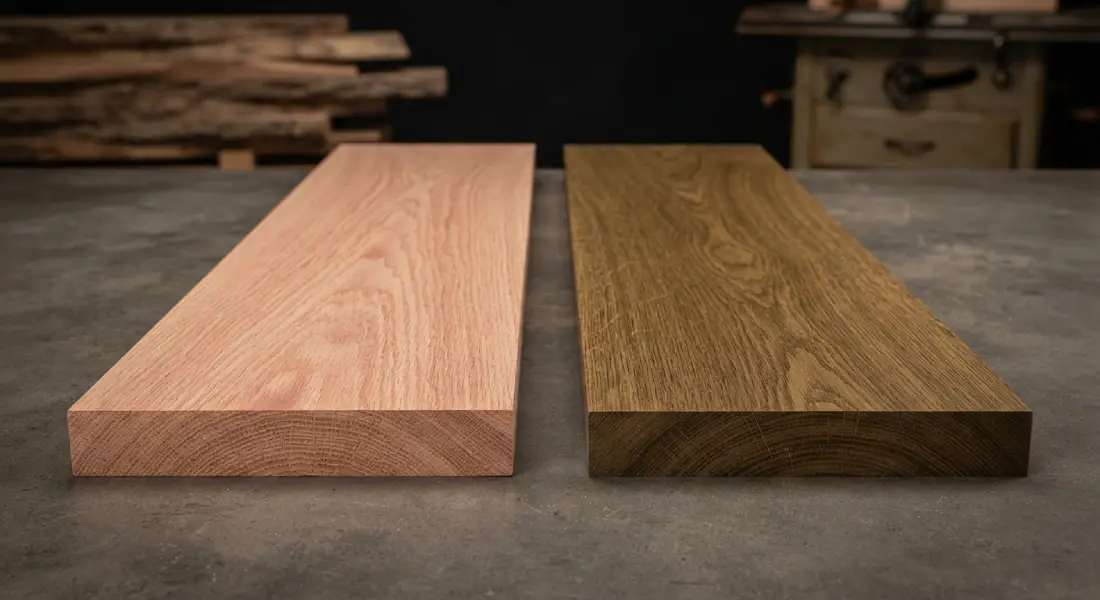
If you have ever stood in a lumber yard trying to decide between two nearly identical stacks of oak boards, you already know how confusing this choice can be. Red oak and white oak look similar at first glance, but they behave very differently once you start cutting, staining, or building with them. Understanding the difference between red oak and white oak can save you money, prevent project failures, and help you pick the right wood for flooring, furniture, or outdoor structures.
This guide breaks down everything you need to know about red oak vs white oak, including strength, grain, cost, and the best uses for each. Whether you are a weekend woodworker or shopping for hardwood flooring, this comparison will help you choose with confidence. And if oak is not the only hardwood on your radar, our related guide on Acacia vs Oak covers how oak stacks up against another popular hardwood option.
Oak trees are among the most common hardwood species in North America, and the oak tree family splits into two main groups: the red oak group and the white oak group. Each group contains several species, but when people talk about red oak vs white oak, they are usually referring to northern red oak and white oak specifically, since these are the varieties most widely sold as lumber and flooring.
Key characteristics: Red oak has a pinkish-red tone and an open, porous grain structure. White oak leans more olive-brown or grayish, with a tighter grain that makes it naturally more water resistant. Both are strong, dense hardwoods, but their cell structures differ enough to affect how each performs under moisture and stress.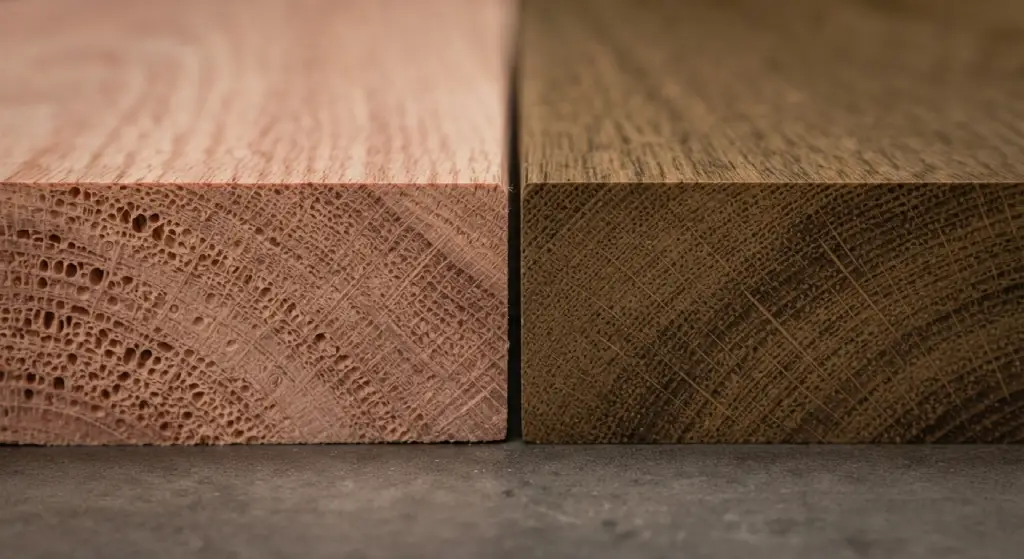
Appearance: At a glance, red oak and white oak can look similar, especially once stained. Red oak often shows a warmer, reddish hue with a busier, swirling grain pattern. White oak tends to look calmer and more uniform, with straighter grain lines and occasional darker streaks called mineral streaks.
Common uses: Red oak shows up frequently in furniture, cabinets, and interior trim because it is easier to work with and takes stain evenly. White oak is the go-to choice for wood flooring, outdoor furniture, barrels, and boat building, thanks to its superior moisture resistance.
The biggest differences between red oak and white oak come down to three things: grain structure, moisture resistance, and color. Red oak belongs to the red oak group, which includes species like northern red oak and southern red oak. These trees have pointed lobes on their leaves, and their wood contains open pores that run the length of the grain. This makes red oak more porous, so liquids can pass through it more easily.
White oak, on the other hand, belongs to the white oak group. White oak leaves have rounded lobes, and the wood itself contains a substance called tyloses that clogs the pores. This is why white oak is naturally more resistant to water damage and rot, and why it has historically been the wood of choice for wine barrels and shipbuilding.
Color is another noticeable difference between red and white oak. Red oak typically has a pink or reddish cast, while white oak looks more brown, gray, or olive. Once you place a red oak board next to a white oak board, the difference in tone becomes much easier to spot.
Both red oak and white oak are dense, strong hardwoods, but they are not identical in performance. White oak generally scores slightly higher on the Janka hardness scale, which measures a wood’s resistance to denting and wear. This makes white oak a strong choice for high-traffic wood flooring and heavy-use furniture.
Red oak, while slightly softer, is still an incredibly durable hardwood and handles daily wear well. Its open grain gives it a more prominent, textured look, which many woodworkers actually prefer for statement furniture pieces or rustic interior projects. White oak’s tighter grain gives it a smoother finish and a more subtle appearance, which some describe as more refined or formal.
In terms of workability, red oak tends to be a bit easier to cut, sand, and shape because of its slightly softer structure. White oak, being denser, can be tougher on tools but rewards the extra effort with a finished product that resists scratches and dents a little better over time.
This is where the difference between red oak and white oak becomes most important for real-world projects. Because white oak contains tyloses that block its pores, it resists water penetration far better than red oak. This is the exact reason white oak has been used for centuries in wine and whiskey barrels, boat decking, and outdoor furniture.
Red oak’s open grain structure means it absorbs moisture more readily. If red oak is exposed to consistent moisture without proper sealing, it is more prone to rot, warping, and staining from water damage. This does not mean red oak is a poor choice, but it does mean it belongs indoors or in climate-controlled spaces rather than outdoor decks or bathrooms.
In terms of appearance, white oak’s tighter grain often photographs and finishes more evenly, which is one reason it has become the top choice for modern hardwood flooring trends. Red oak’s more dramatic grain pattern can add warmth and character to a room, particularly in traditional or farmhouse-style interiors.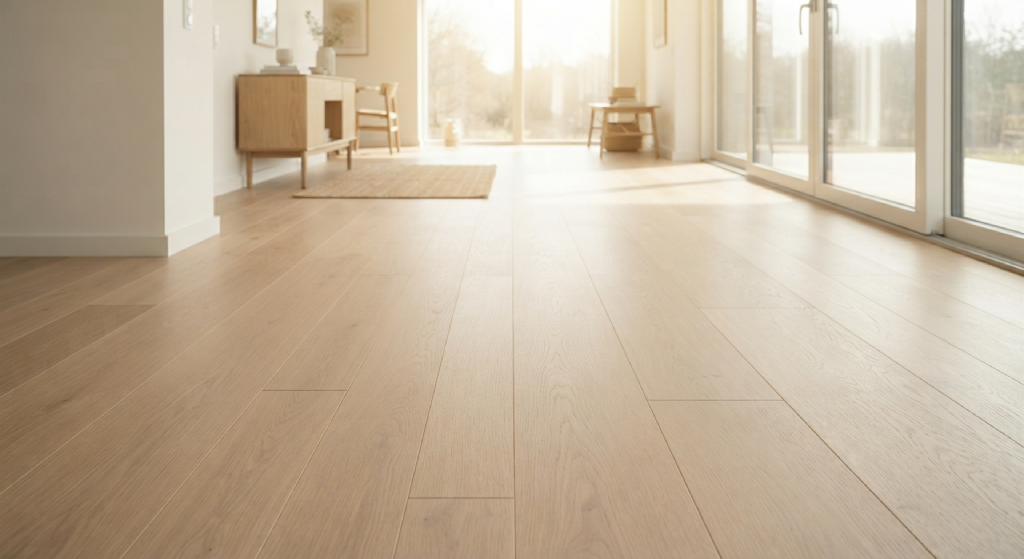
Staining is one area where red oak and white oak behave quite differently, and this trips up a lot of first-time buyers. Red oak’s open, porous grain soaks up stain unevenly, which can sometimes create a blotchy or overly reddish look, especially with darker stains. Many woodworkers use a pre-stain conditioner on red oak to help it absorb color more evenly.
White oak’s tighter grain accepts stain more evenly and tends to produce a cleaner, more consistent result. This is part of why white oak has become so popular for the light, natural-toned flooring look that has dominated interior design trends in recent years.
When it comes to care and maintenance, both oak types need similar basic upkeep: regular dusting, prompt cleanup of spills, and avoiding harsh chemical cleaners that can strip the finish. For wood flooring made from either species, using furniture pads under heavy items and avoiding standing water will extend the life of the floor significantly.
White oak’s natural moisture resistance means it holds up slightly better in kitchens, entryways, and other areas prone to spills. Red oak flooring or furniture should be kept away from consistent moisture exposure and refinished periodically to maintain its protective seal.
Price is often the deciding factor for many buyers, and there is a real cost gap between these two hardwoods.
Red oak is typically the more budget-friendly option. Because red oak trees grow more abundantly and mature faster than white oak trees, the supply is generally larger, which keeps prices lower. On average, red oak lumber and flooring costs anywhere from 10 to 30 percent less than comparable white oak products, depending on the region and supplier.
White oak costs more due to slower growth rates and lower overall supply relative to demand. White oak’s popularity in high-end flooring and furniture markets has also driven prices up in recent years. Quarter-sawn white oak, prized for its unique ray-fleck grain pattern, commands an even higher premium than standard white oak lumber.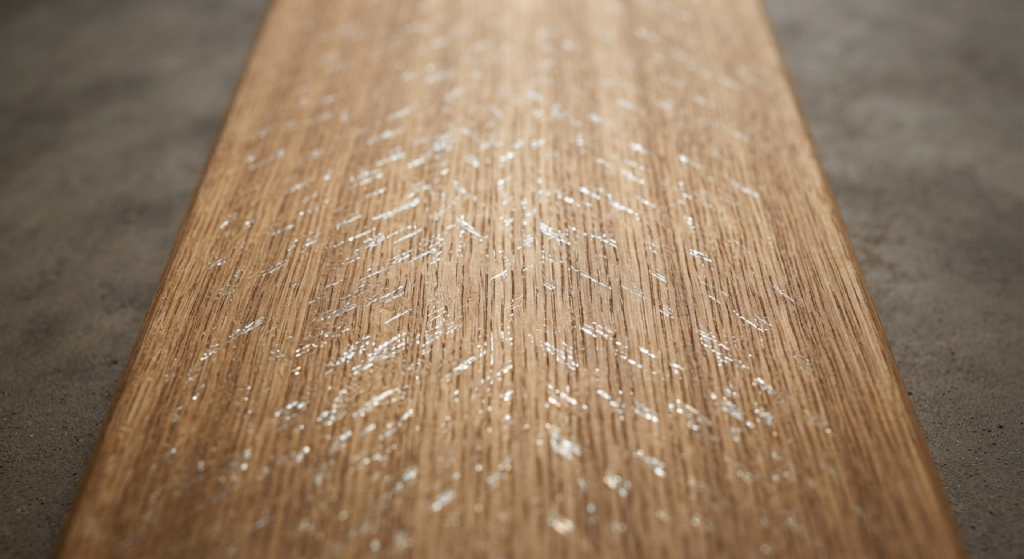
If your budget is tight and moisture resistance is not a top priority, red oak offers excellent value. If you are willing to pay more for superior durability and water resistance, white oak is worth the investment, especially for flooring or pieces meant to last for decades.
Red oak is a favorite among woodworkers building furniture, cabinets, and interior trim. Its slightly softer texture makes it easier to cut and shape, which is especially helpful for beginners or anyone working without professional-grade power tools.
Furniture makers love red oak for its bold, expressive grain, which adds visual interest to dining tables, bookshelves, and cabinetry. Because red oak takes glue and screws well, it is also a solid choice for joinery-heavy furniture projects like chairs and drawers.
Kitchen cabinets built from red oak have a warm, traditional look that has remained popular for decades, particularly in classic and farmhouse-style kitchens. Since cabinets typically live indoors away from major moisture exposure, red oak’s lower water resistance is rarely an issue in this application.
White oak shines in projects where durability and water resistance matter most. Outdoor furniture, garden structures, and any project exposed to the elements benefit from white oak’s natural resistance to rot and decay.
Boat builders have relied on white oak for generations because of how well it holds up against constant water exposure. The same qualities that make it ideal for boats also make it a smart choice for bathroom vanities, kitchen countertops near sinks, and mudroom furniture.
For furniture projects focused on a modern, minimalist aesthetic, white oak’s tighter grain and calmer color palette fit right into contemporary interior design trends. Many high-end furniture makers now prefer white oak specifically because of this clean, understated look combined with its long-term durability.
Whether you choose red oak or white oak, a few simple techniques will help you get the best results:

Red oak pros:
Red oak cons:
White oak pros:
White oak cons:
Choosing between red oak and white oak really comes down to where the wood will live and what you value most. If you want an affordable hardwood with striking grain for indoor furniture, cabinets, or trim, red oak is a smart and budget-friendly choice. If your project will face moisture, whether that is a kitchen floor, outdoor bench, or bathroom vanity, white oak’s natural water resistance makes it the safer long-term investment.
Before you buy, think about your budget, your project’s exposure to water, and the finished look you want. Bring a sample of each to your local lumber yard if possible, since seeing the grain and color side by side makes the decision much easier. Once you know how red oak and white oak differ, you will feel confident picking the right one for your next build.
What is the main difference between red oak and white oak?
The main difference is grain structure and moisture resistance. Red oak has an open, porous grain that absorbs water more easily, while white oak has tighter grain with natural compounds called tyloses that block moisture, making it more water resistant.
Is white oak more expensive than red oak?
Yes, white oak generally costs 10 to 30 percent more than red oak due to slower tree growth and lower overall supply, especially for premium cuts like quarter-sawn white oak.
Can you use red oak for flooring?
Yes, red oak is a popular and durable flooring choice, though it is slightly softer and less moisture resistant than white oak, making it better suited for living rooms and bedrooms than bathrooms or kitchens.
Which oak is better for outdoor furniture, red oak or white oak?
White oak is the better choice for outdoor furniture because of its natural resistance to rot and water damage. Red oak is more prone to warping and decay when exposed to consistent moisture.
How can you tell red oak from white oak just by looking at it?
Red oak has a pinkish-red tone with a bold, open grain pattern, while white oak looks more brown or olive-gray with a tighter, straighter grain. Leaves also differ: red oak leaves have pointed lobes, while white oak leaves have rounded lobes.
Does red oak or white oak take stain better?
White oak generally takes stain more evenly because of its tighter grain. Red oak can absorb stain unevenly due to its open pores, so using a pre-stain conditioner is recommended for a smoother finish.
Is white oak stronger than red oak?
White oak is slightly harder and more durable than red oak based on the Janka hardness scale, though both are strong hardwoods suitable for furniture and flooring.