304 North Cardinal St. Dorchester Center, MA 02124

To provide the best experiences, we use technologies like cookies to store and/or access device information. Consenting to these technologies will allow us to process data such as browsing behavior or unique IDs on this site. Not consenting or withdrawing consent, may adversely affect certain features and functions.
How to Cut Aluminum with a Circular Saw: The Ultimate Expert Guide
Whether you are a seasoned DIY enthusiast or a professional tackling a new home renovation project, you’ve likely asked yourself: can you cut aluminum with a circular saw? The short answer is a resounding yes. However, if you treat aluminum like a standard piece of 2×4 lumber, you are in for a messy—and potentially dangerous—surprise.
Aluminum is a unique beast. It’s a non-ferrous metal, meaning it doesn’t contain iron, and it has a much lower melting point than steel. Because it’s relatively soft, it has a nasty habit of “loading” or clogging up standard saw blades.
In this comprehensive guide, we are going to dive deep into how to cut aluminum with a circular saw safely and effectively. We’ll cover everything from blade selection to specific techniques for sheets, tubes, and extrusions, ensuring you get professional results every time.
How to Cut Aluminum with a Circular Saw
Yes, you can cut aluminum with a circular saw by using a carbide-tipped blade designed for non-ferrous metals. Use a high tooth count blade for thin sheets, apply lubricant to prevent overheating, and cut slowly with steady pressure for a smooth, safe finish.
Can You Really Cut Aluminum with a Circular Saw?
It’s a common misconception that you need a specialized industrial cold saw to handle metal. While those tools are great, your trusty handheld circular saw is more than capable of the task.
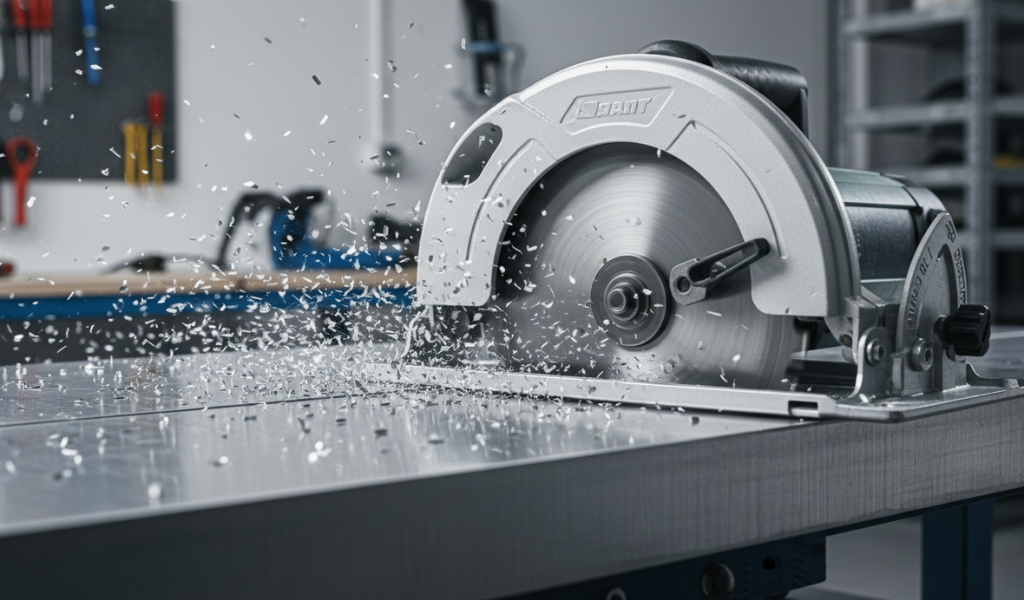
The secret isn’t actually in the motor of the saw; it’s in the cutting blade and your technique. Unlike wood, which chips away into sawdust, aluminum can friction-weld itself to a hot blade if you aren’t careful. If you follow the right steps, you can achieve edges that are almost as smooth as a factory finish.
Choosing the Right Saw Blade for the Job
If you take a standard wood-cutting blade to an aluminum sheet, the teeth will likely grab the metal, kick back, or dull instantly. To do this right, you need a blade specifically designed for non-ferrous metals.
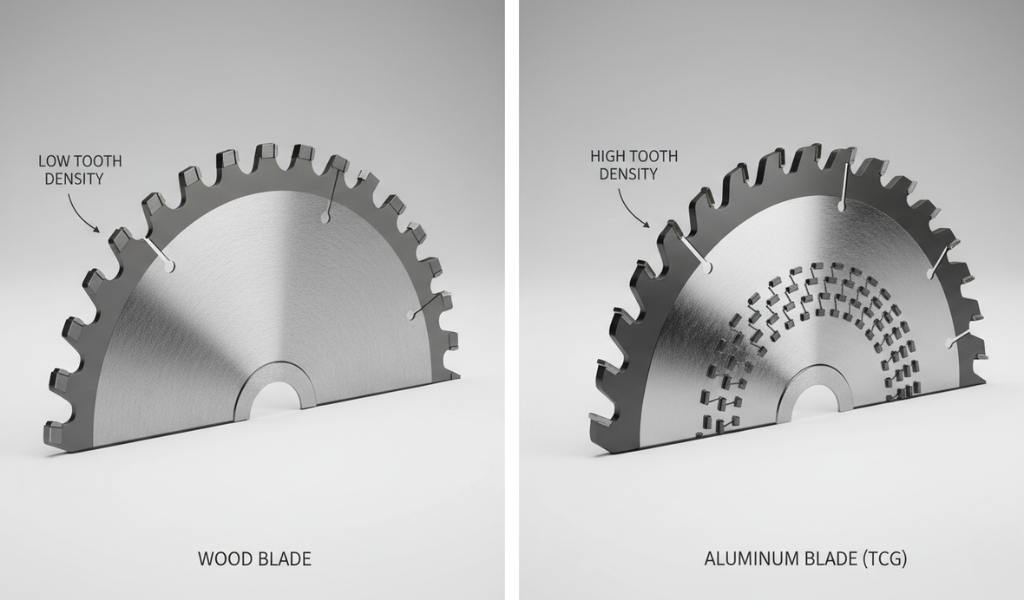
The Power of Carbide Tips
Most high-quality metal blades use a ‘special grade of carbide’. This material is incredibly hard and heat-resistant. For aluminum, look for blades labeled for “non-ferrous” use. These are designed to slice through the metal rather than “chopping” it, which prevents the metal from shattering or catching.
Tooth Count Matters
Thick Material (1/4″ or more): Use a blade with a lower tooth count (around 60 to 80 teeth). This allows the blade to clear out the larger metal chips efficiently.
Thin Material: If you are learning how to cut thin aluminum sheets, you’ll want a high tooth count (100 to 200 teeth) to ensure a clean, burr-free edge.
Key Features to Look for in an Aluminum-Cutting Blade
When shopping for a saw blade, don’t just look at the price tag. Check these technical specs:
Triple Chip Grind (TCG): This is a specific tooth geometry where one tooth is flat and the next is slightly higher and chamfered. This “one-two punch” prevents the metal from chipping and extends the life of your blade.
The Kerf: This refers to the width of the cut. A ‘thin kerf blade’ is usually better for battery-powered saws as it requires less power to push through the metal.
Hook Angle: For metal, you want a zero or negative hook angle. This means the teeth don’t “lean forward.” A negative hook angle prevents the saw from “climbing” or self-feeding into the metal, giving you much more control.
The Gullet: This is the space between the teeth. In metal blades, these are smaller to prevent the metal from “grabbing.”
Safety First: Preparing Your Workspace
Cutting metal is louder, sparkier (though less so with aluminum), and produces sharper waste than wood.
Eye and Ear Protection: Aluminum chips fly everywhere. Wear wrap-around safety goggles and heavy-duty ear muffs.
No Loose Clothing: Metal chips are hot. Wear long sleeves and pants, but ensure nothing is hanging loose that could catch in the saw.
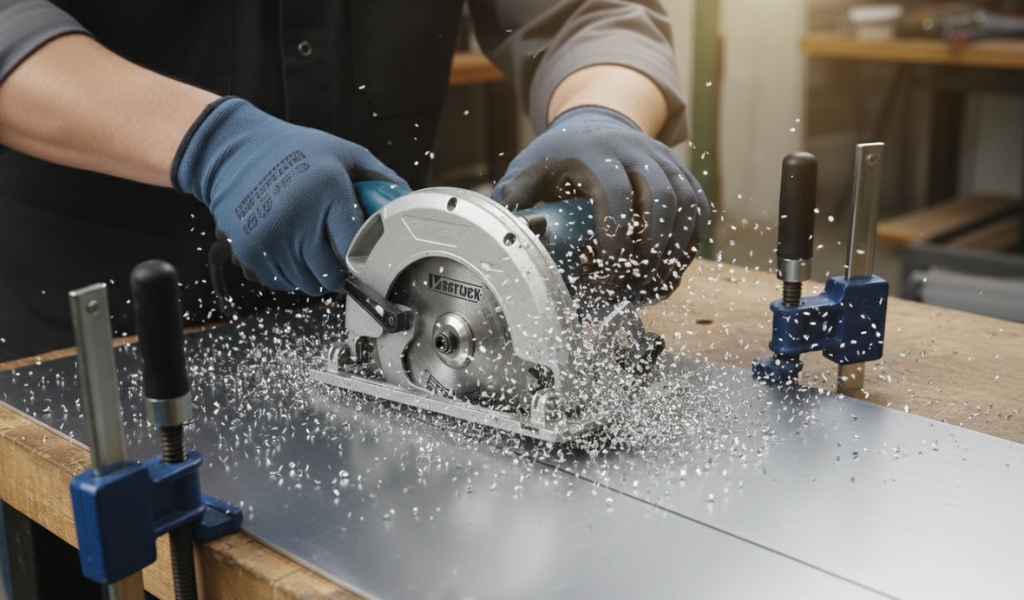
Secure Your Workpiece: Never try to “free-hand” a metal cut. Use ‘heavy-duty C-clamps’ to secure the aluminum to a stable workbench.
Lubrication is Key: To prevent the aluminum from melting and sticking to your blade, use a lubricant. A simple wax stick (specifically for cutting) or even WD-40 can work wonders in keeping the blade cool.
Step-by-Step: How to Cut Aluminum with a Circular Saw
Now that you have your gear, let’s get to the actual process.
Step 1: Mark Your Lines
Use a fine-point permanent marker or a scribe. Lead pencils can be hard to see on reflective surfaces.
Step 2: Apply Lubricant
Run a wax stick along the path of the cut and on the teeth of the blade itself. This is a ‘game-changer’ for preventing blade clogs.
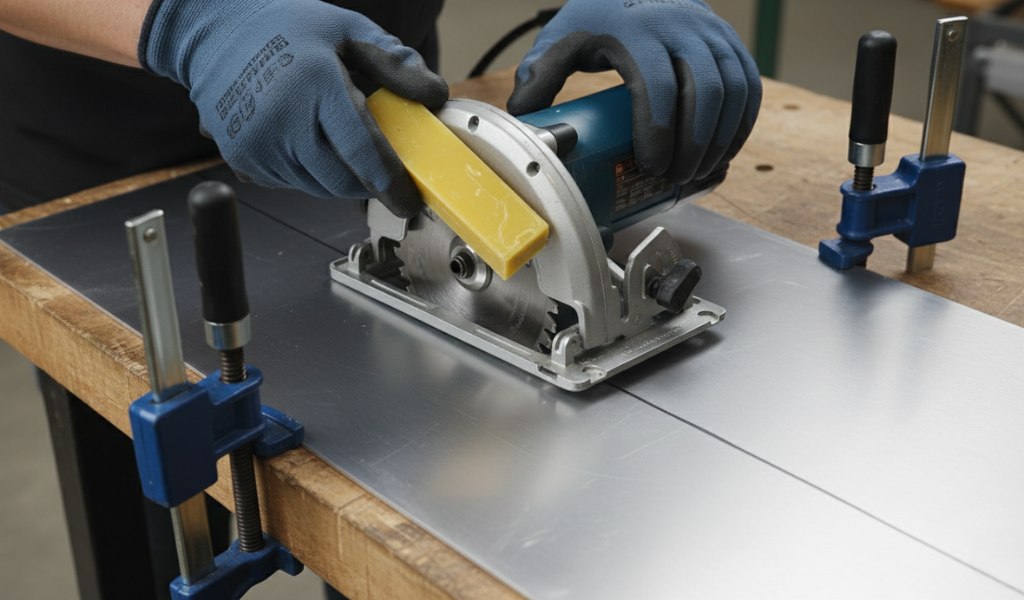
Step 3: Set Your Depth
Adjust your circular saw so the blade sits about 1/4 inch below the bottom of the aluminum. This ensures the teeth are exiting the material at the best angle to clear chips.
Step 4: Make the Cut
Start the saw before touching the metal. Let it reach full RPM. Push the saw forward with steady, moderate pressure. Listen to the motor—if it starts to bog down, slow your pace. Let the blade do the work.
Specialized Techniques: Sheets, Tubes, and Soffits
How to Cut Thin Aluminum Sheets
Thin sheets (like flashing or trim) can vibrate and bend if not supported. The best trick is to “sandwich” the aluminum between two thin pieces of plywood. This provides a solid surface for the saw base and prevents the metal from tearing.
Cutting Aluminum Extrusions and Tubes
Extrusions (like window frames) often have hollow centers. Because they are prone to moving, it’s best to use a ‘woodworking jig’ or a miter saw if you need precise angles. If using a circular saw, clamp a straight-edge guide to your workpiece to ensure the saw doesn’t wander.
How to Cut Aluminum Soffit
Soffit is very thin and corrugated. A pro tip is to actually install your blade backward on the saw. While it sounds counter-intuitive, the dull back-side of the teeth “burns” through the thin soffit cleanly without catching the edges and Mangling the material.
Advanced Troubleshooting: Solving Common Cutting Issues
Even with the right cutting blade, things don’t always go perfectly. Here’s how to fix the most common problems:
Problem: Excessive Vibration
Solution: This usually happens when the aluminum sheet isn’t supported close enough to the cut line. Move your clamps closer to the path of the saw or use a ‘sacrificial wood base’ underneath the metal to absorb the chatter.
Problem: Rough or “Burred” Edges
Solution: If your edges look like a serrated knife, your feed rate is likely too fast. Slow down and let the RPMs do the work. Also, check if your blade is dull; a ‘carbide-tipped blade’ should slice, not tear.
Problem: The Saw “Kicks” at the Start
Solution: Ensure the saw is at full speed before the teeth touch the metal. If it still kicks, check your hook angle. You need a negative hook angle to prevent the blade from grabbing the material.
Pro Finishing: How to Clean Aluminum Edges
Once you’ve mastered how to cut aluminum with a circular saw, the job isn’t quite done. The edges will be razor-sharp.
Deburring: Use a dedicated deburring tool or a flat metal file. Run it at a 45-degree angle along the edge to remove the “flash” (the thin lip of metal left by the blade).
Sanding: For a decorative finish, use 220-grit sandpaper followed by 400-grit. This will give the aluminum a ‘brushed professional look’ that hides any minor saw marks.
Cleaning: Use denatured alcohol to wipe away any leftover cutting wax or oil before painting or welding.
Choosing the Best Circular Saw for Metalwork
While most saws work, if you are doing this frequently, look for these specific saw features:
Variable Speed: Aluminum likes high speed, but thicker plates sometimes require a slower “crawl” to prevent overheating.
Dust Collection: Metal chips are much heavier and sharper than sawdust. A saw with a ‘rear-facing dust port’ or a chip collection tank will save you hours of cleanup time.
Electric Brake: This is a ‘huge safety feature’. When you release the trigger, the blade stops almost instantly, which is vital when working with high-tension metal.
Alternative Tools for Cutting Aluminum
If you find the circular saw a bit too aggressive for your specific project, there are other ways to get the job done:
Tin Snips: Perfect for very thin sheets where you need to make curved cuts.
Jigsaw: Great for intricate shapes, provided you use a T-shank metal-cutting blade.
Electric Shears: These are fantastic for long, straight cuts in sheet metal without producing a mess of chips.
Hacksaw: The old-school manual way. It’s slow but very safe for small tubes.
When NOT to Cut Aluminum with a Circular Saw
If the aluminum is extremely thin (may bend or tear during cutting)
If you don’t have a proper metal-cutting blade
If the material is not securely clamped
If precision cuts are required (use a miter saw or CNC tool instead)
If you are inexperienced and lack proper safety gear
Always choose the right tool based on thickness, precision, and safety requirements.
Conclusion
Learning how to cut aluminum with a circular saw is a skill that opens up a world of DIY possibilities, from custom shelving to automotive repairs. The key takeaway is that preparation is 90% of the work. By selecting a high-quality carbide-tipped blade with a negative hook angle and keeping your workspace secure, you can cut through aluminum as easily as a piece of oak.
Remember to keep your blade lubricated, protect your eyes, and never rush the cut. With these tips, you’ll be handling metal projects like a pro in no time!
Frequently Asked Questions (FAQs)
1. Can I use a regular wood blade to cut aluminum in an emergency?
It is not recommended. Wood blades have a “positive” hook angle that tries to grab the metal. This can cause the saw to kick back violently or shatter the teeth of the blade. Always use a non-ferrous metal blade.
2. Why is my blade getting “clogged” with silver bits?
This is called “loading.” It happens because the aluminum is getting too hot and melting into the teeth. To fix this, use more lubricant (like a wax stick) and ensure you are using a blade with the correct TCG tooth pattern.
3. Is it better to use a corded or cordless circular saw?
Both work fine! However, a corded saw often provides more consistent torque for thicker aluminum. If using cordless, make sure your battery is fully charged, as a dying battery can cause the blade to stall mid-cut.
4. How do I get a perfectly straight cut on a long aluminum sheet?
Clamp a “straight-edge” or a factory-edge piece of plywood to the sheet to act as a guide for your saw’s base plate. This is much more accurate than trying to follow a marked line by eye.
5. Do I need to worry about sparks when cutting aluminum?
Unlike steel, aluminum is non-sparking. However, you will see “chips” flying off at high speeds. These are hot and sharp, so while you won’t see a fireworks show, you still need full skin and eye protection.
6. Can I use a circular saw to cut thick aluminum plates?
Yes, up to about 1/2 inch thick. For anything thicker, you may need to make multiple passes or use a more powerful stationary tool like a band saw. Always use plenty of lubricant for thick plates.
Share your love!
Tools Tale
Disclaimer: This site is owned and operated by Tools Tale. toolstale.com is a participant in the Amazon Services LLC Associates Program, an affiliate advertising program designed to provide a means for sites to earn advertising fees by advertising and linking to Amazon.com. This site also participates in other affiliate programs and is compensated for referring traffic and business to these companies.