Physical Address
304 North Cardinal St.
Dorchester Center, MA 02124
Physical Address
304 North Cardinal St.
Dorchester Center, MA 02124

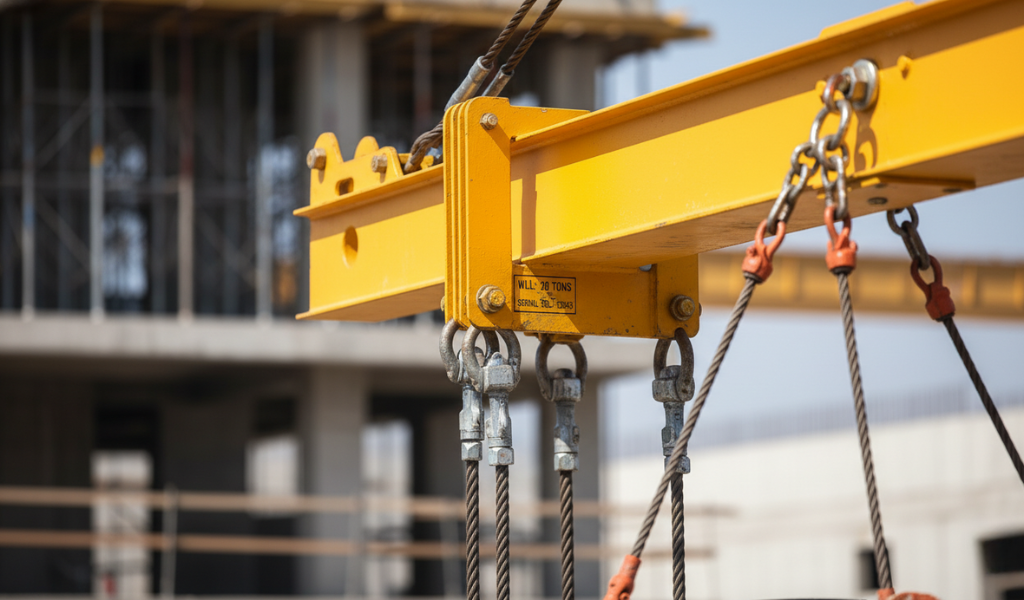
 Lifting large industrial equipment safely requires more than just a crane and standard slings. Uneven weight distribution, fragile materials, and awkward load dimensions can create dangerous pressure during lifting operations. Adjustable spreader bars help distribute lifting forces more evenly, making them essential tools in construction, shipping, manufacturing, and heavy rigging industries.
This is exactly where adjustable spreader bars become indispensable. Designed to convert destructive inward compression forces into safe, vertical lifting forces, these versatile tools are essential components of modern industrial handling equipment.
But what exactly makes them so essential, and how do adjustable spreader bars protect vulnerable loads? Understanding the mechanics and practical applications of these systems helps explain why they are widely used across modern industrial lifting operations.
How Adjustable Spreader Bars Work
Adjustable spreader bars work by separating lifting slings and transferring compression forces into the bar itself. This setup keeps the lower slings vertical, reduces side pressure on the load, and improves lifting stability. Adjustable designs allow rigging crews to change the bar length for different cargo sizes, making them widely used in construction, shipping, manufacturing, and heavy lifting operations.
To appreciate the brilliance of an adjustable spreader bar, we first need to look at the mechanical problems that occur during a standard crane lift.
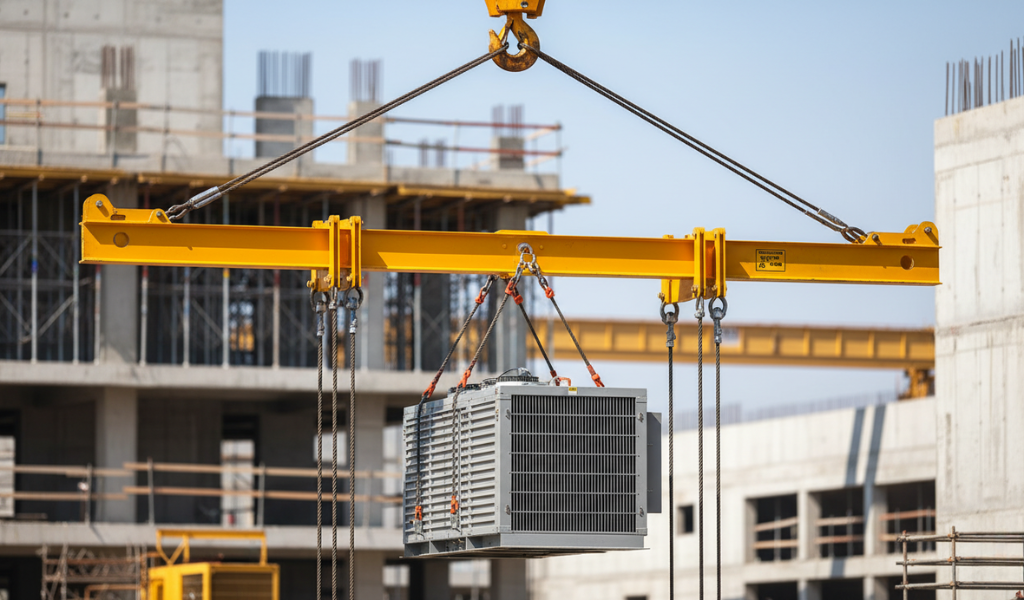
When slings are attached directly from a crane hook to a wide load, angled tension creates inward compression forces. On fragile or uneven loads, this pressure can damage the structure or affect load stability. A spreader bar separates the lifting slings and transfers the compression force into the bar itself, allowing the load to lift vertically with reduced side pressure.
The spreader bar holds the lifting slings apart and transfers compression forces into the bar itself. This allows the lower slings to remain nearly vertical, reducing side pressure on the load and improving lifting stability.
Now that we understand the basic physics, let’s explore the operational mechanics behind the adjustable varieties.
The primary advantage of adjustable spreader bars over fixed-length bars is their extreme versatility. In busy shipping ports, construction sites, and manufacturing plants, workers rarely lift objects of identical dimensions all day long. A crew might need to move a 10-foot generator in the morning and a 30-foot steel pipe stack in the afternoon.
Instead of requiring separate rigging setups for every single task, an adjustable bar can expand or contract to match the specific length of the cargo.
When an operator connects the upper slings from the crane hook to the end caps of the spreader bar, the bar is placed under intense compression. The bar acts as a rigid strut, fighting against the inward pull of the crane. Because the bar absorbs 100% of this force, the lower slings drop completely perpendicular to the load below.
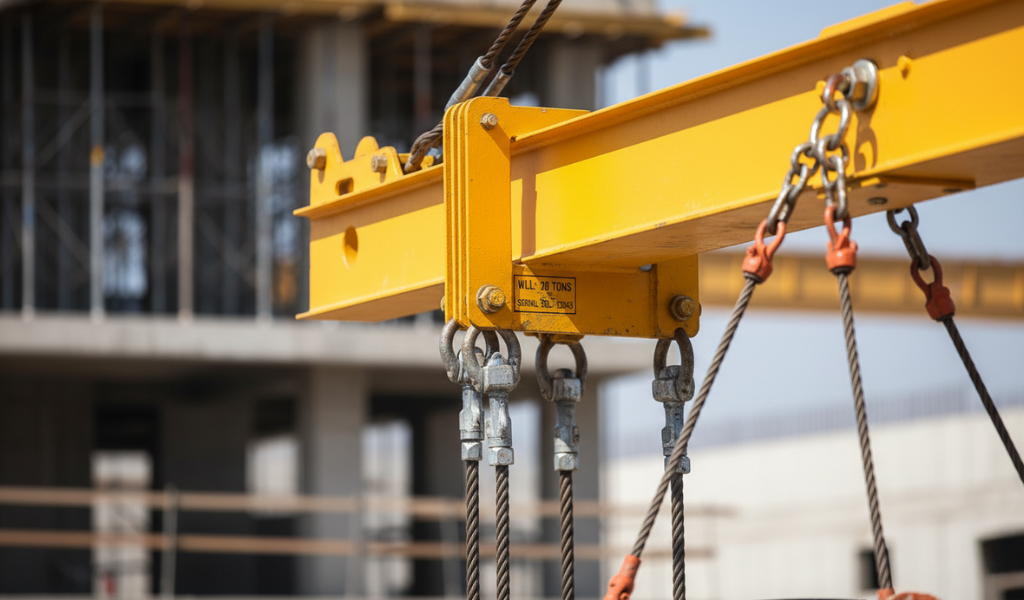
In rigging, the angle of your slings changes everything. As a sling angle drops lower relative to the horizon, the tension on that sling multiplies exponentially. By utilizing an adjustable bar, rigger crews can adjust the span of the bar to ensure the lower hooks align perfectly with the load’s built-in lifting points. This completely eliminates dangerous sling angles and keeps tension calculations predictable and uniform.
Rarely is an industrial load perfectly balanced. A large machine tool might have a heavy motor on one side and a light control panel on the other. If you lift it down the middle, the heavy side will tilt dangerously.
Adjustable bars allow riggers to alter the length of one side of the bar or position the lifting points unevenly. This flexibility aligns the crane’s hook directly over the load’s true ‘center of gravity’, keeping the entire assembly level throughout the lift.
These specialized pieces of industrial handling equipment are built using high-strength structural steel, engineered to withstand hundreds of tons of pressure. To understand how they work smoothly on-site, let’s examine their core anatomy.
| Component | Function |
| Main Strut (Body) | The heavy-duty central beam or pipe that bears the brunt of the inward compression forces. |
| Telescopic Inner Sleeves | Slideable sections housed within the main strut, allowing the operator to change the overall length of the bar. |
| End Caps / Lifting Lugs | Heavy steel attachments welded or pinned to the ends of the bar, providing connection points for both upper and lower shackles. |
| Locking Pins | High-tensile steel pins inserted through matching alignment holes to secure the telescopic sleeves at the desired length. |
| Shackles & Clevises | Heavy-duty connecting hardware that links the rigging slings to the spreader bar’s lifting lugs. |
Manufacturers of industrial handling equipment design adjustable spreader bars using a few distinct methods to alter their span. The choice of mechanism typically depends on the weight capacity required and how often the length needs to be changed.
Telescopic versions are the most popular choice for general industrial use. They consist of a larger outer steel tube and smaller inner steel tubes that slide smoothly inside the main body.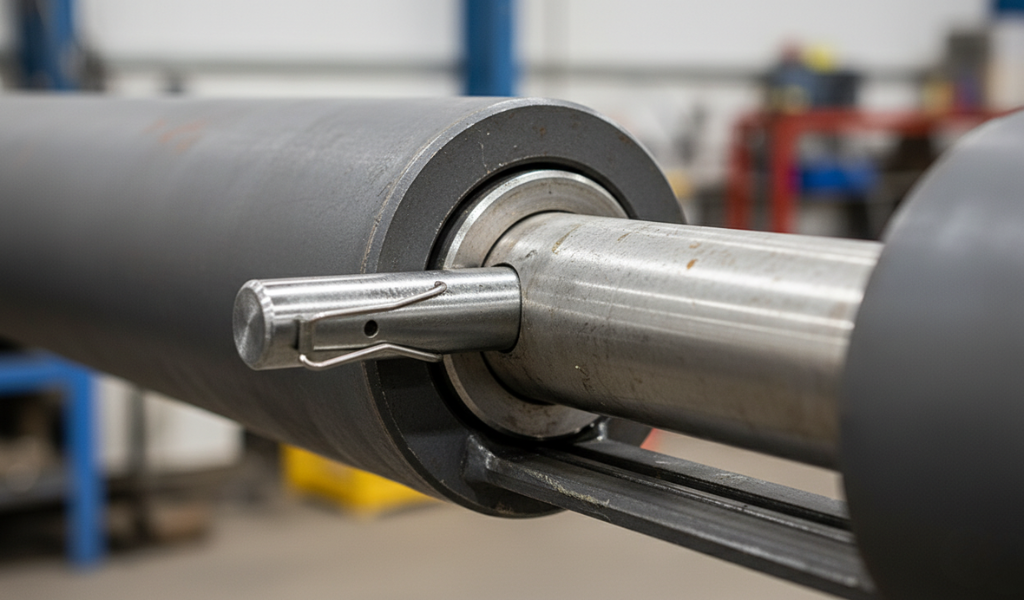
To adjust the length, the rigging crew pulls out the high-tensile locking pins, slides the inner sleeves out to the required width, aligns the pre-drilled adjustment holes, and re-inserts the pins. These units are highly valued for their quick adjustments and ease of transport.
For exceptionally heavy capacities—often exceeding 100 tons—modular systems are preferred. Instead of a sliding sleeve, a modular system consists of a set of distinct, fixed-length pipe sections (e.g., 2-foot, 5-foot, or 10-foot increments).
The riggers bolt these individual sections together end-to-end using heavy-duty flanges and high-grade structural bolts to achieve the exact total length needed for the lift. While they take longer to configure than telescopic units, modular bars offer unparalleled structural strength and can be broken down completely for easy storage.
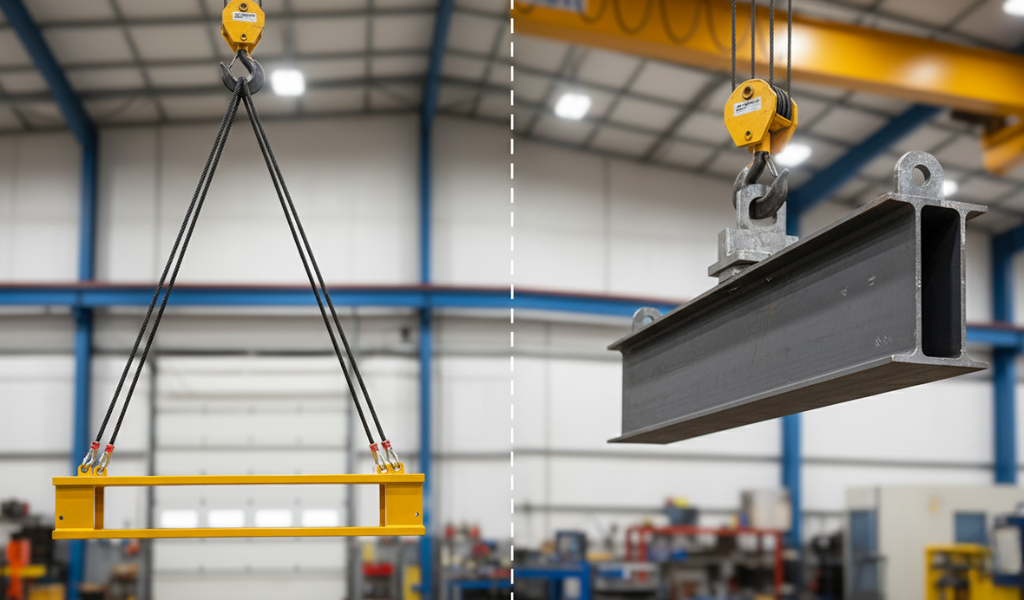
In industrial settings, people frequently confuse spreader bars with lifting beams. While they look somewhat similar at a glance, they operate on completely different mechanical principles. Using the wrong tool for your lift can lead to serious structural damage.
Operating any heavy lifting system requires strict adherence to safety regulations. Because adjustable spreader bars are subject to extreme forces, improper configuration can cause sudden, dangerous structural buckling.
Before picking up any rigging hardware, you must know the exact weight of the cargo, its dimensions, and its center of gravity. Check that the total weight does not exceed the Working Load Limit (WLL) printed clearly on the spreader bar’s data plate.
Pull the locking pins and slide the telescopic sleeves to the correct length so that the lower lifting points line up vertically with the load’s attachment eyes. Ensure the locking pins are fully engaged and secured with their respective cotter pins or safety clips.
This is one of the most critical safety factors when learning how adjustable spreader bars work. The angle of the upper slings—measured relative to the horizontal bar—must match the manufacturer’s precise guidelines.
⚠️ CRITICAL SAFETY NOTE: Most manufacturers require an upper sling angle of 45 degrees or greater (ideally 60 degrees). If the upper slings are too low or flat, the horizontal compression forces spike drastically, which can cause the bar to buckle and collapse inward under pressure.
Slowly raise the crane hook until the rigging slacks tighten. Before lifting the cargo completely off the ground, lift it just a few inches to check the balance. Ensure the bar stays level and check that all lower slings hang at a perfect 90-degree angle. If the load tilts, lower it immediately and adjust the bar’s telescopic settings to redistribute the weight safely.
To ensure long-term reliability and stay compliant with safety standards like OSHA and ASME B30.20, your adjustable spreader bar requires regular care and structured inspections.
Understanding how adjustable spreader bars work is key to running a safe, productive lifting operation. By effectively absorbing horizontal compression forces, these highly adaptable tools protect fragile cargo, optimize rigging angles, and ensure predictable performance during complex lifts. Investing in high-quality adjustable options allows your facility to handle a diverse range of cargo profiles with a single, highly reliable system.
Always cross-reference your load calculations, secure your locking pins carefully, and maintain an optimal upper sling angle during every operation.
Using the correct spreader bar configuration helps improve lifting safety, reduce equipment stress, and maintain stable load control during industrial operations.
No. Spreader bars are designed to work under compression, which requires an upper sling triangle to push the ends inward. If you need to connect your crane hook directly to a lifting beam without upper slings, you must use a dedicated lifting beam engineered specifically to handle bending forces.
When the upper sling angle drops below 45 degrees, the horizontal compression force acting on the bar increases dramatically. This overloading can cause the main strut to buckle and bend out of shape, leading to a sudden drop and structural failure of the entire rig.
No. Spreader bar load capacities change based on the extended length of the bar. Typically, as you extend a telescopic bar to its maximum span, its overall weight rating decreases because longer spans are more vulnerable to buckling forces. Always check the manufacturer’s load charts for your specific configuration.
You should perform a basic visual inspection before every lift. Additionally, safety regulations require a documented structural inspection at least once a year, which often includes non-destructive testing of critical weld points.
What materials are adjustable spreader bars typically made from?
Most industrial models are constructed from high-tensile structural carbon steel for maximum durability and strength. For highly specialized environments—such as marine or chemical facilities—you can find models made from aluminum or stainless steel to resist corrosive environments.
If you need to make fast, frequent length adjustments for varying light-to-medium loads, a telescopic bar is generally your best choice. If your team regularly manages ultra-heavy cargo (100+ tons) and requires a highly portable system that can be broken down completely for transport, a modular system is ideal.