Physical Address
304 North Cardinal St.
Dorchester Center, MA 02124
Physical Address
304 North Cardinal St.
Dorchester Center, MA 02124

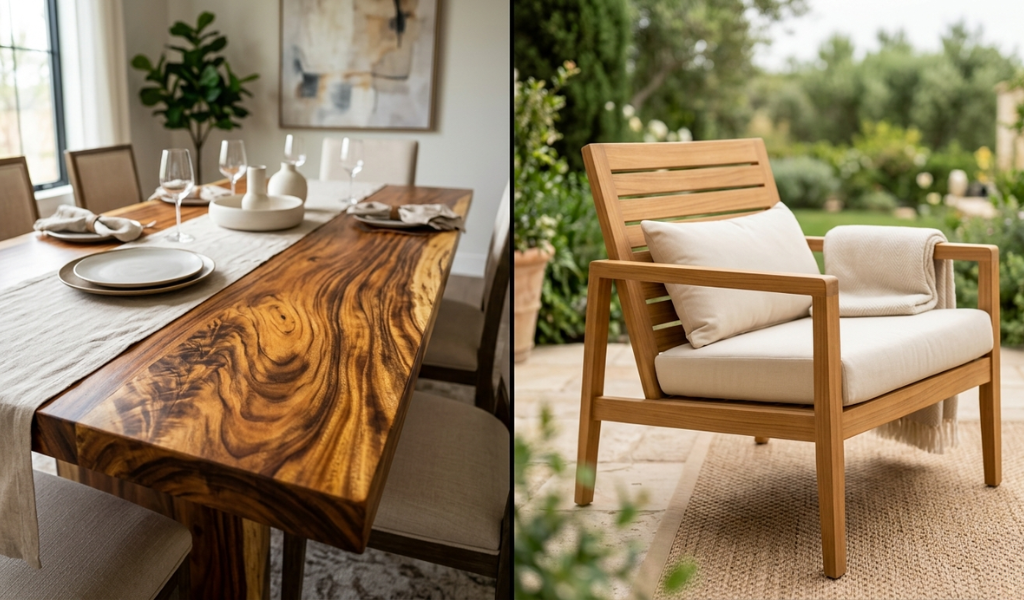
Choosing the right timber for your home is a major decision. Whether you are building a custom dining table or picking out a set of garden chairs, the material you choose determines how long that piece lasts and how much ‘character’ it adds to your space. In the world of premium hardwoods, two names consistently sit at the top of the list: Acacia and Teak.
But when it comes down to the wire, which wood is better for furniture, Acacia wood or teak wood? Both are stunning, durable, and highly respected by carpenters and woodworkers, but they serve very different purposes, lifestyles, and budgets. In this deep-dive guide, we will break down the grains, the hidden costs, and the “real-world performance” of these two legendary woods to help you decide which one deserves a spot in your home.
If you walk into a high-end furniture showroom, you’ll likely see both of these woods featured prominently. At a glance, they can look quite similar—especially if the Acacia has been stained to mimic the warm, honey tones of Teak. However, under the surface, they are fundamentally different species with unique “personalities.”
The debate over which wood is better for furniture, acacia wood or teak wood often boils down to a conflict between luxury and practicality. Teak has long been considered one of the most premium hardwoods, prized by shipbuilders and royalty for centuries because of its durability. Acacia, on the other hand, is the “modern challenger”—a fast-growing, incredibly hard timber that offers a similar look at a much more accessible price point. The right choice for you depends entirely on whether you are furnishing a high-traffic living room or a weather-exposed backyard.
Acacia wood is a dense, heavy hardwood harvested from trees and shrubs native to Australia, Asia, and Africa. There are over 1,300 varieties of Acacia, but the most common ones used for furniture are Australian Blackwood and Hawaiian Koa.
One of the most interesting things about Acacia is its rapid growth. Unlike many other hardwoods that take a century to mature, Acacia grows quickly, making it a highly renewable resource. It is famous for its ‘erratic grain patterns’—you’ll see swirls, waves, and straight lines all in a single plank, making every piece of furniture truly one-of-a-kind.
Teak wood (Tectona grandis) is often referred to as the “Gold Standard” of hardwoods. Native to Southeast Asia, particularly Myanmar and Thailand, Teak is a deciduous tree that takes a very long time to grow—often 80 to 100 years to reach full maturity.
What sets Teak apart is its high concentration of natural oils and silica. These internal oils act as a ‘built-in sealant’, making the wood naturally resistant to water, termites, and rot. It is one of the few woods in the world that can survive decades outdoors without any chemical treatment.
When choosing which wood is better for furniture, Acacia wood or teak wood, the visual “vibe” is usually the first thing homeowners consider.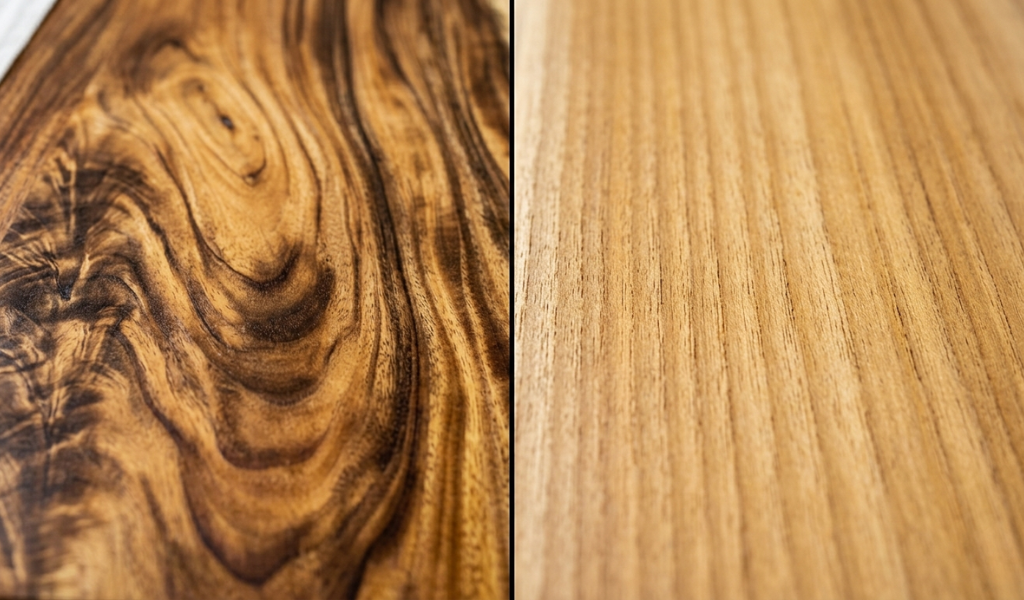
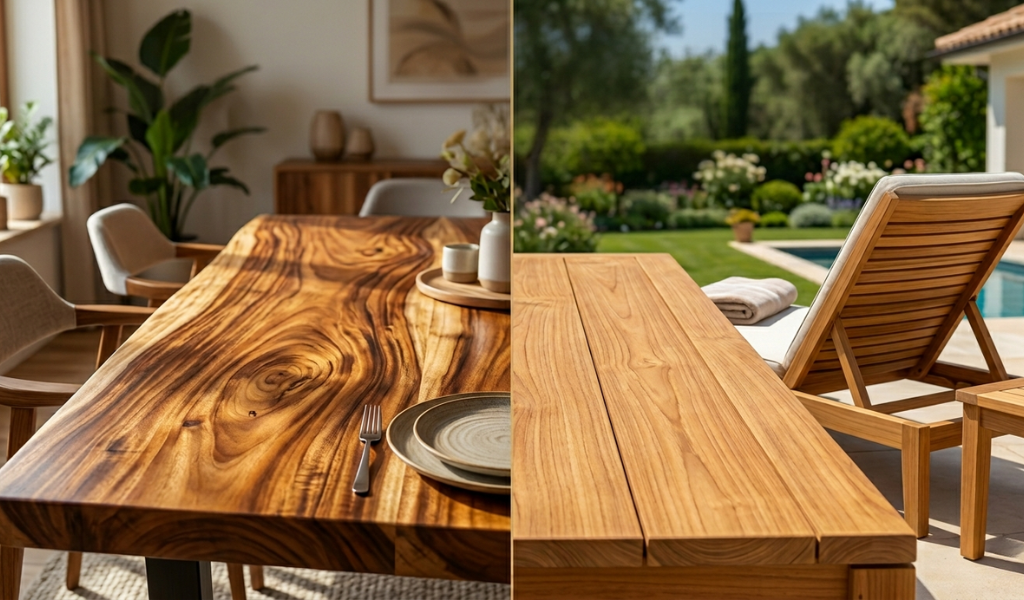
Acacia is known for its bold and varied grain patterns. It has a high contrast between its sapwood (the outer part) and heartwood (the center). This results in a beautiful, multicolored appearance ranging from light amber to deep mahogany. If you love a rustic, bold, or ‘bohemian’ look, Acacia is unbeatable.
Teak is known for its clean grain pattern and premium appearance. It features a more consistent, straight grain with occasional wavy patterns. When freshly cut, it has a golden-brown or tawny hue. Over time, if left untreated outdoors, Teak undergoes a unique transformation, turning into a ‘distinguished silver-gray patina’ that many collectors actually prefer.
Strength isn’t just about how hard a wood is; it’s about how it handles the environment. When we look at acacia wood vs teak, we see two different types of “toughness.”
This is the most critical section for anyone wondering which wood is better for furniture, acacia wood or teak wood.
Acacia is a superstar for indoor dining tables, bookshelves, and bed frames. Because it is easier to stain, you can find Acacia furniture in almost any color. It brings a warmth to interior spaces that feels organic and high-end without the “museum-piece” price tag.
There is a reason you see Teak on the decks of luxury yachts. It is virtually ‘indestructible’ when it comes to rain, sun, and snow. You can leave a Teak bench outside for 50 years, and while it might change color, the structural integrity will remain intact.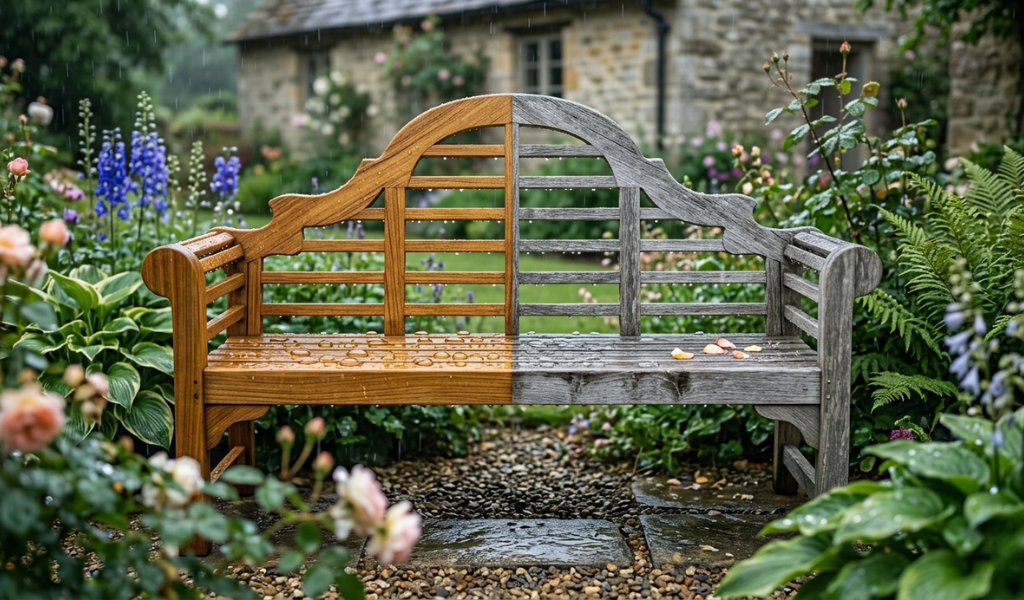 Acacia can be used outdoors, but it requires ‘rigorous maintenance’ to stay healthy.
From a craftsman’s perspective, these two woods offer different challenges. Carpenters and woodworkers often have a love-hate relationship with both.
As we become more conscious of our environmental footprint, the sourcing of timber has become a deciding factor for many.
Acacia is widely considered the more sustainable option. Because it is a fast-growing species that thrives in various climates, it is easily farmed on plantations without destroying old-growth forests. It reaches maturity in as little as 10–15 years, allowing for a ‘continuous harvest’ that doesn’t deplete the earth’s resources.
Teak is much more controversial. Because it takes nearly a century to mature, natural Teak forests in Southeast Asia have been decimated by over-logging. While “Plantation Teak” (grown in Africa and Central America) is a more ethical alternative, it often lacks the high oil content of old-growth Burmese Teak. If you are buying Teak, it is vital to look for ‘FSC-certified’ (Forest Stewardship Council) labels to ensure your purchase isn’t contributing to illegal deforestation.
Let’s talk numbers. There is a significant price gap when deciding which wood is better for furniture, acacia wood or teak wood.
| Feature | Acacia Wood | Teak Wood |
| Price Point | Affordable / Mid-range | Expensive / Luxury |
| Durability | 20–30 years (Indoor) | 75–100 years (Indoor/Outdoor) |
| Maintenance | Moderate (needs oiling) | Very Low (natural oils) |
| Cost Comparison | $ (1x) | $$$ (3x to 5x) |
Acacia offers excellent value for homeowners who want durable hardwood furniture at a more affordable price. You can often furnish an entire dining room with solid Acacia for the price of a single high-quality Teak sideboard. Teak is an investment—you aren’t just buying furniture; you’re buying an ‘heirloom piece’ that will likely be passed down to your grandchildren. The high price reflects the 80 years of growth and the international shipping costs for this rare timber.
Teak wood is generally better for outdoor furniture because of its natural oil content, water resistance, and long lifespan. Acacia wood, on the other hand, is a more affordable and durable option for indoor furniture thanks to its hardness and attractive grain patterns. The better choice depends on your budget, maintenance preference, and where the furniture will be used.
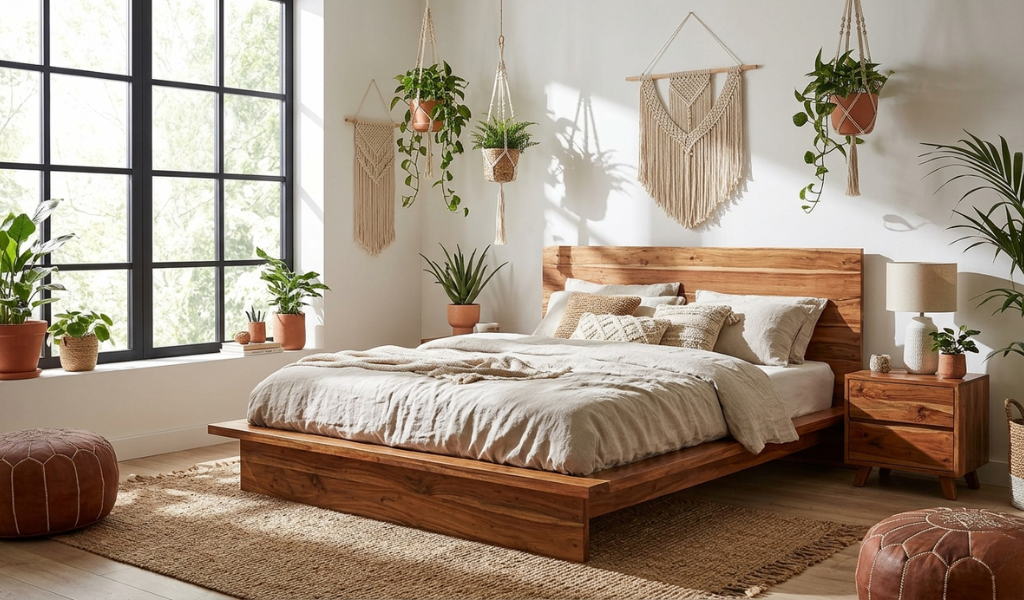
In the battle of which wood is better for furniture, acacia wood or teak wood, the winner is determined by your environment and your wallet.
Both woods are incredible gifts from nature. Whichever you choose, treat it with respect, keep it clean, and it will bring life to your home for years to come.
Raw Acacia wood can have a distinct, slightly sharp smell when first cut (some compare it to urine). However, this smell completely disappears once the wood is kiln-dried and finished. By the time it reaches your home, it has no scent.
Yes. While both are hardwoods, Teak’s ‘high oil content’ makes it naturally hydrophobic (water-repelling). Acacia is water-resistant, meaning it can handle spills, but it is not “waterproof” for long-term outdoor exposure.
Because Acacia is much cheaper but can be stained to look almost identical to Teak, some unscrupulous sellers use it to mimic Teak furniture. Always check the wood species before buying!
To keep the wood from drying out, wipe it down with a food-safe ‘mineral oil’ or specialized wood wax once every 6–12 months. This keeps the colors vibrant and prevents surface cracks.
Quite the opposite. Because Teak is becoming rarer and more regulated, high-quality vintage Teak furniture often increases in value over time, making it a ‘solid investment’ for your home.
If you have children or host a lot of dinner parties, Acacia is the better choice. It is harder (resists dents from dropped forks) and significantly more affordable for a large surface area like a dining table.
Absolutely! While they have different grain speeds, they both share warm, golden undertones. As long as the finishes are similar, mixing these woods can add a professional ‘layered look’ to your interior design.