Physical Address
304 North Cardinal St.
Dorchester Center, MA 02124
Physical Address
304 North Cardinal St.
Dorchester Center, MA 02124

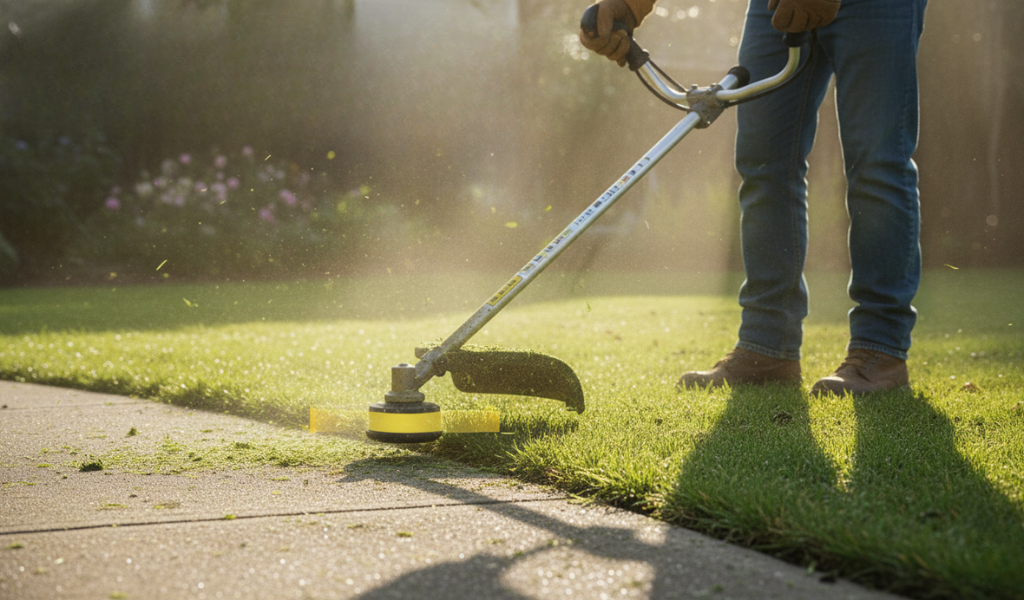
If you have ever looked at your lawn after a fresh mow and felt like something was missing, you aren’t alone. Even the most expensive electric lawn mower can’t reach those tight corners, fence lines, or the delicate edges of your flower beds. That is where the ‘magic of the string trimmer’ comes in. Often called a weed whacker or weed eater, this tool is the secret weapon for a truly manicured yard.
Learning how to use a string trimmer effectively is the difference between a yard that looks “okay” and one that looks like a professional landscaping crew just left. In this guide, we will break down everything from safety and basic operation to advanced edging techniques that will make your neighbors envious.
To use a string trimmer effectively, hold it with a balanced grip, keep the cutting head slightly above the ground, and use a steady side-to-side motion. Always use the tip of the string for cutting and maintain proper safety gear for best results.
This guide is beginner-friendly and will help you learn how to use a string trimmer step by step, even if you have never used one before.
Understanding how to use a string trimmer starts with knowing the tool in your hands. The market is currently split into three main categories, each with distinct advantages and learning curves.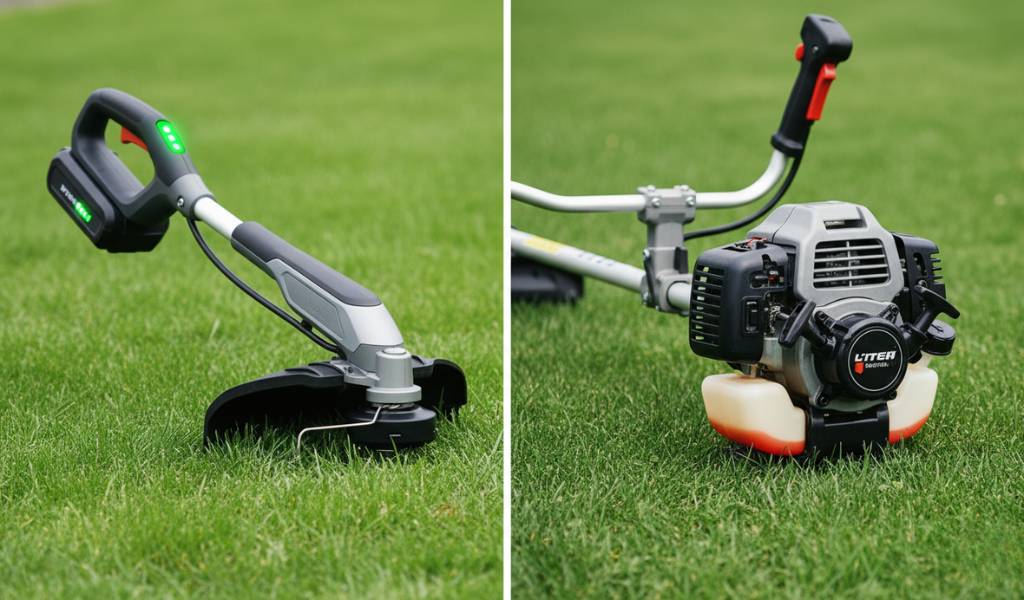
These are the most affordable and lightweight options. They are perfect for very small townhome lots where you are always within 50 to 100 feet of an outlet. The main downside is the “cord dance.” You have to be constantly mindful of the power cable so you don’t accidentally trip over it or, worse, slice through it. However, they offer unlimited runtime and require almost zero maintenance.
This is the fastest-growing segment. Modern lithium-ion technology has made battery trimmers nearly as powerful as gas models. They are quiet, start with the push of a button, and produce zero emissions. If you already own an electric lawn mower, check if the manufacturer uses a “universal battery system.” Being able to swap a battery from your mower to your trimmer saves you hundreds of dollars. They are ideal for suburban yards but might require a second battery for properties over half an acre.
Gas engines (usually 2-cycle or 4-cycle) remain the kings of raw power and “go-anywhere” portability. If you have a massive property or are clearing thick, woody weeds that have grown waist-high, gas is the way to go. However, they are heavy, loud, and require you to mix gas and oil (for 2-cycles). They also require more frequent maintenance, such as spark plug changes and air filter cleaning.
Once you are suited up and your tool is ready, it is time to get to work. Operating a trimmer feels intuitive, but there is a “sweet spot” for every cut.
Most trimmers feature a “straight shaft” or a “curved shaft.”
Straight Shaft: Better for reaching under bushes, decks, and fences. It is generally preferred by taller users and pros.
Curved Shaft: Lighter and easier to maneuver in tight flower beds.
To hold the tool, place your dominant hand on the rear trigger handle and your non-dominant hand on the adjustable D-handle midway down the shaft. Adjust that front handle so that when you stand upright, the trimmer head hangs just an inch above the grass. You should not have to hunch over; let the tool’s balance do the work for you.
The string spins in one direction and throws grass and debris to one side, helping you control your cutting direction. Understanding this helps you control where the clippings go. This means the left side of the arc is your primary cutting zone. If you use the right side, you are more likely to kick debris back at your own legs.
Instead of walking forward and “shoving” the trimmer into the grass, use a rhythmic, side-to-side sweeping motion. Imagine you are using a vacuum cleaner. As you step forward slowly, sweep the head across the grass. This ensures an even height and prevents the motor from bogging down in thick patches.
The most common point of frustration for beginners is the string itself. It is a consumable item; it is designed to wear down. If it didn’t wear down, it would snap the moment it hit a rock.
Most trimmers use a bump feed head. Inside the head is a spring-loaded spool. When you gently tap the bottom of the spinning head against the ground, the spring compresses and allows the centrifugal force to pull out about an inch of new line.
Tip: Don’t “slam” it. A firm tap on flat grass is all it takes.
Common Issue: If the string won’t come out, it might be “welded” together inside the spool due to heat. You’ll need to open the head and manually untangle it.
Eventually, you will run out of string. This is usually when people consider throwing the whole tool in the trash, but it doesn’t have to be hard!
Cut the right length: Usually, 15 feet is the limit. Too much line will jam the spool.
The Hook: Most spools have a small starter hole or hook. Insert the end of your line here.
The Direction: Look for an arrow on the spool that says “Wind Cord” or “Direction.” If you wind it backward, the bump feed won’t work.
Tension: Keep the line tight as you wind it to prevent “bird-nesting” (where the string overlaps and gets stuck).
Not all strings are created equal.
Round Line: The standard. It lasts long and is easy to load.
Square/Twisted Line: These have “edges” that act like teeth. They are much better for thick weeds but can snap more easily against concrete.
Diameter: Most homeowners use a .080-inch line. If you have a heavy-duty gas model, you might use .095-inch for brush.
If you want your yard to look like a golf course, you need to master these three advanced moves.
This is the “pro” move. Instead of holding the trimmer flat to cut grass height, you turn the entire tool 90 degrees so the string is spinning vertically, like a circular saw.
The Goal: To create a “V-shaped” trench between your lawn and your sidewalk or driveway.
The Technique: Walk slowly along the concrete, letting the tip of the string barely touch the dirt. It will blow out the overgrown grass and dirt, leaving a sharp, crisp line that no lawn mower can replicate.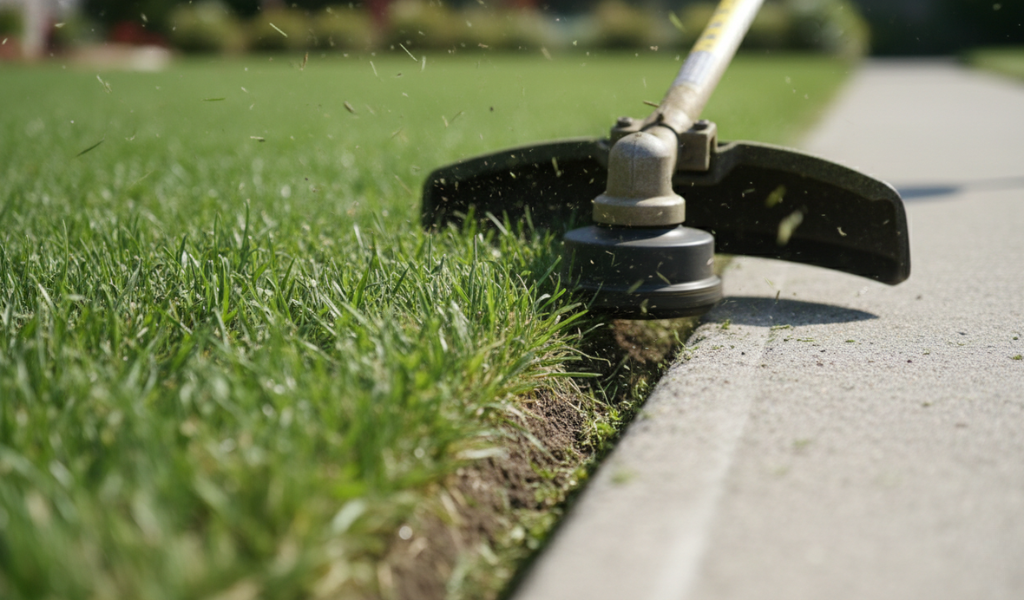
If you are dealing with tall or thick weeds, don’t try to cut everything at once. Instead, trim the top layer first, then gradually move lower. This prevents the trimmer from getting stuck and makes the job easier.
If weeds are growing in driveway or sidewalk cracks, you can gently run the trimmer over them. The spinning string will remove the weeds and clean the surface without using chemicals.
Know exactly where the grass clippings are going to land. If you aren’t careful, you will finish trimming and realize you’ve covered your freshly washed car or your mulched flower beds in grass guts.
As mentioned before, most trimmers spin counter-clockwise. This means they throw debris to the right and slightly forward.
If you are trimming along a fence: Walk so the fence is on your left. The debris will be thrown away from the fence and into the lawn.
If you are trimming a flower bed: Walk so the mulch is on your right. This way, the clippings stay on the grass and don’t end up smothering your flowers.
Because of the spin, you should generally walk forward when trimming grass. However, when you are edging vertically, many pros find it easier to walk backward. This allows you to see the line you are cutting more clearly and prevents you from stepping on the debris you just kicked up.
A trimmer works in a high-stress environment. It is constantly vibrating and sucking in dust. A little TLC goes a long way.
The plastic guard (or shield) on your trimmer isn’t just for safety; it also has a small “cutoff blade” that keeps your string at the perfect length. If the shield gets caked with wet grass, it adds weight and drag to the motor. Use a stiff brush or a hose to clean it after every use.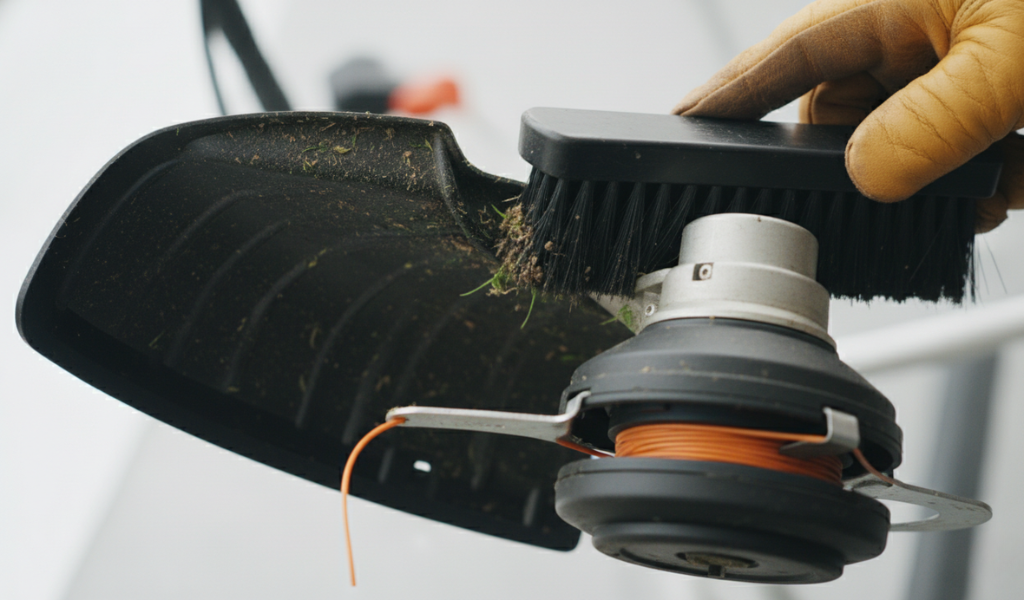
Both gas and electric lawn mower engines—and trimmers—need to breathe. On a battery trimmer, look for the vents near the motor. If these are clogged with grass clippings, the motor will overheat and potentially burn out. On gas models, check the air filter every month. A dirty filter makes the engine run “rich,” wasting gas and making it harder to start.
Higher-end straight-shaft trimmers have a gearbox at the bottom near the head. Some of these require you to add a “dab” of lithium grease every 25 hours of use. Check your manual; if your gearbox is “sealed,” you don’t need to worry about it, but if there is a small bolt on the side, it likely needs grease.
Before we even think about pulling the trigger, we need to discuss the reality of what a string trimmer does. It spins a plastic line at very high speed, which can cut grass and small weeds easily. Because of its high speed, it can also throw small stones, twigs, and debris around like projectiles. Safety isn’t just a suggestion; it is a requirement for anyone wanting to keep their shins and eyes intact.
Safety glasses are the bare minimum. Ideally, you want wraparound glasses that prevent dust and debris from entering through the sides. If you are clearing thick brush or working in a particularly rocky area, a full-face shield is even better. Remember, the trimmer is inches from the ground, and it will kick up dirt clouds that can irritate your eyes and lungs.
You might be tempted to trim in shorts on a hot summer day, but your legs will pay the price. Long pants made of heavy fabric, like denim, act as a shield against “stinging” debris. Furthermore, never operate a trimmer in sandals or flip-flops. Sturdy, closed-toed work boots provide the grip and protection you need. If you are using a powerful gas-powered model, consider “chaps” or specialized shin guards if you frequently work in overgrown, rocky fields.
Even with the best intentions, it’s easy to overdo it. Here is how to avoid the most common “rookie” errors.
“Scalping” the Edges: It is tempting to cut the grass right down to the dirt along the driveway so you don’t have to trim as often. This is a mistake. Scalped grass dies, leaving a brown “dead zone” where weeds like crabgrass will quickly take root. Match the height of your lawn mower cut.
Tapping Too Hard: When feeding the string, people often hammer the head against the sidewalk. This can crack the plastic spool or damage the internal spring. A light tap on soft turf is all that is required.
Trimming While Wet: Wet grass is heavy and “sticky.” It won’t cut cleanly; it will “tear.” This leaves the grass tips jagged and brown. Plus, the wet clippings will stick to the inside of your trimmer, making cleanup a nightmare.
Ignoring the Tree Trunks: A string trimmer can kill a mature tree in minutes. The “cambium layer” just beneath the bark is how the tree gets nutrients. If you whip the string against the bark, you strip that layer away. Always leave a small “buffer” of grass around trees or use a physical tree guard.
Learning how to use a string trimmer is a foundational skill for any homeowner. It bridges the gap between a rough-cut field and a beautiful landscape. By following the right safety protocols, choosing the right string, and practicing your edging technique, you can transform your yard into a masterpiece.
Remember, patience is key. Your first few attempts at edging might be a bit wiggly, but with a steady hand and a little practice, you’ll be ‘trimming like a pro’ in no time. Now, get out there and give your lawn the finishing touch it deserves!
Technically, yes, but it is highly inefficient. It is nearly impossible to keep the height perfectly level across a large area. However, for “no-mow” zones like steep hills where a standard lawn mower might tip over, a trimmer is the safest tool for the job.
This usually happens because the line is getting too hot. This occurs when you crowd the head—trying to force it into a thick brush rather than letting the tips of the string do the work. If the line is old, it can also become brittle. Try soaking your spool in water for 24 hours to restore its flexibility.
Check the owner’s manual or the label on the trimmer head. Most residential electric trimmers use .065″ or .080″ string. Using a string that is too thick will put excessive strain on the motor and may void your warranty.
Straight shafts are generally considered superior because they have a longer reach and use a gear drive which is more durable. Curved shafts use a flexible cable drive, which is lighter and cheaper but more prone to breaking under heavy use.
For most homeowners, once every season (in the spring) is enough. A fresh spark plug ensures the engine starts quickly and runs efficiently without sputtering.
For gas models, drain the fuel or use a stabilizer. For battery models, remove the battery and store it indoors (not in a freezing garage). Hang the trimmer vertically to save space and prevent the flexible drive in curved models from taking a permanent set.