Physical Address
304 North Cardinal St.
Dorchester Center, MA 02124
Physical Address
304 North Cardinal St.
Dorchester Center, MA 02124


If you have ever stood in the tool aisle staring at two very different looking machines, you already know the struggle. A random orbital sander vs belt sander decision trips up beginners and experienced woodworkers alike, and honestly, it should. These two tools look similar at first glance, but they behave in completely different ways once you turn them on.
Whether you are refinishing an old dresser, leveling a hardwood floor, or just trying to smooth out rough wood before painting, picking the right sander can save you hours of frustration. This guide breaks down everything you need to know about belt sanders and orbital sanders, so you can equip your workshop with the right tool for the job.
A random orbital sander is a handheld power tool built for finesse rather than brute force. The sanding pad on this tool spins in a circle while also moving in a small elliptical pattern at the same time. This dual motion is what gives the tool its name, and it is also the secret behind its smooth results.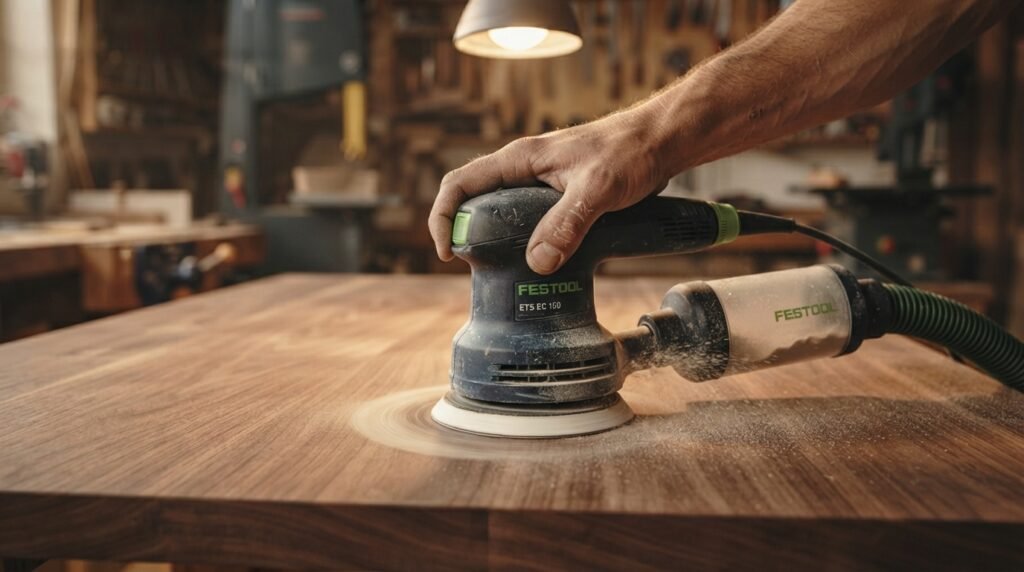
Because the orbital sander moves in a random, non repeating pattern, it does not leave the swirl marks or circular scratch patterns that a simple rotary sander might create. This makes it a favorite for fine finishing work on furniture, cabinets, and any flat surfaces where appearance matters. Most models use a round sanding pad with hook and loop sandpaper sheets that are easy to swap out when the grit wears down.
Orbital sanders come in a range of sizes, and many are equipped with dust collection systems built right into the housing. This keeps your workspace cleaner and reduces the amount of fine dust floating around while you sand. If you are working indoors or in a shop without great ventilation, this feature alone can make a big difference.
A belt sander is a different animal entirely. Instead of a round pad, it uses a continuous loop of sandpaper, called a belt, that wraps around two rotating drums. When you switch it on, the belt spins at high speed in one direction, moving across the surface like a tiny conveyor belt.
This design makes the belt sander incredibly effective at material removal. If you need to strip old paint, level uneven boards, or remove thick layers of finish quickly, a handheld belt sander will get the job done far faster than an orbital sander ever could. Stationary belt sanders, which sit on a workbench, are also common in shops for shaping smaller pieces of lumber or cleaning up rough edges.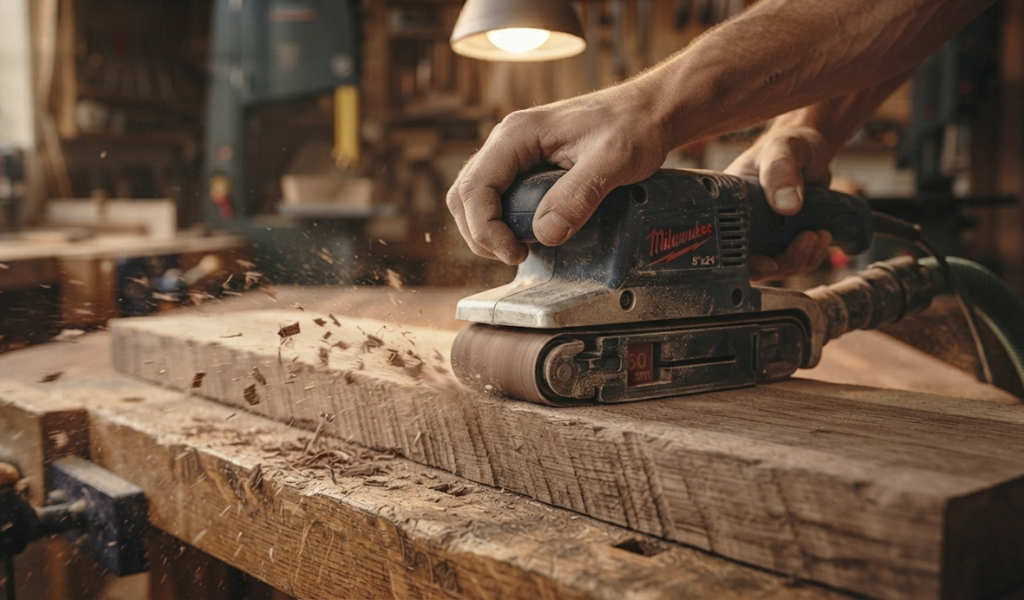
Because belt sanders are so aggressive, they are typically loaded with coarser grit belts for heavy removal jobs and switched to finer grits as the surface gets closer to finished. Many woodworkers keep a variety of grit belts on hand so they can move from rough stripping to a smoother finish without changing tools.
The key differences between belt sanders and orbital sanders really come down to speed, control, and the type of finish each one produces.
A belt sander is built for power. It removes material fast, which makes it the better choice for big jobs like refinishing hardwood floors or stripping paint from an old porch railing. The tradeoff is that it takes more skill to use well. Since the abrasive belt spins so aggressively, staying in one spot for even a second too long can gouge the wood or leave visible sanding marks that are hard to fix.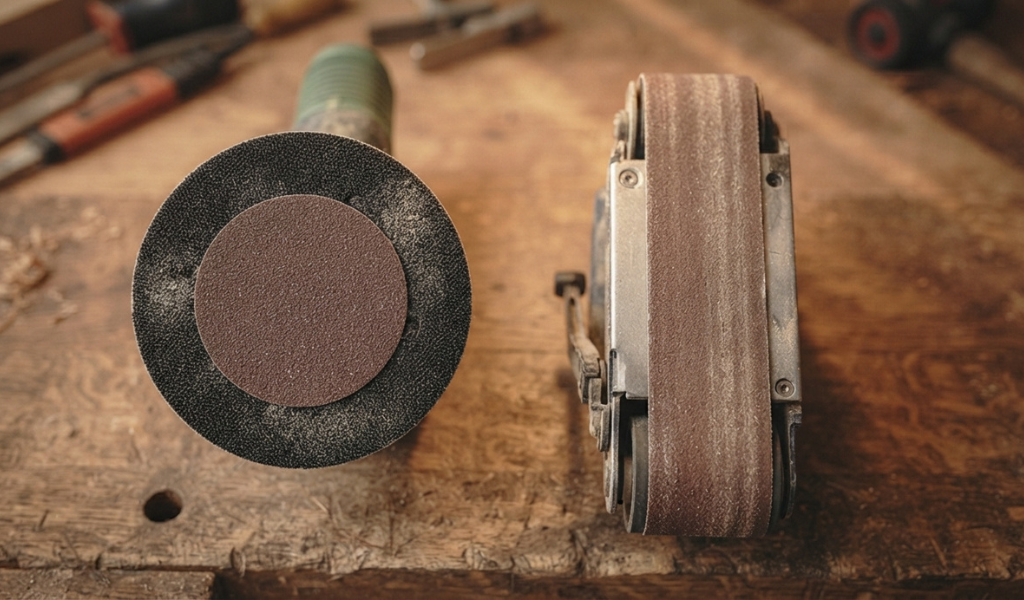
An orbital sander, on the other hand, is designed for control. Its gentle, random spin pattern means you can rest the pad flat on the surface without worrying about digging in. This makes it far more forgiving for beginners and much better suited to fine finishing where a smooth, even surface is the goal.
Another difference worth mentioning is versatility. A random orbital sander is genuinely versatile, handling everything from rough sanding with lower grits to fine finishing with finer grits, all with the same tool. A belt sander is more of a specialist, built almost entirely around fast material removal rather than delicate finish sanding.
The right sander really depends on the task at hand. If you are working on furniture restoration, cabinet doors, or any project where the final look matters most, a random orbital sander is usually the better choice. It handles curves, edges, and flat surfaces with equal ease, and the finish it leaves behind needs little to no additional work.
If your project involves rough wood that needs serious shaping, like leveling a new deck, sanding down a tabletop with an uneven glue up, or stripping decades of old paint off a door, a belt sander will save you a huge amount of time. Refinishing hardwood floors is actually one of the classic use cases for a belt sander, since large stationary or handheld drum sanders are standard equipment for that kind of floor removal work.
Many woodworkers keep both tools in their arsenal and use them together. The belt sander handles the heavy lifting and initial leveling, and the orbital sander steps in afterward to refine the surface and eliminate any leftover scratch marks.
If you are new to woodworking or DIY projects in general, control matters just as much as speed. A random orbital sander is much easier to handle for a first timer. You simply move the sander in slow, overlapping passes across the surface, and the random orbit pattern takes care of blending everything smoothly. There is a low risk of gouging or over sanding one spot.
A belt sander demands a steadier hand. You need to keep the tool moving constantly, follow the direction of the wood grain, and apply even pressure across the whole belt. Stop moving even briefly and you risk creating a dip or a burn mark on the surface. This is why most guides recommend practicing on scrap wood before using a belt sander on a real project.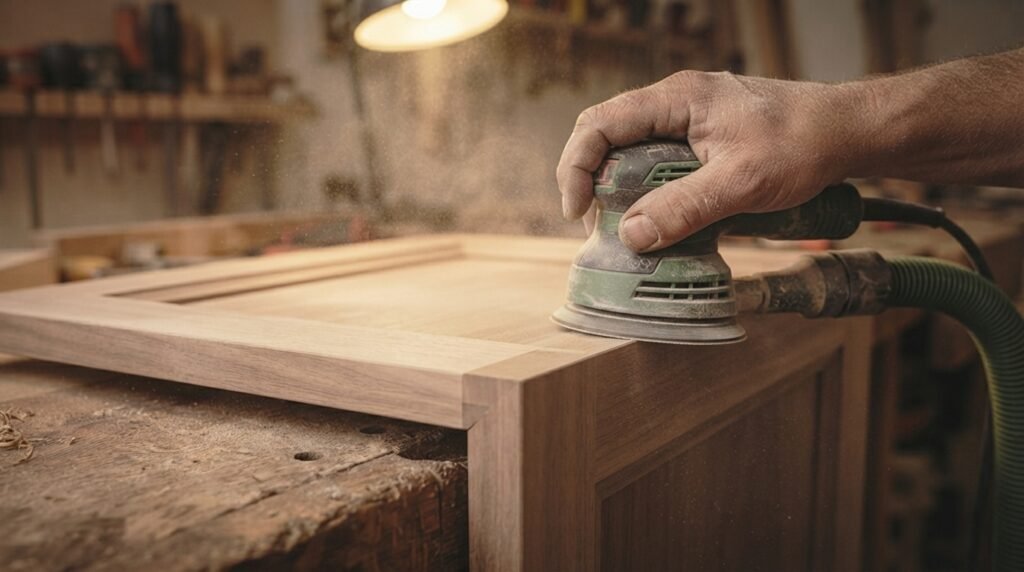
When it comes to finish quality, the orbital sander wins in almost every case. Its finer grits and gentle motion produce a smooth, swirl free surface that is often ready for stain or paint right away. A belt sander, even with fine grit belts, tends to leave a slightly rougher texture that usually benefits from a final pass with an orbital or finishing sander.
Random orbital sanders offer a great balance of speed and precision. They are lightweight, easy to handle for long periods, and produce a fine, even finish without much effort. The circular sanding pad also makes it simple to reach corners and curved edges that a rectangular belt sander would struggle with.
On the downside, orbital sanders are not built for heavy material removal. If you need to strip thick paint or level a badly uneven board, this tool will take much longer to get the job done, and you may find yourself wishing for something more powerful.
Belt sanders shine when speed and power are the priority. They chew through rough wood, old finishes, and uneven surfaces quickly, which makes them a favorite for floor refinishing and heavy duty shaping work. Swapping grit belts is also fairly quick once you get the hang of it.
The downside is control. Belt sanders are harder to master, and mistakes tend to show up as noticeable gouges or uneven spots. They are also heavier and bulkier, which can make extended use more tiring, and their rectangular shape makes tight corners nearly impossible to reach.
When comparing finish quality side by side, the orbital sander almost always produces the smoother result. Its random spin pattern prevents the repetitive scratch lines that other sanders can leave behind, which is exactly why it is the go to choice for fine finishing before staining or painting.
Control follows a similar pattern. The orbital sander stays flat and steady on the surface with little risk of digging in, while the belt sander requires constant attention and movement to avoid damaging the wood. If your project depends on a flawless, ready to finish surface, lean toward the orbital sander. If your project is about leveling and stripping first, the belt sander should do that heavy work before the orbital sander finesses the final result.
Belt sanders perform best on hardwood floors, decking, stripping old paint or varnish, leveling rough lumber, and any job that involves removing a large amount of material in a short time. They are also common in framing and construction work where speed matters more than a polished finish.
Orbital sanders are best suited for furniture refinishing, cabinet work, trim, smoothing filler or putty, prepping surfaces before painting, and any fine finishing task where the final texture needs to feel smooth to the touch. Many woodworkers also reach for an orbital sander when working with veneer or thin panels, since the gentle action is far less likely to sand through delicate layers.
Both tools generate a lot of dust, so wearing a mask or respirator is important, especially during extended sanding sessions. Safety glasses are a must as well, since wood chips and dust particles can easily fly up toward your face.
With a belt sander, always keep both hands on the tool and let the machine do the work rather than pressing down hard. Start the sander before it touches the wood, and lift it off the surface before switching it off, to avoid gouging.
With an orbital sander, the risks are lower, but it still helps to use a dust extractor or shop vac attachment when available, and to check your sandpaper regularly since a worn out sheet will slow down your progress and produce a rougher finish than expected.
There is no single winner in the belt sander vs orbital sander debate, because these tools are built for different purposes. If your project involves heavy material removal, floor refinishing, or stripping old finishes, a belt sander is the better choice. If your goal is a smooth, refined surface on furniture or any flat surfaces that need to look their best, a random orbital sander is the tool you want.
Many serious woodworkers eventually own both, using the belt sander to handle the rough stage and the orbital sander to bring everything to a polished finish. Think about the task at hand, consider how much control you need, and choose the sander that actually matches your project instead of trying to force one tool to do everything.
Can a random orbital sander replace a belt sander completely?
Not really. An orbital sander is great for fine finishing and light sanding, but it will struggle with heavy material removal jobs like stripping paint or leveling rough lumber, which a belt sander handles much faster.
Is a belt sander good for beginners?
It can be trickier to control than an orbital sander. Beginners should practice on scrap wood first, since it is easy to gouge a surface if the tool sits in one place too long.
What grit should I start with on a belt sander?
For heavy removal, start with a coarse grit around 60 to 80. Once the surface is level, move up to 100 or 120 grit, then finish with an orbital sander for a smoother result.
Do orbital sanders leave swirl marks?
Rarely. The random, elliptical motion of the pad is specifically designed to prevent the swirl marks that some rotary sanders can leave behind.
Which sander is better for refinishing hardwood floors?
A belt sander, often a larger stationary or drum style version, is the standard tool for floor refinishing because it can remove old finish and level boards quickly across a large area.
Can I use an orbital sander on furniture with curves?
Yes. Its round pad and gentle motion make it well suited for curved or detailed furniture pieces, unlike the rectangular belt sander which works best on flat, open surfaces.
How do I know when to switch from a belt sander to an orbital sander?
Once the surface is level and free of major imperfections, switch to the orbital sander with a finer grit to smooth out any remaining marks and prepare the wood for stain or paint.