Physical Address
304 North Cardinal St.
Dorchester Center, MA 02124
Physical Address
304 North Cardinal St.
Dorchester Center, MA 02124

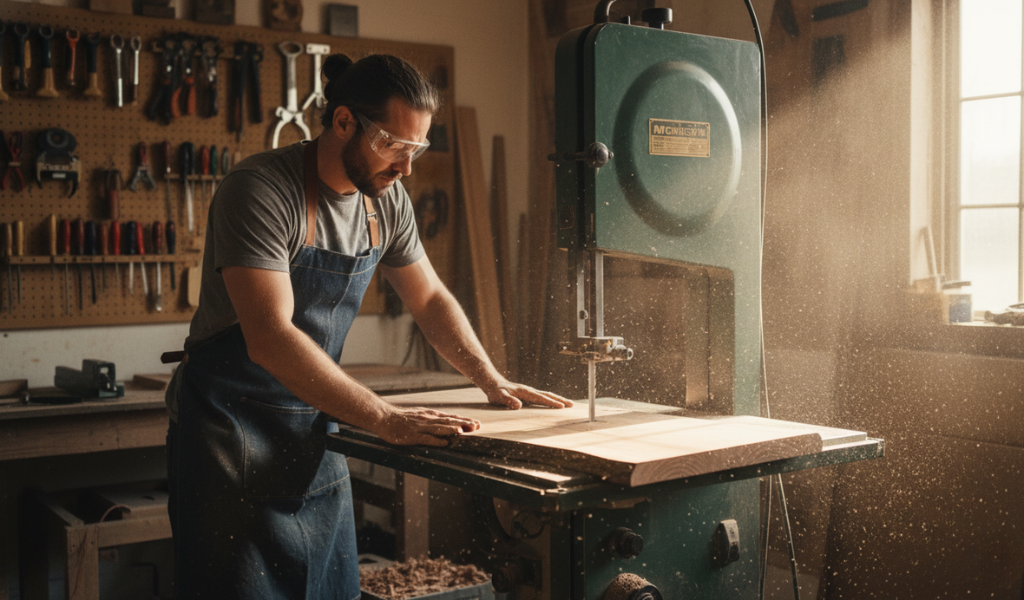
A band saw machine is one of the most versatile cutting tools in any workshop — whether you’re shaping hardwood furniture, slicing through metal bars, or trimming plastic components. If you’ve been trying to understand band saw machines and figure out whether one belongs in your workspace, this guide covers everything you need to know: how they work, what they’re used for, which types exist, how to choose the right blade, and how to use one safely.
By the end, you’ll have a clear picture of what makes a band saw so widely used across industries — and how to get the most from one in your own projects.
A band saw machine is a power saw that uses a long, continuous loop of toothed metal blade stretched between two or more rotating wheels. As the wheels spin, the blade moves in a single, constant direction — which is what gives the band saw its smooth, consistent cutting action.
The design is deceptively simple. Two wheels hold the blade under tension, and as the material is fed into the blade, the teeth do the cutting work. Because the blade never reverses direction, the cut stays clean and the pressure on the material stays even.
Band saws are used in woodworking, metalworking, butchery, plastics manufacturing, and several other industries. Their ability to handle both straight cuts and complex curves makes them useful in situations where other saws fall short.
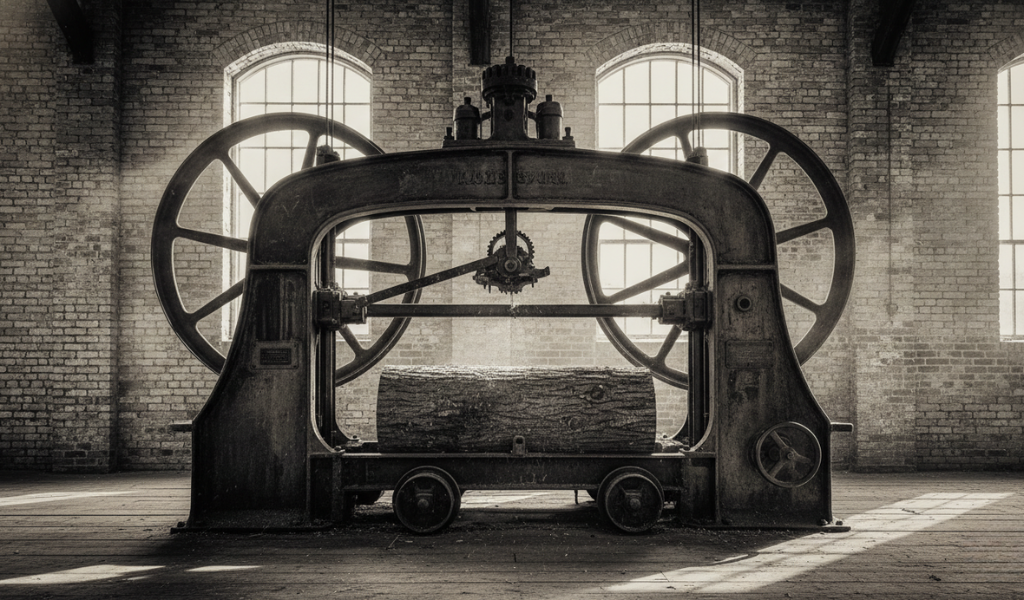
The origin of the band saw traces back to England, though the exact inventor remains unconfirmed. Early versions struggled due to the manufacturing limitations of the era — specifically, producing a blade long enough and strong enough to hold up under continuous use. As metalworking technology improved, band saws became more reliable and gradually spread into industrial and craft workshops.
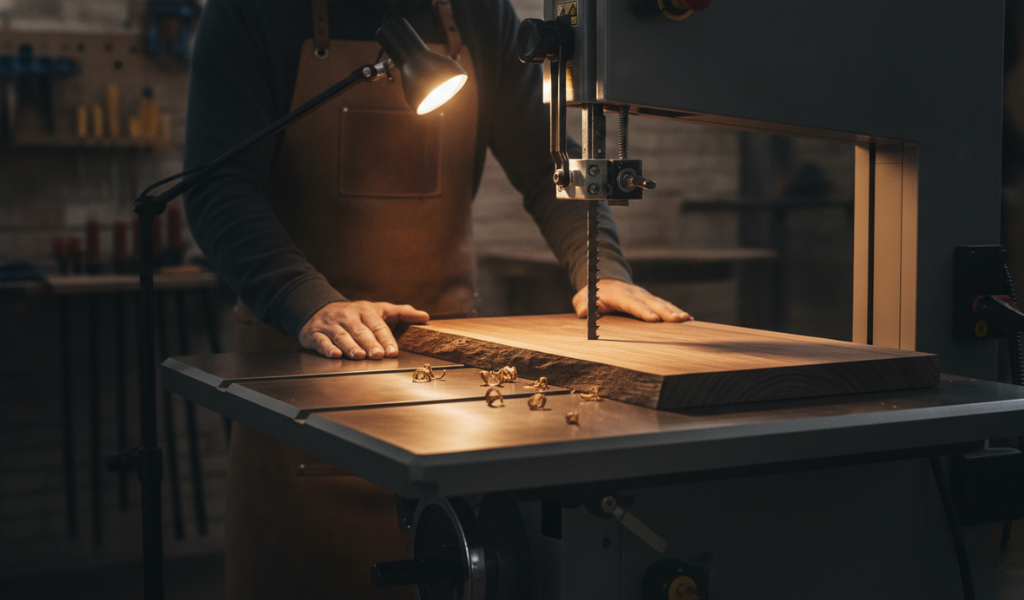
The working principle is straightforward: two (sometimes three) wheels rotate continuously, keeping the blade under constant tension. The blade loops around both wheels and passes through a cutting slot in the machine table. You push the material into the blade — the blade does not come to you.
This setup offers a few important advantages over reciprocating saws (which move back and forth). Because the cutting force is always applied in one direction, there’s less vibration, less blade deflection, and a more predictable cut. The teeth also stay cooler because each tooth only contacts the material briefly before cycling away.
The table on most band saw machines can tilt, which lets you make angled cuts without repositioning the material. Some machines also allow the blade speed to be adjusted depending on whether you’re cutting wood, metal, or plastic — each material has an ideal cutting speed.
Band saws appear in more industries than most people expect. Here’s a breakdown of the most common applications.
In furniture making, cabinet building, and wood sculpting, band saws are valued for their ability to cut curves, irregular shapes, and tight joints. A table saw can rip a straight line faster, but it can’t follow a curved template. A band saw can. This makes it the preferred tool for chair legs, decorative panels, and custom cabinetry components.
Wood sculptors and artisans also rely on band saws to rough out three-dimensional shapes before refining them with chisels or carving tools.
Metal-cutting band saws handle pipe, bar stock, sheet metal, and structural profiles. They’re found in machine shops, automotive repair facilities, and fabrication workshops. Because band saw blades apply steady, downward cutting pressure (unlike an angle grinder, which generates heat through friction), they produce cleaner cuts with less material distortion.
In the automotive industry, band saws are used to cut replacement parts, trim metal components, and process raw stock before machining.
Band saws cut more than just wood and metal. Common applications include:
The common thread across all of these is the need for a controlled, consistent cut — which is exactly what a band saw delivers.
Understanding band saw machines means understanding why so many industries rely on them. Here are the core advantages.
Flexibility: A single band saw can handle wood, metal, plastic, foam, and composites. You change the blade and, in some cases, the speed — and the same machine adapts to a different task.
Precision: The continuous blade applies an even cutting force across the full thickness of the material. This means the cut stays consistent from the top of the workpiece to the bottom, with very little deviation. For detailed joinery or tight-tolerance metal parts, this matters.
Efficiency: Band saws cut faster than hand tools and are generally more efficient than reciprocating saws for long or curved cuts. They can handle thick material in a single pass, which reduces setup time and the need for multiple tools.
Minimal vibration: The continuous-loop blade design produces less vibration than saws that reverse direction. Less vibration means more accurate cuts and a better working environment for extended use.
Reduced waste: Band saw blades are narrow, so the kerf — the width of material removed by the cut — is smaller than what most other saws produce. Less material is converted to sawdust, which matters when you’re working with expensive hardwood or metal stock.
Creative range: The ability to follow curves and cut complex shapes opens up design possibilities that straight-cut tools simply can’t match. For custom furniture, artistic woodwork, and prototype fabrication, this is a genuine advantage.
There is no single band saw design that fits every situation. Machines vary by size, orientation, automation level, and intended material. Knowing the differences helps you choose the right tool — or understand why a manufacturer might recommend one model over another.
Vertical band saw machines hold the blade vertically, with the table positioned horizontally. The operator feeds material across the table into the blade. These are common in woodworking and light metalworking, where the operator needs to guide irregular shapes.
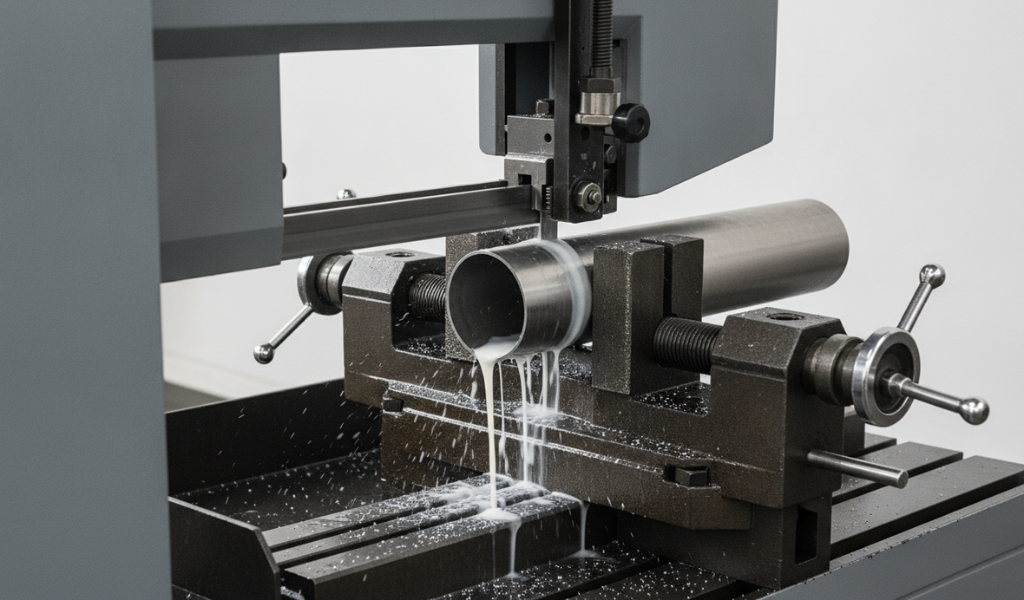
Horizontal band saw machines orient the blade horizontally and lower it into the material under controlled gravity or hydraulic pressure. These are standard in metal cutting, particularly for cutting bar stock and pipe to length.
Manual band saw machines require the operator to feed the material and control the cut throughout the process. They offer the most flexibility for custom, one-off cuts.
Semi-automatic band saw machines handle the downward cutting movement automatically but still require the operator to load and position the material. They’re suited to repetitive production work where consistent cut depth matters.
Fully automatic band saw machines handle feeding, cutting, and sometimes unloading with minimal operator input. These are found in high-volume industrial settings where throughput and repeatability are priorities.
Other configurations include scissor-type band saws, rotating angle band saws (which can cut at multiple angles without repositioning the material), gantry-type automatic band saws for large workpieces, and column band saw machines designed for heavy industrial use.
For specialized applications — such as cutting semiconductor wafers or food processing — custom-designed band saws are available with specific blade compositions, speed ranges, and contamination controls.
Band saw vs Table saw is a great debate but a band saw uses a continuous loop blade and excels at curved cuts, resawing, and safer ripping. A table saw uses a circular blade and is better for fast straight cuts, sheet goods, and production work. Many workshops use both tools because they complement each other.
Choosing the right saw blade is one of the most important decisions when using a band saw. The wrong blade will produce poor cuts, wear out quickly, or even damage the machine. Here’s what to consider.
Tooth pitch (TPI — teeth per inch): Higher TPI blades produce smoother cuts but cut more slowly. Lower TPI blades remove material faster but leave a rougher surface. For thick metal, a lower TPI blade is generally more effective. For thin sheet metal or fine woodwork, higher TPI gives better results.
Blade width: Wider blades are more rigid and better suited to straight cuts. Narrower blades flex more easily and are better for curves. For general-purpose woodworking, a medium-width blade handles both reasonably well. For tight curves, use the narrowest blade the machine can accommodate.
Blade material: High-speed steel (HSS) blades are common for metalworking. Bi-metal blades — which combine a flexible steel body with hardened teeth — last longer and handle harder materials. Carbon steel blades are a cost-effective option for woodworking.
Blade set: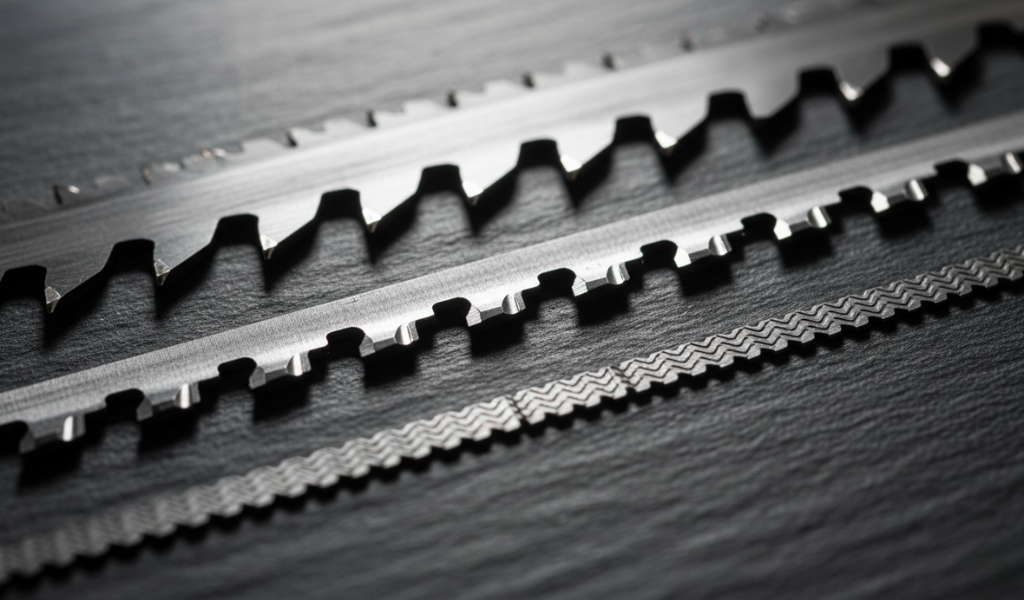 The teeth on a band saw blade are bent slightly outward in an alternating pattern. This creates a kerf slightly wider than the blade body, preventing the blade from binding in the cut. Blades with more sets produce wider kerfs and are better for green or wet wood. Blades with less set give tighter cuts in dry, stable materials.
Cutting speed: Metals generally require slower blade speeds to prevent heat buildup and tooth wear. Wood can be cut at much higher speeds. Always check the manufacturer’s recommendation for the material you’re cutting — running a blade too fast through metal is one of the most common causes of premature blade failure.
When in doubt in How to Select the Right Saw Blade, consult the band saw machine’s documentation or the blade manufacturer’s material chart. Starting with the recommended settings and adjusting from there is far easier than troubleshooting a damaged blade after the fact.
Knowing how to use a band saw correctly is just as important as knowing which blade to choose. The machine is precise and efficient, but it requires careful handling.
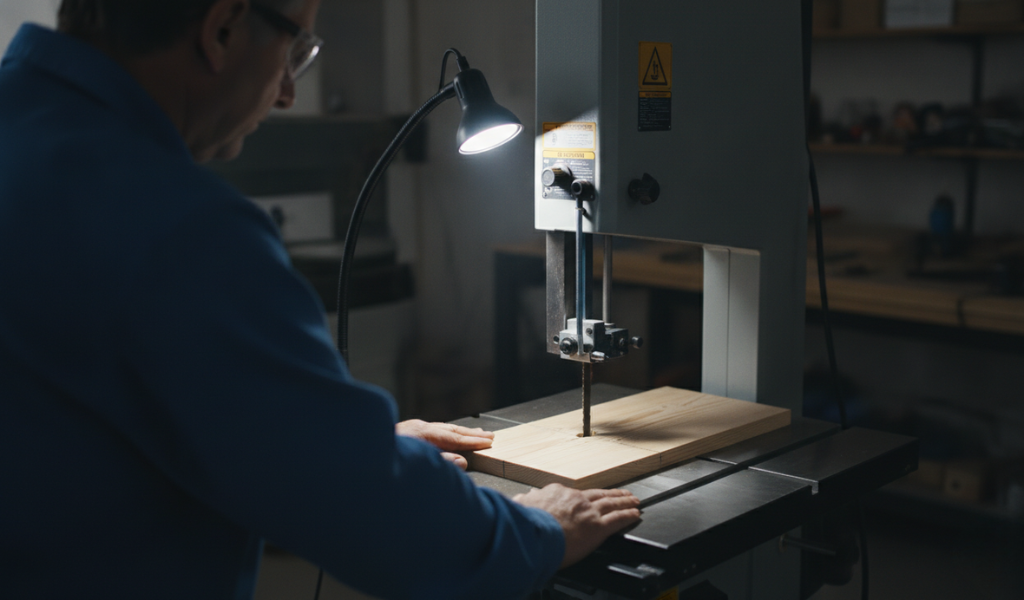
Prepare your workspace first. Clear the area around the machine and ensure you have at least two meters of free space on all sides. Good lighting is essential — aim for at least 50 foot-candles of illumination to see your cut line clearly and spot any issues with the material.
Wear appropriate protective equipment. Safety glasses protect against chips, dust, and fragments. Avoid loose clothing, gloves with dangling material, or jewelry that could catch on the blade or workpiece. Keep long hair tied back.
Inspect the blade before starting. Check for cracks, missing teeth, or signs of unusual wear. A cracked blade should be replaced immediately — continuing to use it risks blade failure during operation. If the blade makes unusual noise or vibration during a cut, stop the machine and investigate before continuing.
Use the widest blade that your cut allows. Wider blades are more stable and produce straighter cuts with less blade drift. Only switch to a narrower blade when the curve radius genuinely requires it.
Keep your hands away from the blade path. Position your hands to the side of the cut line, not directly behind the blade. Use push sticks or guides when working with small pieces that would bring your hands close to the blade.
Stop the machine before making adjustments. Never adjust blade tension, reposition guards, or clear material from the table while the blade is moving.
Following a set of standard operating procedures — and making sure every person who uses the machine is trained on them — reduces the risk of accidents significantly. Treat safety training as a routine part of onboarding, not a one-time event.
Regular maintenance keeps a band saw running accurately and extends the life of both the machine and its blades.
Before each use, check the following:
On a longer schedule, replace lubricating oil every two weeks and gear oil every six months. Inspect the tungsten steel guide blocks — the components that support the blade during cutting — for wear and replace them when they show visible deterioration. Guide blocks that are worn down allow the blade to flex, which directly affects cut accuracy.
Understanding band saw machines gives you a real advantage when selecting equipment, choosing blades, or troubleshooting cut quality. The machine is flexible, precise, and efficient — but only when the right type, blade, and settings are matched to the task.
If you’re just starting out, a vertical band saw with a medium-width bi-metal blade covers most woodworking and light metalworking needs. For production environments or heavy metal cutting, a semi-automatic or fully automatic horizontal band saw will save time and produce more consistent results.
Whatever your application, take the time to match the machine to the material, maintain it consistently, and follow safe operating procedures. The band saw rewards careful setup with clean, repeatable cuts — and that’s a foundation worth building on.
What is a band saw machine used for?
A band saw machine is used to cut wood, metal, plastic, foam, composites, and food products such as meat and bone. It handles both straight cuts and curved cuts, making it useful across woodworking, metalworking, fabrication, and food processing industries.
What is the difference between a vertical and horizontal band saw?
A vertical band saw holds the blade vertically and requires the operator to feed the material across the table. A horizontal band saw lowers the blade into the material under controlled pressure. Vertical saws are better for curves and custom shapes; horizontal saws are better for cutting bar stock and pipe to length.
What Are the Main Types of Band Saw Machines?
The main types of band saw machines include vertical band saws, horizontal band saws, manual band saws, semi-automatic band saws, and fully automatic band saws. Each type is designed for different cutting applications, material sizes, and production requirements.
How do I choose the right blade for my band saw?
Select a blade based on the material you’re cutting, the thickness of the cut, and the type of cut (straight or curved). Higher TPI blades produce smoother cuts on thin or fine materials; lower TPI blades cut faster through thick material. Bi-metal blades last longer and handle metal well; carbon steel blades are cost-effective for woodworking.
How often should I maintain my band saw machine?
Check hydraulic oil, cutting fluid, blade installation, and machine stability before each use. Replace lubricating oil every two weeks and gear oil every six months. Inspect guide blocks regularly and replace them when they show visible wear.
Why is my band saw cutting crooked?
Crooked cuts are usually caused by blade drift, insufficient blade tension, worn guide blocks, or using a blade that’s too narrow for a straight cut. Check the blade tracking, re-tension the blade, and inspect the guide blocks. If the problem persists, try a wider blade.
Can a band saw cut metal?
Yes. Metal-cutting band saws use blades with lower TPI, harder tooth materials (such as bi-metal or carbide), and slower blade speeds to manage heat. Cutting fluid or coolant is typically used to reduce friction and extend blade life. Always match the blade specification to the type and thickness of the metal.
Is a band saw safe for beginners?
A band saw is considered safer than some other power saws because the blade moves in one direction and produces less kickback. That said, it still requires proper training, appropriate protective equipment, and careful attention to blade condition and workspace setup. Beginners should start with supervised practice and review the machine’s safety guidelines before operating independently.