Physical Address
304 North Cardinal St.
Dorchester Center, MA 02124
Physical Address
304 North Cardinal St.
Dorchester Center, MA 02124


You might have heard the term used in auto shops, dental offices, or construction sites, but if you are entirely new to industrial tools, you are likely asking: what is a compressor? Simply put, a compressor is a mechanical device that increases the pressure of a gas by reducing its volume. It acts as a vital power source for many different applications, from inflating car tires to powering heavy manufacturing machinery.
Learning how these machines work can help you understand the tools you rely on daily. This guide explores the basic mechanics of compressors, the different types available, and practical tips for maintaining them. You will learn exactly what these devices do and gain the knowledge needed to operate them safely and efficiently.
A compressor is a mechanical device that increases the pressure of air or gas by reducing its volume. It stores compressed air or gas and releases it as energy to power tools, industrial equipment, refrigeration systems, and various mechanical applications.
At its core, a compressor is a machine that forces gas or air into a smaller space. By packing the air tightly into a storage tank, the machine increases the air’s pressure. When this highly pressurized air is released, it creates a powerful force that can run pneumatic tools, manage heating and cooling systems, or propel industrial processes.
The mechanism relies on fluid mechanics and thermodynamics — the science of how heat and energy interact. When the machine mechanically works on the gas, the pressure rises while the volume drops. Because air is non-toxic and affordable to compress, it serves as an incredibly efficient power source for both small DIY projects and large-scale manufacturing.
Not all compressors do the same job. Manufacturers categorize these machines based on how they compress the air. The two main categories are positive displacement compressors and dynamic compressors.
These machines work by pulling air into a chamber and physically reducing the chamber’s size. The main types of compressors in this category include:
Reciprocating compressors: These use a piston moving back and forth inside a cylinder to compress the gas. You will often see them in automotive shops and smaller industrial plants.
Rotary screw compressors: These feature two interlocking screws that continuously turn to compress the air. They are highly efficient and ideal for factories that need a constant, uninterrupted air supply.
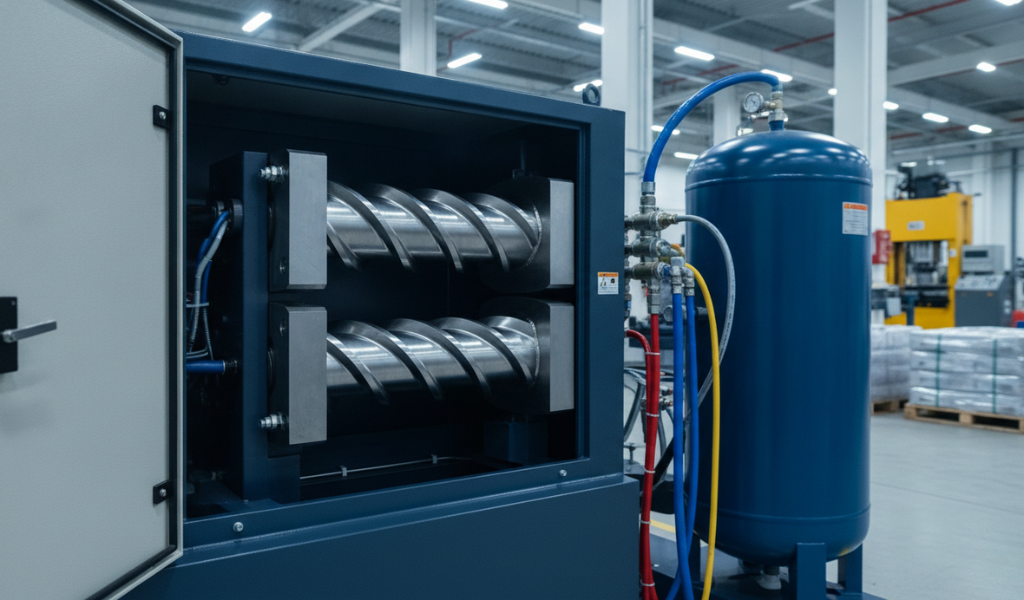
Scroll compressors: These use two interleaved scroll-shaped vanes. They run quietly and frequently power refrigeration and air conditioning systems.
Instead of trapping air in a shrinking chamber, dynamic compressors use rapidly spinning blades to accelerate the air, which builds pressure.
Centrifugal compressors: These machines draw air into the center of a rotating impeller and push it outward. They handle massive volumes of gas and are common in chemical plants.
Axial compressors: These force air parallel to the rotating shaft. They are highly efficient at high speeds and are heavily used in aerospace applications like jet engines.
Understanding compressor functions helps you see just how heavily modern industry relies on this technology. The specific role a compressor plays depends entirely on its design and the industry using it.
Key functions include:
Modern compressor technology has evolved to prioritize energy efficiency, lower noise levels, and better operational reliability. Today’s machines feature advanced capabilities designed to save money and protect the environment.
Recent innovations:
Variable Speed Drive (VSD): These motors adjust their speed to match the current air demand. This prevents the machine from running at full power when it is not needed, significantly cutting electricity costs.
Oil-free designs: Some industries, like food processing and pharmaceuticals, cannot risk oil contaminating their air supply. Oil-free compressors use alternative materials and coatings to run smoothly without standard lubrication.
Smart monitoring: Many modern units connect to the internet to track their own performance. They can alert you to potential breakdowns before they happen, making predictive maintenance much easier.
These technological leaps allow compressors to serve incredibly diverse fields. You will find them running assembly lines in manufacturing plants, controlling air brakes in heavy trucks, and even powering dental drills in medical offices.
If you have recently purchased a unit for your garage or workshop, knowing how to use an air compressor correctly is essential for both your safety and the tool’s longevity.
Steps for safe operation:
Check the oil: If you have an oil-lubricated model, verify that the oil level reaches the indicator line before turning it on.
Attach the hose: Securely connect your air hose to the regulator valve. Ensure the connection is tight to prevent air leaks.
Plug it in: Connect the unit to a properly grounded electrical outlet.
Turn it on: Flip the power switch. The motor will start, and you will hear the tank filling with air. It will shut off automatically once it reaches maximum pressure.
Adjust the pressure: Look at the tool you plan to use and note its required pounds per square inch (PSI). Adjust the compressor’s pressure regulator to match that number.
Drain the tank after use: When you finish your work, open the drain valve at the bottom of the tank to release trapped moisture. This prevents the interior of the tank from rusting.
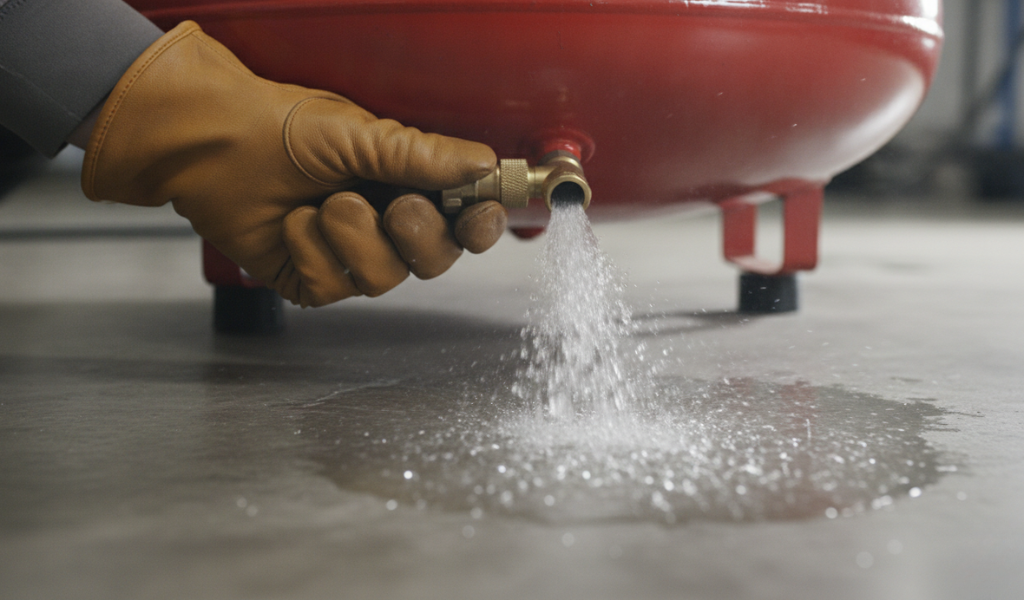
Taking care of your equipment guarantees long-term reliability and prevents expensive repairs. A solid approach to air compressor maintenance protects your investment and keeps your tools running efficiently.
Routine tasks:
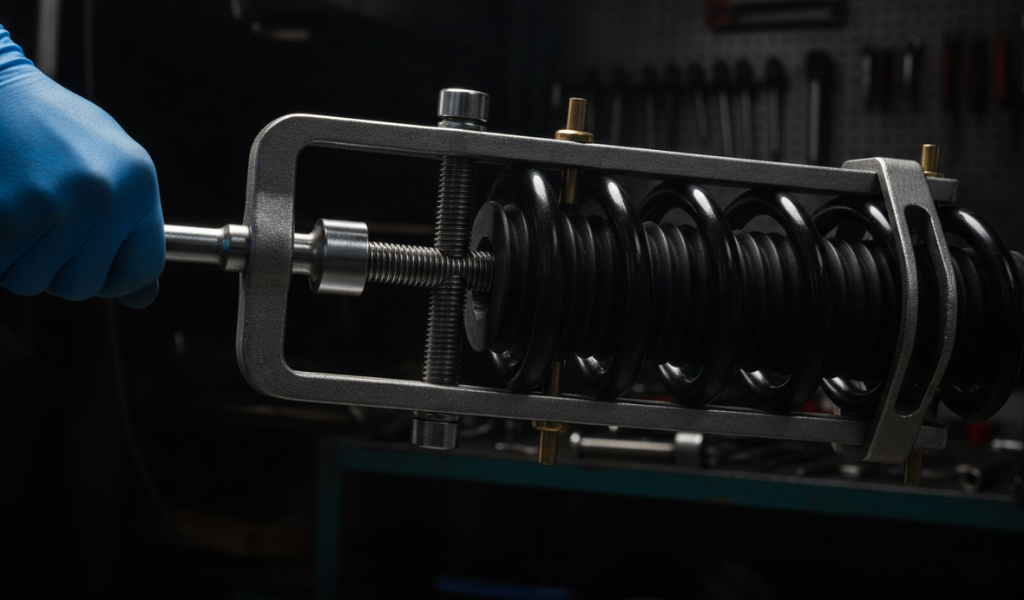
While air compressors handle gases, a spring compressor is a specialized mechanical tool used by mechanics to safely remove and install coil springs on a vehicle’s suspension. The spring holds massive amounts of stored energy, so you should know about how to use a spring compressor to handle it improperly ,can cause severe injury.
How it works:
Talk to a professional mechanic before attempting this task if you do not have experience working with automotive suspensions.
Selecting the correct equipment depends heavily on the tasks you need to complete. Learning how to choose the right compressor tool involves matching the machine’s output to your specific needs.
Consider the airflow:
Look at the cubic feet per minute (CFM) rating. Your compressor must produce more CFM than your most demanding tool requires. If your sander needs 5 CFM, buy a compressor that produces at least 6 or 7 CFM to give yourself a safe buffer.
Evaluate the tank size:
If you are using tools that require continuous air, like a paint sprayer, you need a larger tank (20 gallons or more) so the motor does not run constantly. For quick tasks like using a brad nailer, a small 3-gallon pancake compressor works perfectly.
Think about portability:
If you need to move the unit around a job site, choose a model with wheels and a sturdy handle. If it will stay in a designated corner of a factory, a heavy, stationary unit offers better performance.
If you are looking specifically for automotive suspension work, knowing how to choose the right spring compressor tool means looking for high-quality, heavy-duty forged steel. Ensure the tool features safety pins or locking jaws to prevent the spring from slipping out under pressure.
Establishing a schedule is the best way to ensure your equipment lasts. So, what is a compressor maintenance routine that actually works? It is a proactive schedule of checks that keeps small issues from becoming major mechanical failures.
Daily checks:
Weekly checks:
Annual checks:
Compressors are foundational tools that power countless industries and hobbies. Whether you are using a massive rotary screw compressor to run a manufacturing plant, or relying on a small pancake unit to inflate tires in your garage, understanding how these machines function allows you to work smarter.
By familiarizing yourself with the different types, matching the equipment to your specific needs, and sticking to a consistent maintenance schedule, you ensure your tools will serve you reliably for years to come.
What is the life expectancy of an air compressor?
For most people, a well-maintained air compressor will last between 10 and 15 years. The exact lifespan depends heavily on how often you use it and whether you follow a strict maintenance schedule.
What Is the Difference Between an Air Compressor and a Compressor?
An air compressor specifically compresses air for powering pneumatic tools, inflating tires, operating machinery, and other air-powered applications. A compressor is a broader term that includes machines designed to compress various gases, such as air, natural gas, refrigerants, hydrogen, and industrial process gases for commercial, residential, and industrial use.
How do positive displacement and dynamic compressors differ?
Positive displacement compressors trap air in a chamber and shrink that space to build pressure. Dynamic compressors use rapidly spinning blades to accelerate the air, relying on speed to generate pressure.
How often should I change my air filter?
You should clean or replace your air filter every 1,000 hours of use. However, if you operate the machine in a highly dusty environment, like a woodworking shop, you should check and replace it much more frequently.
Can I use a spring compressor with an air impact wrench?
Most manufacturers advise against using an impact wrench with a spring compressor. The rapid, violent torque of an impact wrench can damage the threads on the tool or cause the hooks to slip, which is extremely dangerous. Always use hand tools to tighten it slowly and evenly.
Why does my compressor have water in the tank?
When air is compressed, the moisture naturally present in the air gets squeezed out and turns into liquid water inside the tank. This is entirely normal, which is why opening the drain valve after every use is a critical maintenance step.