Physical Address
304 North Cardinal St.
Dorchester Center, MA 02124
Physical Address
304 North Cardinal St.
Dorchester Center, MA 02124

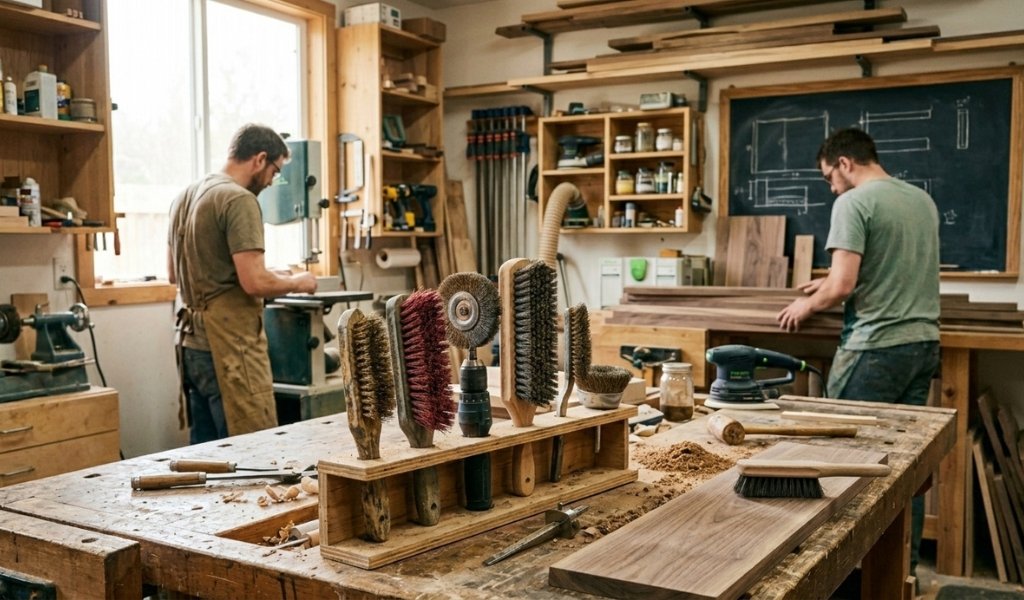
Sandpaper has its limits. Try smoothing a carved chair leg, a fluted molding, or the grooves of a reclaimed barn board with a flat sheet, and you’ll quickly understand why. This is where the wood sanding brush earns its place in serious woodworking. Instead of a rigid abrasive surface, a sanding brush uses flexible bristles that follow the shape of your workpiece wrapping around contours, dipping into recesses, and reaching spots a sander simply can’t touch.
Whether you’re a production shop chasing consistent results or a weekend DIYer restoring old furniture, understanding how these brushes work will change the way you approach surface finishing. If you want a broader foundation on abrasives and technique first, our complete guide to sanding covers grit progression, tools, and safety in detail.
In this guide, we’ll break down what a sanding brush actually is, the main types of sanding brushes for woodworking, and exactly when to reach for one over traditional sandpaper. You’ll also get straight answers to the most common questions about detailed and efficient sanding wood. Let’s get into it.
Before you buy a single brush, it helps to understand what makes brush sanding different from every other abrasive method. The magic isn’t in the brush body, it’s in the filament.
A wood sanding brush is a tool built from flexible bristles that abrade a wood surface as they rotate or move across it. Unlike a sheet of sandpaper pressed flat against a board, the bristles of a sanding brush bend and flex, letting the abrasive reach into profiles, edges, and detail that flat abrasives skip over entirely.
There are two broad families of sanding brush, and they do very different jobs:
The simplest way to remember the difference: an abrasive nylon brush refines a surface, while a steel wire brush transforms it. Choosing between them comes down to whether you want to polish or to texture.
Sandpaper is flat, rigid, and unforgiving. It excels on flat surfaces, tabletops, panels, wide boards where you can lay the sheet down and work with the grain. But push sandpaper into a cove or a carved edge and it either skips the detail or crushes it.
A sanding brush works the opposite way. The bristles conform to whatever shape they meet. That flexibility makes brushes the better sanding tool for three specific situations:
There’s a trade-off, though. On a dead-flat surface that needs to be perfectly level, sandpaper on a block still wins. Brushes follow contours including any high or low spots so they won’t flatten a warped board. Think of the sanding brush as a specialist, not a replacement for your sander.
Once you know the filament matters most, the next decision is the brush format. The shape of the brush, its shank, and how it mounts all determine which jobs it suits. Here are the workhorses you’ll encounter in woodworking production and home workshops alike.
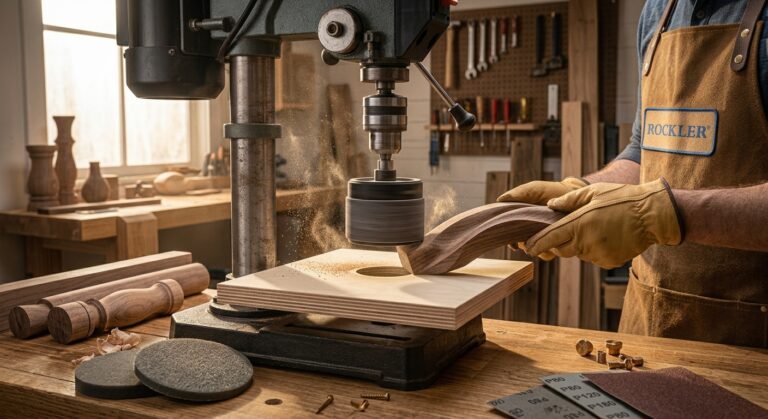
An abrasive nylon wheel brush is a cylindrical brush that mounts on a spindle, arbor, or drill. As it spins, the grit-filled nylon filaments flick across the wood surface, sanding evenly along every curve they touch. Because the filaments are flexible, they wrap around raised profiles and dip into hollows perfect for molding, spindles, and turned legs.
Sanding mops take this idea further. A sanding mop is built from overlapping flaps or a dense roller of abrasive material that flexes even more freely than stiff bristles. Mounted on a lathe or a spindle, the mop hugs intricate wood pieces and delivers a soft, even finish across complex contours. For anyone doing repetitive contour work, a nylon brush roller or mop turns a tedious hand-sanding job into a quick pass.
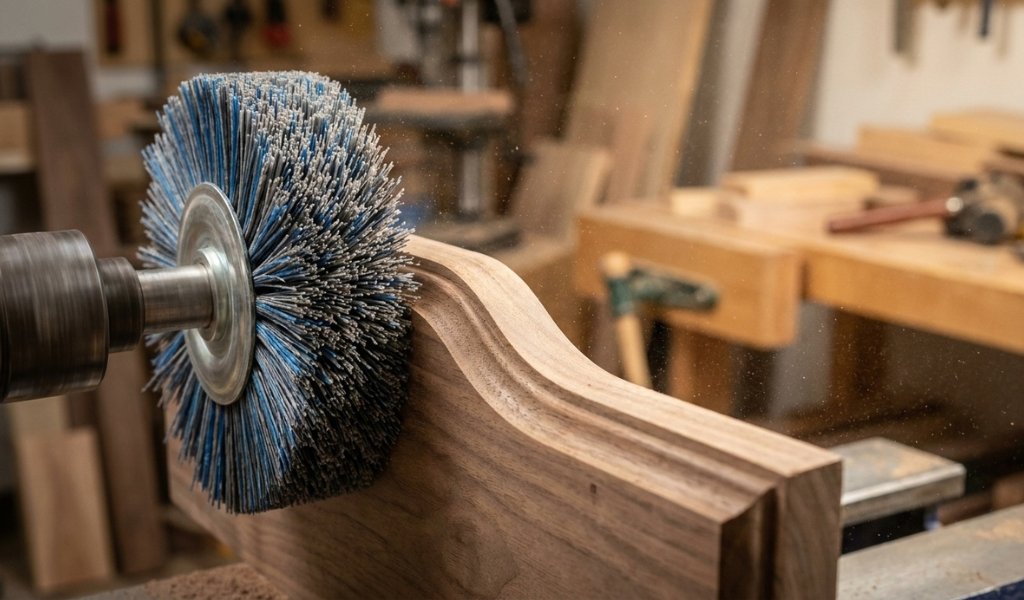
Grit ranges here run from coarse (around 80 grit) for stock removal up to fine (180 grit and beyond) for finish sanding. Softer woods respond best to a lighter touch and finer grit, since the flexible filaments can otherwise scrub away growth rings and leave an uneven texture.
A cup brush is exactly what it sounds like bristles arranged in a cup shape with a shank that chucks straight into a drill or angle grinder. The nylon cup version, filled with abrasive nylon, is excellent for surface prep, dust removal from raw wood, and knocking down fuzz over a broad area quickly.
Swap the nylon for steel wire and the same cup brush becomes a distressing tool. A steel wire cup brush digs out soft grain and can remove old paint or weathered fibers from flat surfaces and edges. This is the classic approach for giving new lumber an aged, rustic look or for cleaning up a log home before refinishing.
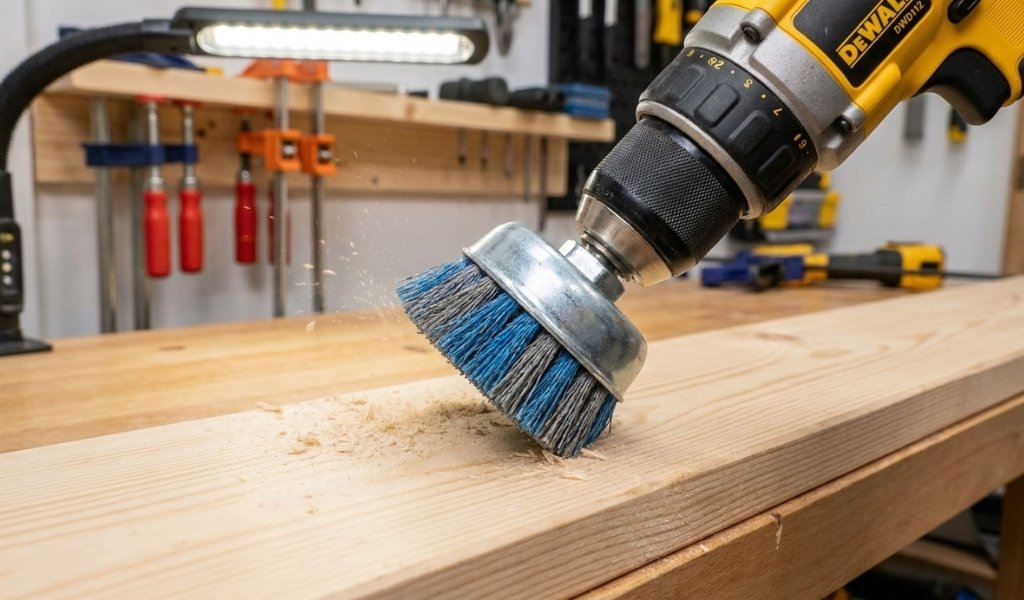
Drill-mounted brushes are the entry point for most DIYers. They’re affordable, they fit tools you already own, and they cover a surprising range of sanding tasks from smoothing to aggressive texturing depending on which filament you load into the shank.
Osborn is a name long associated with industrial brush manufacturing, and Osborn-style buffing brushes have become a standard in serious finish work. A single Osborn brush, loaded with fine abrasive nylon, is built to buff and polish rather than remove heavy stock.
These buffing brushes shine at one specific task: grain raising removal. When wood gets wet during staining, water-based finishing, or water-popping the surface fibers swell and stand up, leaving a rough texture. Running a fine abrasive nylon buffing brush across the surface shears off those raised fibers cleanly, restoring a smooth feel without gouging the wood. The result is a polished surface ready for the next coat.
For woodworking production environments, larger Osborn-style brushes mount directly onto sanding machines and woodworking machine setups, letting shops buff hundreds of parts to a consistent finish. The same principle scales down to a single brush on a bench grinder for the small shop.
Knowing the types of sanding brushes is only half the picture. The real value comes from matching the right brush to the right job. Here are the three applications where a sanding brush genuinely outperforms a flat abrasive.
Water-popping deliberately wetting wood to open the grain before staining produces deeper, richer color. The downside is wood felting: a fuzzy layer of raised fibers that appears once the surface dries. Sandpaper can remove it, but on any shaped or detailed piece, a flat sheet struggles.
An abrasive nylon brush handles wood felting and raised grain beautifully. The flexible filaments shear off the fuzz across curves and flat surfaces alike, leaving the grain smooth and the profile intact. A quick pass with a fine nylon brush is often all it takes to remove wood fuzz before the finish goes on.
Every finisher knows the frustration of dust nibs and tiny bumps that appear after a coat of sealer dries. Sanding these down with paper risks cutting through the thin coat and exposing bare wood underneath.
A fine abrasive nylon brush is the safer finish sanding tool here. Its filaments knock down nibs on sealer and fill coats without aggressively cutting the film. Between coats, a light brush pass leaves a flat, clean base for the next layer no sanding marks, no burn-through, just a smooth foundation. For production shops running many parts, brush-based denibbing on a woodworking machine keeps the whole line moving.
Not every project calls for glassy smoothness. Sometimes you want character, and this is where the steel wire brush earns its keep. Dragging a wire brush along the grain of soft or reclaimed wood tears out the soft spring-growth fibers while leaving the harder grain lines standing a technique called wire brushing or “brushing” that produces a textured, weathered surface.
This grain-raising technique is the foundation of rustic and antique finishes. On a reclaimed barn board or a fresh piece of pine, a wire brush can knock down excessive raised grain in some spots while deliberately raising texture in others. The same tool that ruins a fine tabletop is exactly right for aging a farmhouse table or refreshing the exterior boards of a log home.
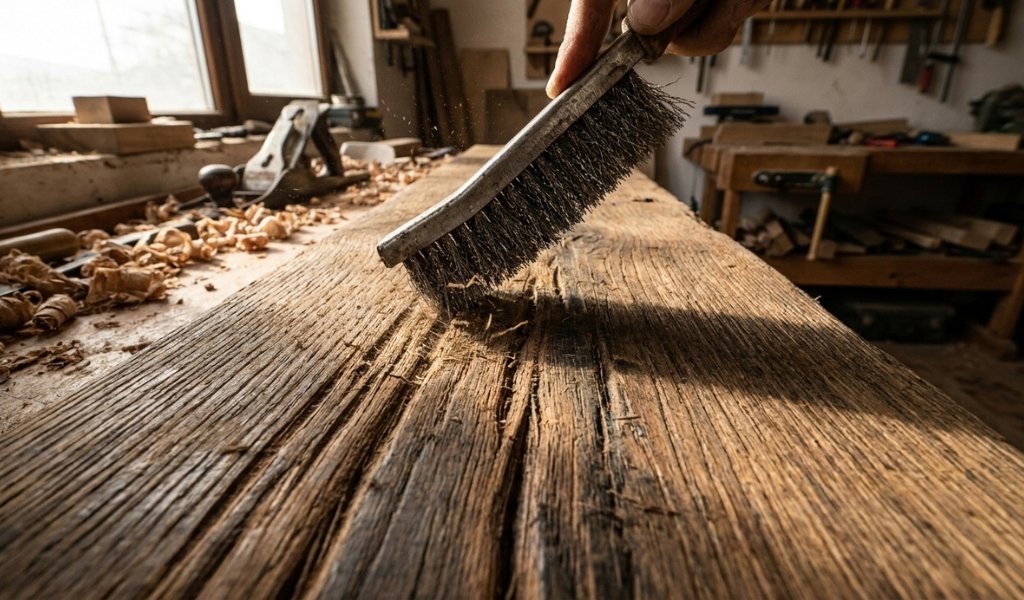
Match the brush to the look you’re after, and the wood does the rest.
To simplify the decision, here’s how the main brush types line up against common woodworking goals:
Choose nylon when a smooth surface finish matters more than speed. Choose steel wire when texture and material removal matter more than a polished result.
There’s no single best sanding tool it depends on the surface. For flat surfaces, a random orbital sander with quality grit sandpaper delivers the fastest, most even results. For contoured, carved, or profiled work, an abrasive nylon sanding brush is the better choice because its flexible bristles follow shapes that a flat sander skips. Most well-equipped shops keep both on hand.
For most finish work, an abrasive nylon brush filled with silicon carbide is the best all-around choice. It refines the surface, removes raised grain, and works on both softer woods and hardwoods without tearing the fibers. If your goal is distressing or removing old paint rather than smoothing, a steel wire brush is the better pick. Match the filament to the outcome: nylon to polish, wire to texture.
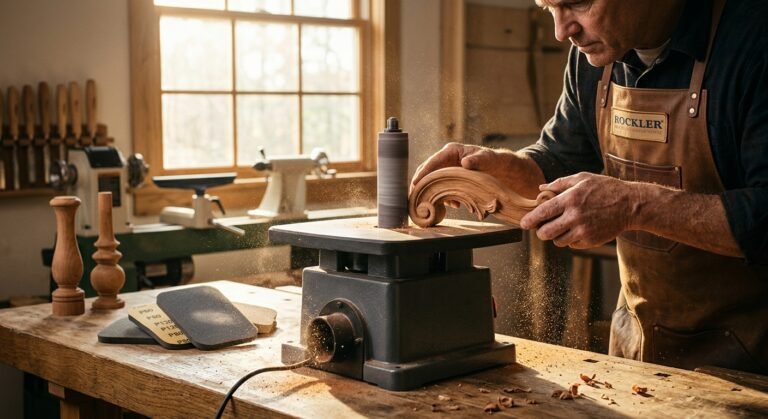
For very detailed wood carvings, moldings, spindles, and turned legs use an abrasive nylon wheel brush or sanding mop rather than sandpaper. The flexible nylon filaments conform to grooves and curves, sanding evenly into recesses that a flat abrasive can’t reach. For tight interior details, a small nylon brush mounted on a drill or rotary tool gives you precise control. Keep the speed moderate and the pressure light to avoid rounding over crisp edges.
For large flat surfaces, a belt sander or random orbital sander with coarse grit removes material fastest, followed by progressively finer grit. For shaped or detailed pieces, a nylon brush roller or cup brush mounted in a drill is the quickest way to sand wood without hand-working every contour. The real speed gain comes from picking the tool that matches the shape of your workpiece rather than forcing one method onto every job.
The difference between a good finish and a great one often comes down to reaching the spots your sander can’t. An abrasive nylon brush smooths contours and clears raised grain; a steel wire brush carves out character and strips away the old. Once you understand how the filament drives the result, choosing the right brush becomes second nature.
Start by identifying what your project actually needs polish or texture, flat or contoured, refine or remove then match the brush to the task. For a deeper dive into grit progression, power sanders, and finishing technique, explore our complete guide to sanding and build out a workshop that handles every surface with confiden