Physical Address
304 North Cardinal St.
Dorchester Center, MA 02124
Physical Address
304 North Cardinal St.
Dorchester Center, MA 02124


Walk into any woodworking shop and you’ll find a well-worn collection of chisels within arm’s reach of the bench. That’s no accident. A quality wood chisel set is one of the few tool investments that pays off on nearly every project, from rough joinery to fine detail work. But not all chisel sets are created equal, and choosing the wrong one can leave you fighting your tools instead of your material.
This guide breaks down everything you need to know before buying a chisel set: the different types included in a typical kit, the features that separate a durable tool from a disposable one, and how to match a set to your skill level and budget. If you’re still fuzzy on what a chisel actually is and how it works, our beginner’s guide to chisels covers the fundamentals before you dive into set selection. And once your project moves past shaping into finishing, our guide to sanding techniques will help you get a smooth, stain-ready surface.
Whether you’re outfitting your first workshop or upgrading to professional-grade tools, understanding the anatomy and application of each chisel type will help you buy smarter and work better.
A wood chisel set is a curated collection of chisels, typically ranging from four to ten pieces, designed to cover the most common cutting and shaping tasks in woodworking. Rather than buying individual chisels one at a time, a set gives you a range of blade widths and types in a single purchase, often at a better price than buying each tool separately.
For anyone serious about woodworking, a chisel set is non-negotiable. Cutting clean joinery, paring a shoulder flush, or chopping a mortise all require slightly different tools, and having the right width and blade shape on hand saves time and prevents damage to your workpiece. A well-rounded tool set also means you’re not reaching for a knife or screwdriver when a proper chisel would do the job cleanly.
Most wood chisel sets are built around bench chisels, the general-purpose workhorses of any woodworking chisel collection. Bench chisels feature beveled edges and are suited to a wide range of tasks, including paring, light mortising, and general chopping. Their versatility makes them the default choice for most projects, which is why nearly every collection of chisels starts here.
Mortise chisels, by contrast, are built for one specific job: cutting mortises. These thick, sturdy blades with square edges withstand repeated mallet strikes without flexing, making them essential for joinery work that demands precise, rectangular holes. If your woodworking projects involve frame-and-panel construction or traditional joinery, a set that includes at least one mortise chisel is worth prioritizing.

Paring chisels round out a well-equipped tool set. With long, thin blades, paring chisels excel at fine, controlled cuts, such as trimming a tenon shoulder or smoothing a surface by hand pressure alone. Unlike bench or mortise chisels, paring chisels are never struck with a mallet. They’re built for precision woodworking, where finesse matters more than force.
Beyond blade shape, chisels differ in how the blade connects to the handle. This distinction matters more than many buyers realize when choosing chisel tool sets.
Tang chisels have a spike-like extension, called a tang, that inserts directly into the wood handle. This design is lighter and common in bench chisel sets intended for hand-pressure work like paring. However, a tang chisel isn’t always rated for heavy mallet use, since repeated striking can loosen or crack the handle over time.
Socket chisels, on the other hand, feature a hollow, cone-shaped socket at the base of the blade that the wooden handle fits into. When struck with a mallet, the force drives the handle further into the socket rather than working it loose, making socket chisels the better choice for mortise chisels and other heavy-use applications. If your projects involve frequent mallet work, prioritize a wood chisel set with socket construction for the bench and mortise pieces.
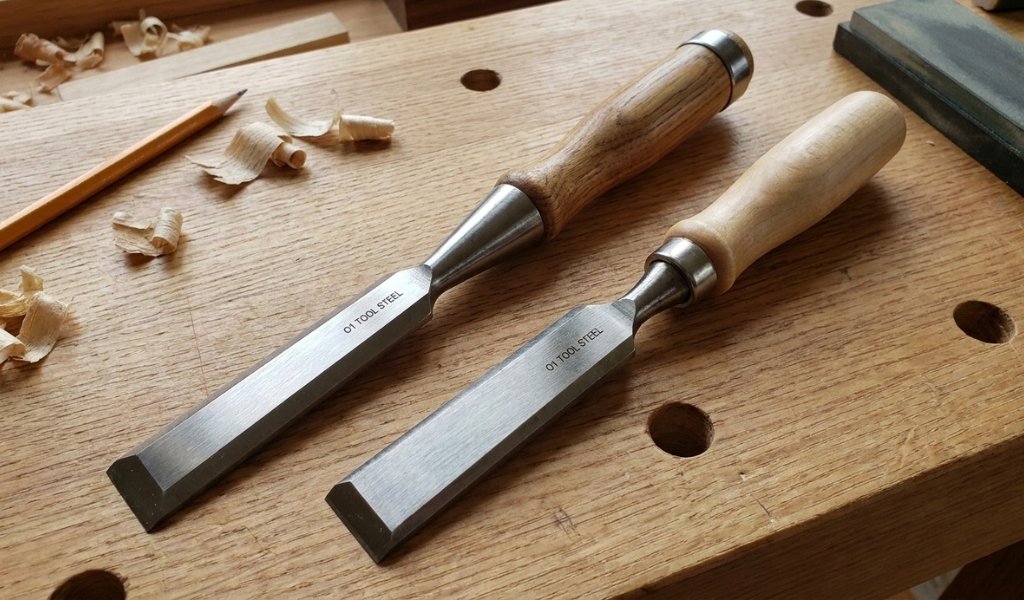
Not every chisel set on the market is built to the same standard. Before buying, it helps to understand the specific features that separate a sharp wood chisel capable of years of service from one that will disappoint within a season.
The blade material is the single most important factor in a chisel’s performance. Two steel types dominate the market: chrome-vanadium steel and high-carbon steel.
Chrome-vanadium steel is a popular choice for affordable and mid-range chisel sets. It offers good hardness, decent edge retention, and resistance to corrosion, making it a practical option for beginners and general use. It won’t hold an edge quite as long as premium high-carbon steel, but it’s more forgiving and easier to sharpen for those still building their skills.
High-carbon steel, often used in professional-grade and Japanese chisels, offers superior hardness and edge retention. A sharp wood chisel made from high-carbon steel will hold its edge significantly longer under heavy use, which matters for professionals working through dozens of joints a week. The tradeoff is that high-carbon steel is more prone to rust if not properly maintained and can be more brittle, meaning it chips more easily if used incorrectly.
Choose chrome-vanadium if you’re a hobbyist or beginner who values low maintenance and forgiveness. Choose high-carbon steel if you’re a professional or serious enthusiast who wants maximum edge retention and doesn’t mind the extra care that tool steel of this caliber demands.
The handle affects both comfort and durability, particularly for chisels that see regular mallet use.
A traditional wood handle, often made from ash, hornbeam, or beech, offers a warm, ergonomic grip that many woodworkers prefer for extended use. Wood handles absorb some of the shock from mallet strikes, reducing hand fatigue during long sessions. However, an untreated wood handle can crack or split over time if struck with a metal hammer instead of a wooden or rubber mallet.
Impact-resistant plastic handles have become increasingly common in modern chisel tool sets, particularly beginner and all-purpose lines. These handles are typically more durable under repeated striking, resistant to moisture, and require no oiling or maintenance. They lack some of the traditional aesthetic appeal of a wooden chisel, but for buyers prioritizing low maintenance and toughness, plastic is a practical choice.
Many wood chisel sets include chisel accessories designed to help you maintain a sharp edge from day one. A honing guide is one of the most valuable inclusions, as it holds the chisel at a consistent bevel angle while you sharpen, making it far easier for beginners to achieve a sharp, even edge without years of freehand practice.
Some higher-end sets also include a basic sharpening stone or a storage roll. Tool rolls keep your collection organized and protect the cutting edges from knocking against each other in a drawer, which can dull or chip a blade over time. If a set doesn’t include a roll, it’s worth buying one separately to protect your investment.
The market for wood chisel sets spans everything from budget-friendly starter kits to heirloom-quality tools built by specialized tool makers. Matching your budget and skill level to the right brand will save you money and frustration.
For beginners and DIYers, affordability and general usability matter more than fine sharpening angles or exotic tool steel. Amazon Basics and WORKPRO both offer budget-friendly chisel sets that typically use chrome-vanadium steel and impact-resistant handles, making them a durable, low-cost entry point for anyone starting woodworking projects for the first time.
Narex, a Czech tool maker, occupies a slightly higher tier while remaining accessible to beginners. Narex chisels are known for offering high-carbon steel performance at a price closer to budget sets, making them a favorite among woodworkers who want better edge retention without jumping straight to premium pricing. Many woodworking forums cite Narex as the best value bridge between entry-level and professional-grade tools.
Once you’re working on fine woodworking projects or earning income from your craft, investing in a professional-grade woodworking chisel set becomes easier to justify.
Narex Richter chisels, an upgraded line from the same tool maker, use higher-quality tool steel and refined bevel angles for improved performance over the standard Narex line. They’re a popular stepping stone for woodworkers moving beyond beginner tools without committing to the highest price bracket.
Pfeil, a Swiss manufacturer, is particularly well-regarded for carving chisel and gouge sets used in relief carving and wood carving tools generally. Their chisels are prized for precise bevel edge chisel geometry and excellent steel hardness, making them a favorite among carvers who need consistent, repeatable results.
Two Cherries, a German brand with a long manufacturing history, is respected for both bench chisel sets and specialty chisels. Two Cherries chisels are known for a comfortable wood handle, excellent hardness, and a reputation that has made them a staple recommendation on woodworking forums and among fine woodworking instructors.
Chisel set sizes vary based on the range of tasks they’re designed to cover, and choosing the right size depends on how you plan to use the tools.
A 4-piece kit typically includes the most commonly used bevel edge chisel widths, usually 1/4″, 1/2″, 3/4″, and 1″. This is a smart starting point for beginners or anyone with a limited budget, since these widths cover the majority of general woodworking tasks without unnecessary duplication.
A 6-piece kit adds a few more widths, often including narrower options for detail work or a wider chisel for larger surfaces. This size suits woodworkers who’ve moved past the absolute basics and want more flexibility for varied woodworking projects.
A 10-piece kit is aimed at more serious woodworkers or those who want a truly comprehensive collection of chisels in one purchase. These kits often mix bevel edge chisels, mortise chisels, and sometimes even a gouge or two, offering the range needed for dovetail work, joinery, and finer carving tasks without needing to buy additional pieces later. If you frequently work on dovetail chisels-specific tasks or varied joinery, the wider range justifies the higher price.
Buying a quality chisel set is only half the equation. Without proper maintenance, even the best tool steel will dull quickly and lose the precision that makes woodworking chisels worth the investment.
A honing guide is the easiest way to consistently sharpen chisels, particularly for those still developing a feel for freehand sharpening. Clamp the blade into the guide at the manufacturer’s recommended bevel angle, typically between 25 and 30 degrees for most bench chisels, and work the blade across a sharpening stone in a steady, controlled motion.
Start with a coarser stone to remove any nicks or establish the bevel, then progress to finer grits to polish the edge to a sharp, mirror-like finish. Flip the chisel and lightly flatten the back on the same fine stone to remove any burr left from the sharpening process. A properly sharpened chisel should be able to pare thin, translucent shavings from softwood with minimal pressure.

Japanese chisels require a slightly different approach due to their laminated blade construction, which pairs a hard cutting edge with a softer backing steel. This design allows Japanese chisels to take an exceptionally sharp, durable edge, which is part of why they’re so highly regarded among precision woodworking specialists. However, their hollow-ground back needs careful attention during sharpening to avoid damaging the thin edge.
After each use, wipe down the blade to remove resin, dust, and moisture that can lead to rust over time, especially on high-carbon steel blades. A light coat of oil on the blade helps prevent corrosion during storage.
Store your chisels in a tool roll, a wall-mounted rack, or a dedicated drawer insert that keeps the cutting edges separated. Letting chisels knock against each other in a toolbox is one of the fastest ways to dull or chip an otherwise sharp wood chisel. If your handles are traditional wood, an occasional application of linseed oil will keep them from drying out and cracking.
Protecting your edges isn’t just about longevity. A well-maintained chisel performs more predictably, giving you cleaner cuts and more control on every project, whether you’re cutting a dovetail joint or shaping a decorative edge.
A quality wood chisel set is an investment that shapes the outcome of nearly everything you build. Whether you’re drawn to an affordable WORKPRO starter kit or ready to commit to a Two Cherries or Pfeil professional line, the right choice comes down to matching steel quality, handle type, and set size to the kind of woodworking you actually do.
Start by assessing your current projects. If you’re mostly handling general repairs and simple joinery, a 4-piece or 6-piece all-purpose set will serve you well. If you’re moving into fine furniture making, detailed carving, or repeatable joinery work, it’s worth stretching your budget toward a professional-grade set with better tool steel and included chisel accessories like a honing guide.
Whatever you choose, remember that even the best chisel set underperforms without regular sharpening and proper storage. Treat your tools well, and they’ll return the favor for decades of woodworking projects to come.
The best set depends on your skill level and the type of work you do. For general woodworking, a 4- to 6-piece bevel edge chisel set from a brand like Narex offers a strong balance of quality and value. Professionals or those focused on fine woodworking often prefer Two Cherries or Narex Richter for their superior steel and refined edges.
A good quality set uses durable tool steel, such as chrome-vanadium or high-carbon steel, paired with a comfortable, impact-resistant handle. Look for consistent bevel angles, solid socket or tang construction depending on intended use, and ideally, included chisel accessories like a honing guide for easier maintenance.
Japanese chisels use a laminated blade construction that combines a very hard cutting edge with a softer, more flexible backing steel. This combination allows the blade to take an exceptionally sharp edge while remaining resistant to chipping, a balance that’s difficult to achieve with single-material blades. Their reputation among precision woodworking specialists is well earned.
Cheap chisels typically use softer steel that dulls faster, less precise bevel grinding, and lower-quality handles that may crack under repeated mallet use. Expensive chisels use higher-grade tool steel with better edge retention, more precise manufacturing tolerances, and durable handles built to withstand years of daily use in a professional shop.