Physical Address
304 North Cardinal St.
Dorchester Center, MA 02124
Physical Address
304 North Cardinal St.
Dorchester Center, MA 02124

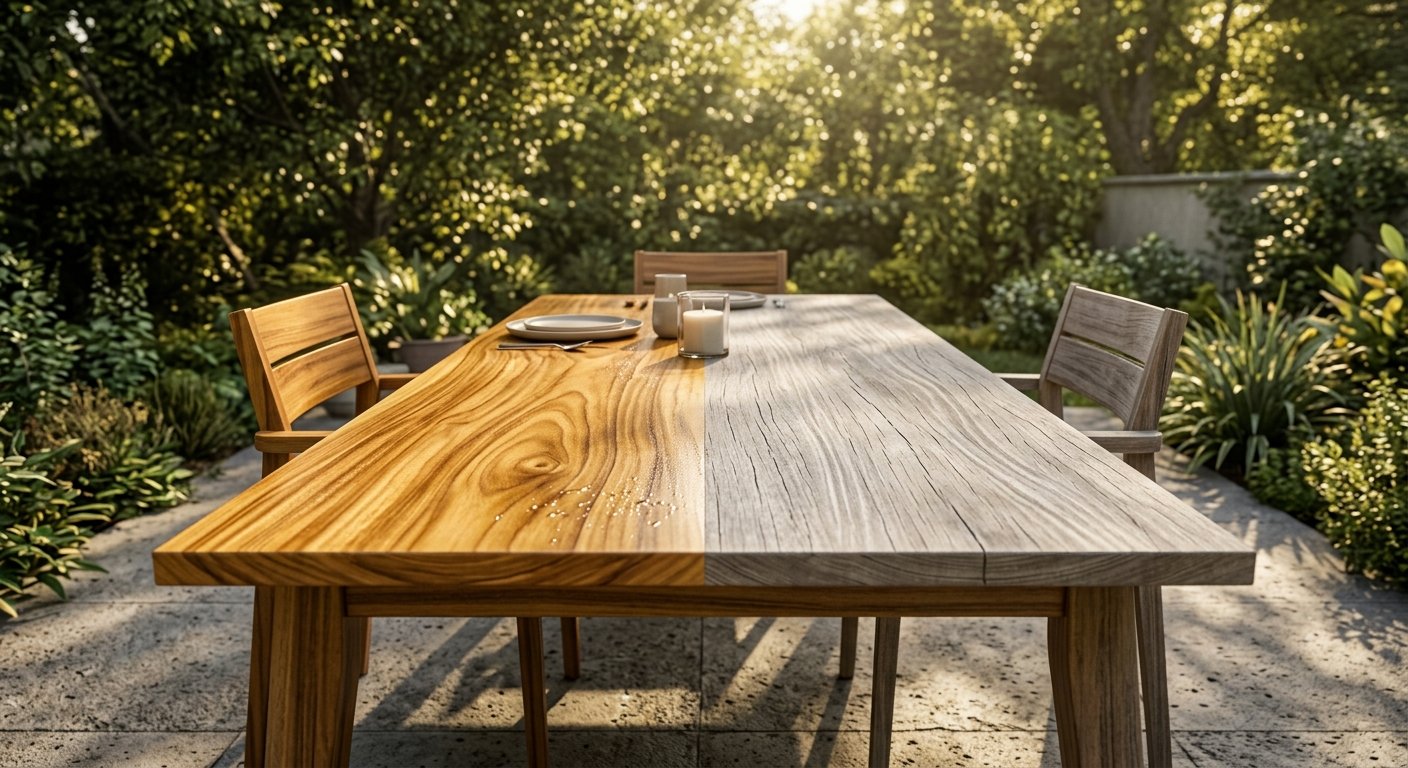
The disadvantages of acacia wood outdoor furniture rarely show up on a product page. The listing says “solid hardwood,” “natural oil,” “built to last,” and the price looks great next to teak. Then two summers pass, the table is gray, the slats have tiny cracks and one chair leg wobbles.
That does not mean acacia is a bad choice. It means it is a different choice than most sellers admit. If you are stuck on Acacia vs. Teak Outdoor Furniture: Which Is Better?, the honest answer depends on your climate, your budget and how much weekend time you want to spend with a brush and a can of oil.
This guide covers what acacia does well, where it falls short, how long it really lasts and what you can do to protect it. Read it like advice from a neighbor who already made the purchase and learned a few lessons the hard way.
Walk through any big box store in spring and you will see acacia everywhere. Dining sets, bistro tables, folding chairs, benches and side tables fill the aisles. A few years ago, most of this space belonged to teak, pine and cheap metal. Now acacia wood furniture is one of the most common choices for patio furniture.
There are good reasons for that. Acacia trees grow quickly, so the supply is steady and the cost stays down. The wood is dense and has a warm golden brown color with dark streaks that look rich and natural. It also feels like real solid wood furniture, not a thin veneer or a plastic copy. For a family setting up a first outdoor space on a budget, that combination is hard to ignore.
Social media helped too. Photos of styled balconies and backyard dinners almost always feature warm wood tones, and acacia delivers that look at a friendly price. The trouble is that a picture taken on day one says nothing about year three.
Most sellers pitch acacia as “like teak, but less expensive than teak.” That line is not totally false. Both are hardwoods, both look good and both can handle some outdoor use. But the comparison skips a few details that matter a lot.
Teak grows slowly for decades before it is cut. It is rich in natural oil and rubber compounds that block water from soaking deep into the wood. This is why old boat decks and garden benches made from it can sit out in rain and still be useful after twenty years. The price of teak wood reflects all of that, so it costs far more.
Acacia is a large family. There are hundreds of acacia species, and the type of acacia used in furniture is often a fast growing plantation variety. Some have good density and decent oil content. Others are softer and drier. When a label only says “acacia,” you cannot tell which one you are getting. Brands use the teak comparison because shoppers know teak, not because the two woods act the same outdoors.
Here are the problems owners run into most often. None of them is a deal breaker alone, but together they explain why many reviews turn sour after a couple of seasons.
You will often read that acacia wood is water-resistant. That is only half true. Acacia has some natural oil, so a fresh piece sheds water better than plain pine. But it is not waterproof, and it is much less protected than teak.
Left in rain or morning dew, the wood slowly soaks up moisture through the end grain and joints. Once water gets in, the surface can darken, grow mildew or start to feel rough. Standing water is worse. A planter placed on a table or a cushion that stays damp will leave stains and soft spots that are hard to fix.
A real example shows how this works. A family in a humid coastal town bought an acacia wood table with a factory finish and left it uncovered all year. By the second summer, black spots had formed under the edges where water pooled. The same style in a dry inland area might look fine for far longer.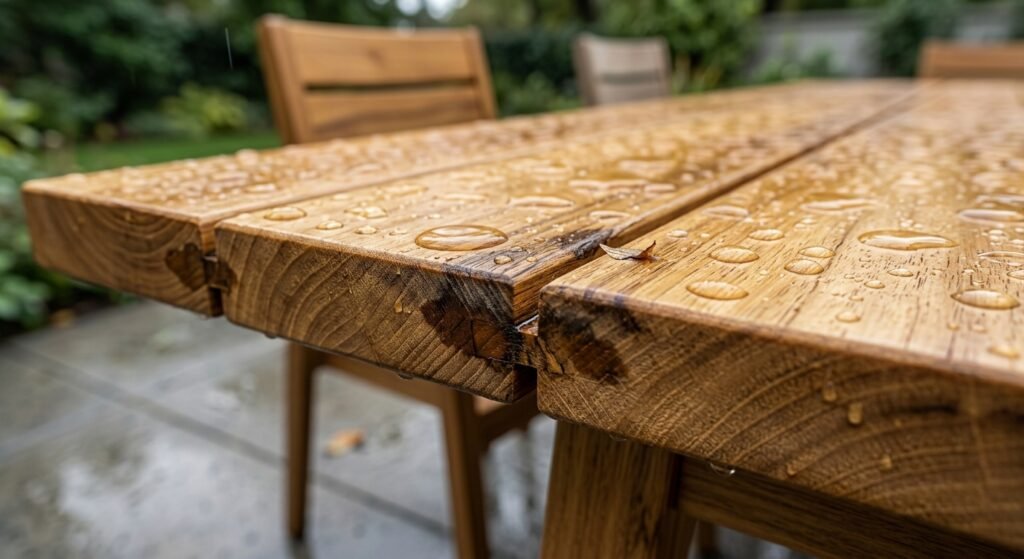 Climate changes everything.
Wood moves. It swells when wet and shrinks when dry, and outdoor furniture goes through that cycle every single day. Acacia is especially likely to show it because of how it is dried and built.
Many budget pieces are made from short strips glued together. When the wood expands and contracts at different rates, the glue lines can open up. You may see small gaps on a tabletop, a bowed slat on a bench or a hairline split along the grain. Screws can also loosen as the wood shifts around them.
This is not always a sign of bad work. It is what happens when a wood with less natural stability meets rain, sun and cold nights. Better furniture uses properly kiln dried boards and strong joints, but even then, acacia moves more than teak does.
This is the drawback most buyers do not see coming. To keep acacia looking good, you need to seal or oil it on a regular schedule. In most climates that means once or twice a year, and sometimes more in harsh sun or wet weather.
The job is not hard, but it takes time. You clean the wood, let it dry fully, lightly sand if needed and then wipe on a fresh coat of oil. A full dining set can eat up an entire Saturday. Miss a season and the wood starts to dry out, which opens the door to the cracking and fading we talk about next.
Many shoppers choose acacia because they want a low effort option. What they get is a wooden furniture set that behaves much more like pine or cedar than like teak. If you hate yearly upkeep, that is worth knowing before you buy.
Sun is the other big enemy. Strong light breaks down the natural color in wood. Acacia starts out warm brown with rich tones, but in full sun it can turn dull, pale and gray fairly fast. The top of a table fades much faster than the legs, so the piece ends up uneven.
Not everyone minds a silver patina. Some people like it on teak. The difference is that teak ages into an even, soft gray while still staying strong. Acacia often fades in patches and gets rough at the same time, so it looks tired, not charming. 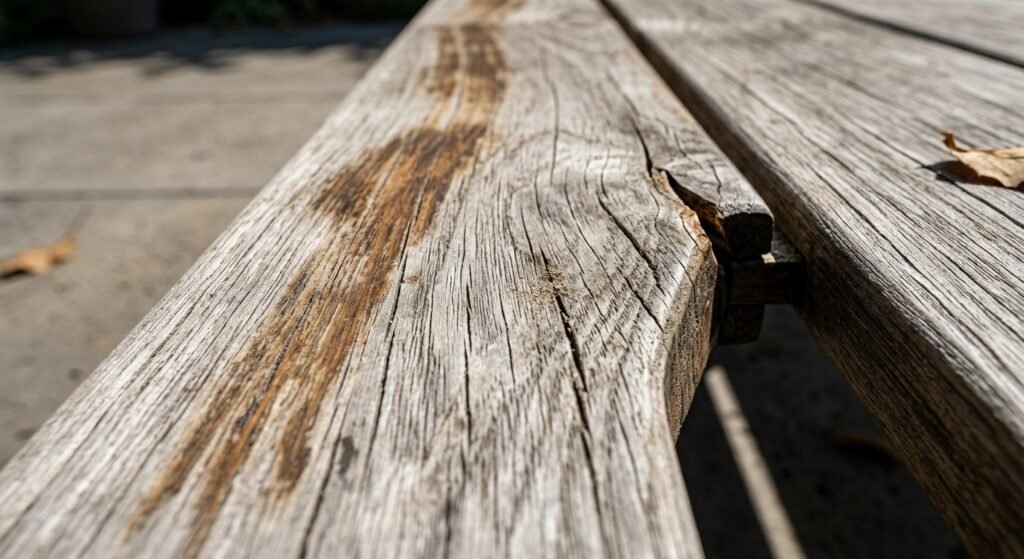 If your patio gets bright afternoon light, plan for shade or a cover.
Price is the main reason people buy acacia, so it makes sense to do the math. A good acacia dining set may cost half or even a third of a comparable teak set. That gap is real money, and for many households it is the difference between having an outdoor table and having none.
But cost and value are not the same thing. Think about it over ten years. If a teak set costs twice as much but lasts twenty years with light cleaning, the yearly cost is low. If an acacia set lasts six or seven years and needs oil, cleaner, brushes and a cover along the way, the savings shrink. Replacement is also a hassle. You have to haul out the old set, pick a new one and deal with the waste.
Here is a simple way to decide. If you rent, move often or just want a place to eat dinner this summer, acacia is a fair and sensible buy. If you plan to stay put and want furniture that feels like a long term part of your home, a higher upfront price may be the smarter move. Be honest about your habits. A cheap set that gets cared for beats an expensive one that gets ignored, but only if you actually do the care.
One more thing to check is the build. Look at the joints, the thickness of the boards and the finish. Two acacia wood tables can look alike online and perform very differently after a winter.
Let’s talk lifespan in plain numbers. These are rough ranges, since care and climate make a huge difference.
With regular oiling and some cover during bad weather, a well made acacia piece can last five to ten years. Left out without any care, many sets start to fail in two to four. Joints loosen, finish peels and the surface turns rough and dry.
Teak plays in another league. Good teak furniture can last twenty to forty years or more outdoors, even with almost no work. It may fade to gray, but it stays solid. Some people never oil it at all.
The way it ages also differs. A teak bench slowly mellows. An acacia bench tends to show its age through damage, such as splits, wobble and flaking finish. That does not mean the piece has to go in the trash. With a fresh sanding and new oil, a tired acacia chair can come back to life. But you will be doing that job again and again.
So the five years versus decades claim is not an exaggeration. It is a fair summary of what many owners report, as long as you treat the numbers as a guide, not a promise.
Sun and heat work as a team. Light bleaches the surface while heat pulls moisture out of the wood. Together they cause most of the visible aging on outdoor furniture.
UV rays break down lignin, which is the part of wood that gives it color and helps hold the fibers together. As that layer wears away, the surface turns gray and feels slightly fuzzy. It happens on every kind of wood, but oil rich species like teak slow it down.
Acacia has less protection, so the color can change within one or two summers. A dark honey table may look washed out by the end of the second year. You can slow this by using a finish with UV blockers, placing the set under a pergola or umbrella and rotating pieces now and then so one side does not take all the sun.
Heat is a quieter problem. On a hot day, the surface of a tabletop can get very warm, and the top layer dries much faster than the wood underneath. That uneven drying pulls fibers apart and creates small cracks, often called checks.
Checks start thin, like a hair. Water gets in, freezes in winter and opens them wider. After a few cycles you can have a deep split that runs across a board. This is common on slatted tables and benches left in open sun all day.
You can reduce the risk by keeping a good oil layer on the wood. Oil slows the drying and helps the board move more gently. Covers during heat waves and long vacations also help a lot.
If acacia is not perfect, how does it stack up against other choices? Teak and eucalyptus are the two names that come up most.
Oil is the heart of this comparison. Teak is loaded with natural oil and rubber. It feels slightly greasy to the touch even when it is dry, and that is what keeps water out. Because the oil comes from within the tree, it lasts for years without help.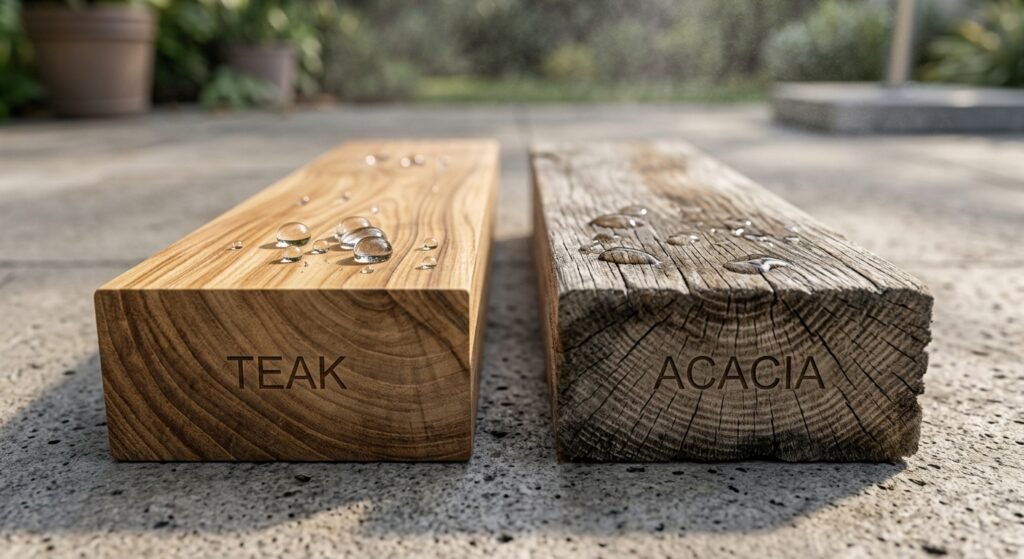
Acacia has less natural oil, and the amount varies by species. It starts out with some protection, but that protection fades faster and has to be topped up by hand. Eucalyptus sits in the middle. It is a dense hardwood with moderate oil and often costs less than teak. Some eucalyptus furniture is treated and sealed at the factory, which helps it handle weather a little better than raw acacia.
So in the teak vs acacia wood debate, teak wins clearly on oil. Eucalyptus is a solid middle option if you want a better balance of price and weather performance.
When you compare long term strength, teak leads, eucalyptus follows and acacia usually comes third. Teak resists rot, insects and swelling very well. Eucalyptus handles moderate weather if you keep up with care. Acacia can do well in mild, dry places with shade, but it struggles in wet or very sunny settings.
This does not make acacia a wrong pick for everyone. If your outdoor space is a covered porch, a screened room or a sunny but dry courtyard with a good cover system, acacia may serve you for years. The mistake is expecting it to behave like teak with no work.
Already bought a set? Good news. A little routine goes a long way, and most of the damage we covered above can be slowed or avoided.
Start with a clean surface. Wash the wood with mild soap, warm water and a soft brush. Rinse well and let it dry fully in the shade for a day or two. Never use a harsh pressure washer, since it can rip up the grain and leave fuzzy patches.
Next, apply the right finish. A penetrating teak oil or outdoor furniture oil with UV protection works well. Wipe on a thin coat, let it soak in for about fifteen minutes and then wipe off the extra.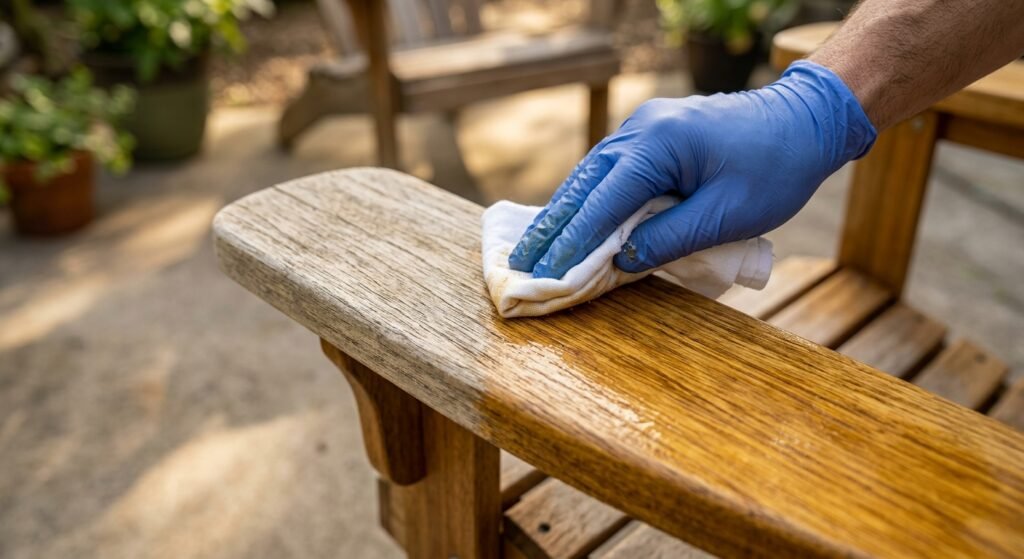 Thick, sticky layers stay tacky and attract dirt. Repeat every three to six months in harsh conditions or once or twice a year in mild ones.
Cover or store your set when you can. A breathable cover keeps off rain and sun while letting air move through. Avoid plastic tarps that trap moisture, since they can cause mildew. In winter, move pieces into a garage or shed if you have room.
Small habits matter too. Lift the legs off wet ground with furniture pads. Brush off leaves and standing water after storms. Check screws each spring and tighten any that have loosened. If you see a crack, fill it with a bit of waterproof wood glue and clamp it before it spreads.
Finally, rotate pieces. Moving a chair or bench every few weeks lets all sides get similar sun and shade, so the aging looks even.
The disadvantages of acacia wood outdoor furniture come down to a few simple facts. It takes in moisture more easily than teak. It can warp, crack and split as it dries and swells. It needs regular oiling. And it fades under strong sun.
At the same time, it looks great, costs less and works fine for people who are ready to look after it. If you live in a mild climate, have some shade and do not mind a few hours of upkeep each year, acacia can be a smart and friendly choice. If you want a set you can leave outside and forget, teak is worth the extra money.
Before you buy, check the joints, ask which acacia species was used and read reviews from people who have owned the set for more than a year. If you already have a set, grab a can of oil and a soft brush this weekend. Your furniture will thank you. And if this guide helped, share it with a friend who is shopping for patio furniture right now.
It can be, in the right conditions. Acacia is a dense hardwood with some natural oil, so it handles light weather well. But it needs regular sealing and shade to last. In very wet or very sunny places, it tends to age faster than teak.
Most well cared for sets last five to ten years. Without maintenance, many show serious damage in two to four years. Covers, oil and a shaded spot can add several seasons to its life.
Teak has much more natural oil, so it resists water, rot and insects without help. Acacia has less oil and needs yearly care. Teak costs more upfront but usually costs less over its full lifespan.
You can leave it out in mild weather, but it will wear faster. In heavy rain, snow or strong sun, a cover or indoor storage is a much better plan. This is true for most types of wood, but acacia is less forgiving than teak.
Sunlight breaks down the color in the wood and the surface slowly fades to gray. It happens faster when the finish wears off. A UV protective oil applied once or twice a year can slow the change and keep the color warmer.
Yes, and it often performs better there. Acacia is popular for indoor furniture such as coffee tables, shelves and living room furniture because it is not exposed to rain or UV. The same look with far less upkeep.
Yes, if you accept the care that comes with it. Choose a well built piece, seal it early and protect it from harsh weather. That way you get the beauty of solid wood at a lower price without losing it too soon