Physical Address
304 North Cardinal St.
Dorchester Center, MA 02124
Physical Address
304 North Cardinal St.
Dorchester Center, MA 02124

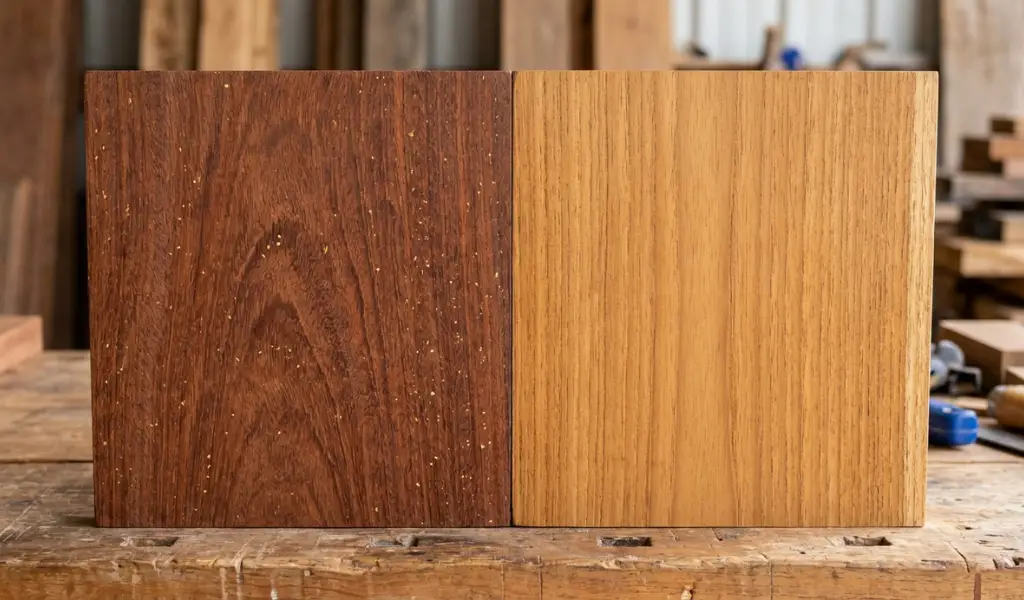
Picture yourself in a lumber yard with two samples in your hands. One is a golden brown board that looks calm and classic. The other is a deep reddish brown piece that feels heavy and bold. Both are sold as a tropical hardwood for decks and furniture. Both come with big promises. So the real question behind merbau wood vs teak is simple: which type of wood deserves your money?
Teak has been the best wood for outdoor jobs for centuries. Sailors trusted it on ship decks and gardeners still trust it on park benches. Merbau is the tougher and cheaper rival that more builders now pick for decking and flooring. If you have read our guide on Rubber wood vs Teak Wood you already know that teak sets the standard for solid wood. Here we use that same standard to judge merbau.
We will look at appearance, hardness, density, weather resistance, staining problems and price. By the end you will know which timber fits your project and your budget.
Merbau comes from a tree called Intsia bijuga. It grows in the tropical forests of Indonesia, Papua New Guinea, Malaysia and nearby islands. People also know it as kwila or ipil depending on where they live. It is a dense and strong hardwood that mills use for decking, flooring, stairs and heavy outdoor structures.
The tree itself is slow growing and most merbau on the market is cut from natural forest rather than plantations. That matters for two reasons. The supply can be uneven and the sourcing can be questionable. Always ask for proof of legal and certified harvesting before you buy.
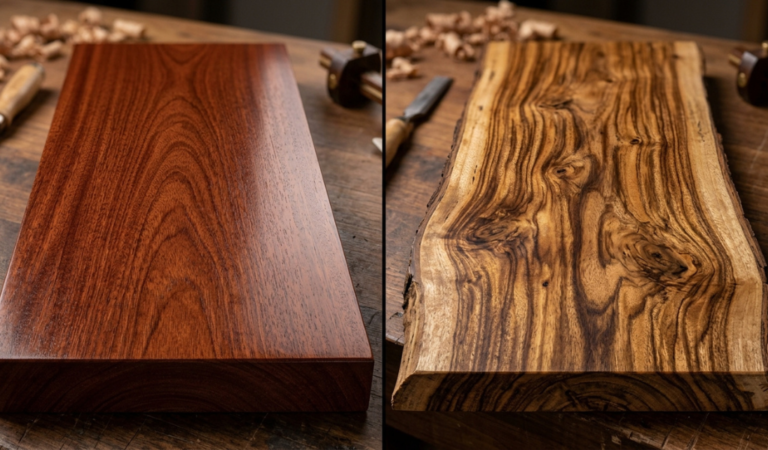
Fresh merbau starts out as a light orange brown. Over a few months it deepens into a rich reddish brown or dark chocolate shade. The grain is usually interlocked and sometimes wavy. This gives the surface a lively pattern that looks great on a deck or a floor.
The feature that surprises most new buyers is the yellow flake. If you look closely at a raw board you may see small yellow mineral deposits sitting in the pores. Some people love them because they add character. Others find them messy because the yellow powder can wash out when the board gets wet. These flakes are harmless and they are a quick way to spot genuine merbau.
Merbau is very hard. Its Janka hardness sits around 1,900 to 2,000 pounds force depending on the source. Its density is roughly 800 kilograms per cubic metre when dry. That is clearly higher than most popular decking timbers. A hard surface resists dents from heels and furniture legs. It also means the boards are heavy and slow to cut.
For natural durability merbau does very well. It resists rot and fungus and it has good natural resistance to decay. It also stands up well against termite attack in most conditions. Many suppliers rate it for 25 years or more above ground when it is cared for properly. The trade off is that merbau can split if you skip pre-drilling. The boards also move a little as humidity changes.
Teak comes from Tectona grandis. This is a large tree that grows tall in warm and wet regions. It has big leaves and clusters of fragrant white flowers. The wood from this tree has been valued in boat building and furniture making for hundreds of years. When people talk about the best teak they usually mean mature wood with a tight grain and a strong oily feel.
There are several sources of teak and they are not equal. Old-growth teak from Burma teak forests, also called Burmese teak, is the most prized and the most expensive. Indian teak is also well regarded. Today most of the supply comes from plantation teak grown in Indonesia, Thailand, Ghana and other African countries. Ghana teak and other African teak can be good value but the quality depends on tree age and how it was dried.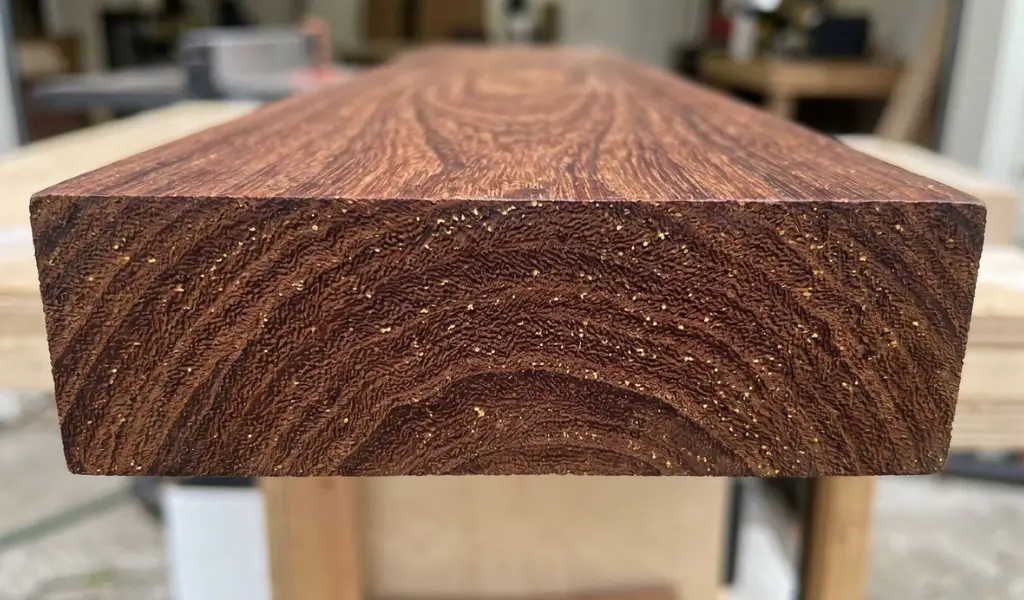
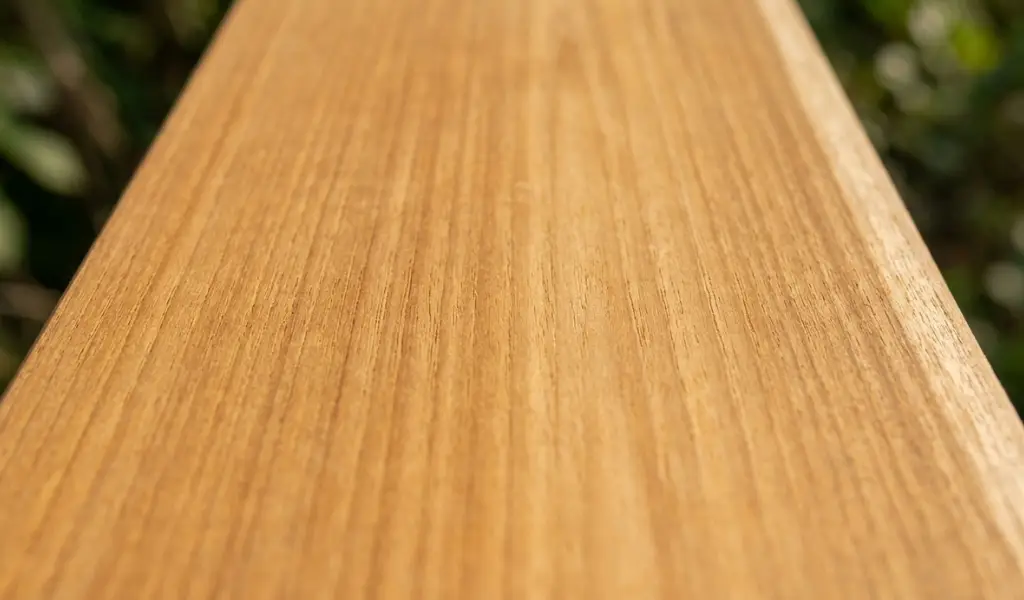
Teak has a warm golden brown look that many people describe as honey. Darker streaks often run through the board. The grain is mostly straight with a fine and even texture. Compared with merbau the pattern is calmer and more refined. This is a big reason why teak furniture feels so elegant in a living room or on a patio.
Here is a quick tip on how to identify teak. Rub a clean board with your thumb. Real teak has a slightly greasy and smooth feel and it gives off a leathery smell. Fake or low grade pieces often feel dry and look flat in colour. Also check the end grain. Genuine teak shows even growth rings and a consistent tone. If the seller cannot tell you the species or the source you should walk away.
The secret of teak is its high oil content. These natural oils fill the wood cells and push water out. Teak also contains silica which is a mineral that helps block insects and fungus. Together they give teak excellent water resistance and a natural resistance to rot. This is why teak decks on boats can last for decades.
The high oil and silica content also has a downside. Silica wears out sharp blades faster so you need carbide tools when you cut it. Even so teak is easy to work compared with many dense timbers. It sands smoothly and holds screws well. Left untreated teak turns a soft silver grey and keeps its strength. If you prefer the golden colour you can keep it by applying teak oil once or twice a year.
Teak is only a medium density wood at about 650 kilograms per cubic metre. Its hardness is about 1,000 to 1,150 pounds force. That is softer than merbau but it makes the boards more stable. Teak rarely cracks or twists after it has been installed.
Now let us place both timbers side by side. The three areas that matter most to buyers are outdoor performance, staining behaviour and cost.
Both woods are tough enough for years of rain and sun. The difference is in how they earn that toughness. Merbau relies on raw density and hardness. Teak relies on natural oils and silica. In terms of durability both are good and both are rated for outdoor decking.
Teak wins on stability. It holds its shape through wet and dry seasons with very little movement. This is why it is the favourite choice for furniture that sits outside all year. A teak table can face monsoon rain and strong sun and still feel solid after ten years.
Merbau wins on surface hardness. A merbau deck handles heavy foot traffic and scraping chairs better than most teak decks. In sunny places merbau can fade from deep red to a silvery brown unless you oil it every year. In very wet areas it may need a bit more care to avoid surface checks. Both woods resist termite damage but old-growth teak is slightly more reliable over very long periods.
A real life example helps here. A homeowner in a coastal area built two small platforms side by side. One was teak and one was merbau. After eight years the teak had turned soft grey and was still perfectly flat. The merbau had darker colour and a few hairline cracks near the screws. Both were safe and strong but the teak looked calmer with age.
This is where merbau gets a bad name. New merbau boards release a dark brown or yellow tannin when they get wet. The liquid runs off the deck and stains whatever it touches. Light concrete, pale pavers, white walls and pool edges are the usual victims. The stains can be hard to remove once they dry.
The bleeding is strongest in the first few months and usually fades within a year. You can lower the risk in a few simple ways.
Teak does not bleed in the same way. It can leave very mild marks when it is brand new but nothing close to merbau. If your deck sits near a white patio or a pool this single point can decide the whole choice.
Price is where merbau shines. In most markets merbau decking costs roughly four to eight dollars per square foot. Teak decking usually starts around twelve dollars and can go past thirty for premium old teak. Prices change with grade, thickness and country so always check with local lumber yards.
For furniture the gap is just as clear. A merbau dining set costs far less than a high quality teak set. However plantation teak has made teak more affordable than it once was. A younger planted teak tree has less oil and a lighter colour but it still gives good durability for the money. Naturally grown teak from older forests costs more and lasts longer.
When you think about quality and price consider the full life of the project. A teak deck may cost twice as much at the start. It may also need less repair and almost no refinishing. Merbau gives you a hard and handsome surface at a lower price but you will spend more time on oiling and cleaning in the early years.
Sourcing is the other cost to think about. Merbau is harvested from natural forests and has faced pressure from overcutting. Teak plantations ease some of this stress but not all plantations are managed well. For both woods look for FSC or similar certification. It protects the forests and gives you more confidence in what you get.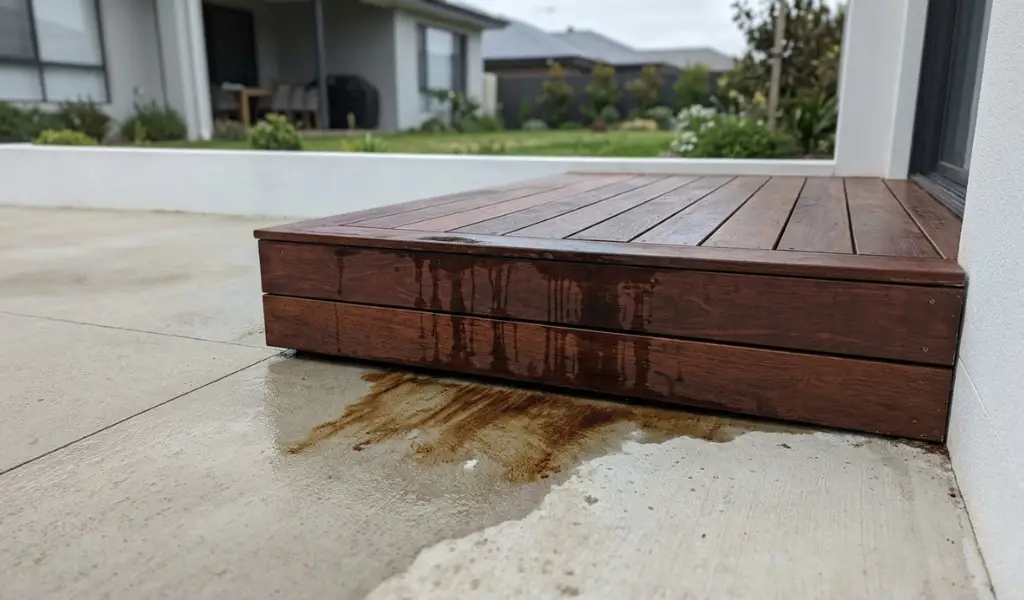
| Feature | Merbau | Teak |
|---|---|---|
| Botanical name | Intsia bijuga | Tectona grandis |
| Colour | Orange brown turning deep red brown | Golden honey turning silver grey |
| Grain | Interlocked and wavy | Straight and tight grain |
| Janka hardness | About 1,900 to 2,000 lbf | About 1,000 to 1,150 lbf |
| Density | About 800 kg per cubic metre | About 650 kg per cubic metre |
| Natural oils | Low | High oil content |
| Rot and termite resistance | Very good | Excellent |
| Stability | Moderate | Very high |
| Tannin bleeding | Strong at first | Very low |
| Ease of working | Hard on tools | Easy to work with carbide blades |
| Cost per square foot | Roughly $4 to $8 | Roughly $12 to $30 or more |
| Best use | Decking, flooring, stairs | Outdoor furniture, boat decks, high end decking |
There is no single winner in the merbau wood vs teak debate. The right pick depends on what you are building and how you plan to live with it.f
Choose merbau if you want a hard and handsome surface at a friendly price. It is a strong option for decking, stairs and use as wood flooring in busy areas. Just be ready to manage the bleeding and to oil the boards each year.
Choose teak if you want the most stable and low maintenance timber. It is the better choice for outdoor furniture and for any spot near light stone or water. It costs more but it rewards you with calm looks and a very long life.
Before you buy anything visit a few suppliers and handle both woods yourself. Ask about the source and the grade. Then get teak or merbau from a seller who can show proof of legal harvest. A little research now saves a lot of money later.
Merbau is very good outdoors but it is not quite equal to teak. It is harder and cheaper but it moves more and it bleeds tannin at first. Teak is more stable and needs less care over time.
Merbau is much harder. Its Janka rating is almost double that of teak. This makes it better for heavy foot traffic but also harder to cut and drill.
Yes. New merbau releases tannin when wet and it can leave brown or yellow marks on light surfaces. Washing the boards and sealing them before installation reduces the problem.
Yes. Merbau usually costs a fraction of teak on a per square foot basis. Plantation teak narrows the gap but teak is still the more expensive option in most markets.
Look for a golden brown colour with straight grain and a slightly oily feel. Real teak also has a leather like smell. Ask the seller for the species name and origin to be safe.
Teak can be left untreated and will turn silver grey with no loss in strength. Treated with oil it keeps its golden tone. Merbau looks best with a yearly coat of oil and fades faster without it.
Teak is the better choice for furniture. It is stable and easy to work and it looks refined. Merbau can work for heavy tables and benches but it is more often used for decking and flooring.