Physical Address
304 North Cardinal St.
Dorchester Center, MA 02124
Physical Address
304 North Cardinal St.
Dorchester Center, MA 02124

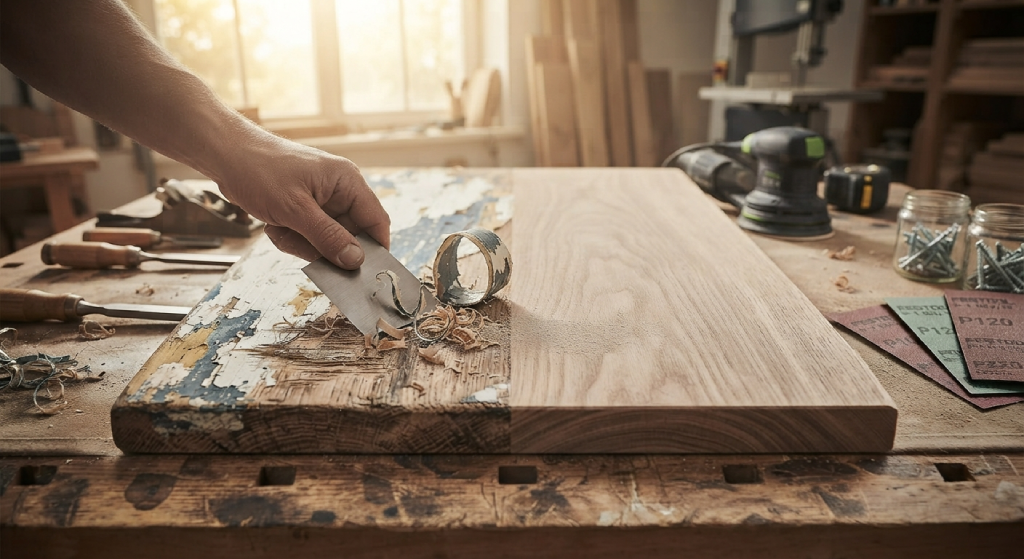
Anyone who has restored an old dresser, refinished a wooden floor, or stripped paint off a door knows there are two main paths to a clean surface: sanding and scraping. Both remove old finish and prep wood for a new coat, but they work in very different ways and one is not always better than the other. The sanding vs scraping debate comes up in almost every woodworking forum and restoration project, and the honest answer is that the right choice depends on the job in front of you.
This guide walks through everything you need to know, from when to reach for a scraper, when sandpaper is the smarter move, and how combining both methods often gives the best results. Think of this as The Complete Guide to Sanding Wood and scraping, written for anyone who wants a smooth, professional finish without wasting time or damaging good wood underneath.
Before comparing the two, it helps to know exactly what each method involves and how they physically remove material from a wood surface.
Sanding uses an abrasive material, usually sandpaper or a sanding belt, to wear down the wood surface through friction. As the abrasive grit moves across the wood, it shaves off tiny particles, smoothing out rough spots, old finish, and minor imperfections. Sanding can be done by hand, with a handheld power sander, or with a larger machine for bigger projects. The grit level you choose determines how aggressive or gentle the process is, with coarse grits removing more material and fine grits polishing the surface.
Scraping, on the other hand, uses a sharp-edged tool, usually a flat or curved metal blade, to physically shave off layers of old paint, varnish, or finish. Instead of grinding the surface down like sandpaper does, a scraper cuts and lifts material away in thin curls, similar to how a chisel works. 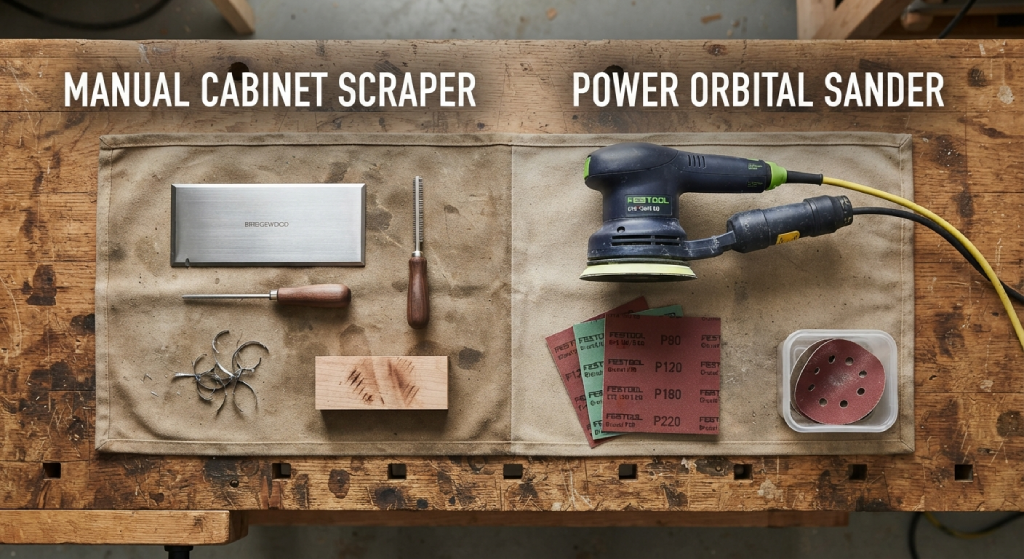 This method does not rely on friction and heat the way sanding does, which is part of why many woodworkers prefer it for certain jobs, especially when dealing with thick layers of old paint or finish that would clog sandpaper almost instantly.
Scraping tends to shine in situations where sanding alone would take forever or create a mess of dust and clogged paper. Here are the two most common cases where a scraper earns its place in your toolbox.
Old paint, especially layers that have built up over decades, is thick, hard, and often brittle. Sanding through multiple coats of paint chews through sandpaper fast and creates a huge amount of dust, which is a real concern if the paint contains lead, common in homes built before 1978. A scraper lets you peel away those layers in controlled strips without generating nearly as much airborne dust. It is slower in some cases, but far safer and more efficient when paint buildup is heavy.
Old varnish, shellac, or lacquer finishes can also gum up sandpaper quickly, especially if the finish has softened or is not fully cured. A sharp scraper glides under that old finish layer and lifts it off cleanly, leaving the bare wood underneath ready for the next step. 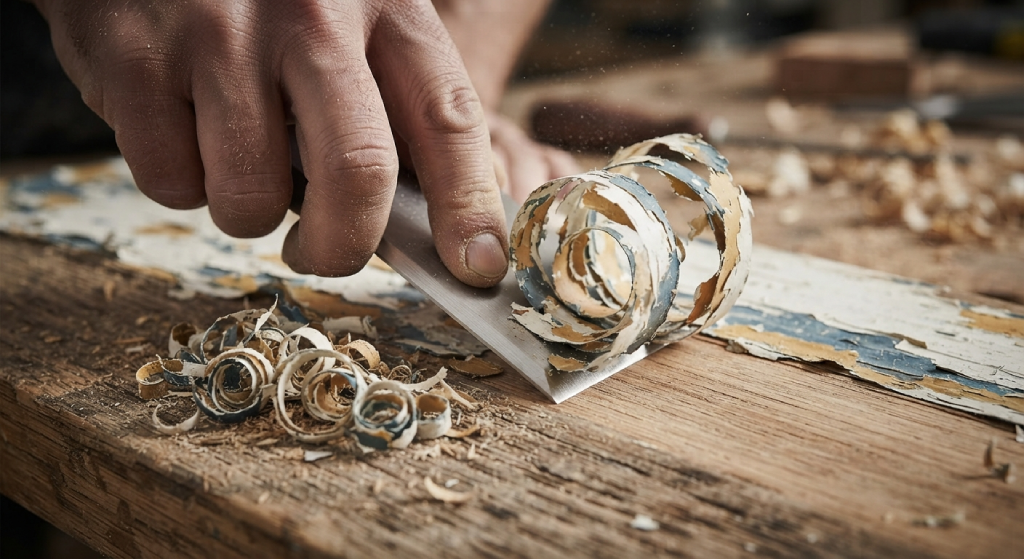 Furniture restorers often reach for a scraper first when working on antique pieces, since it removes finish without grinding into the wood grain the way aggressive sanding can.
Sanding becomes the better option once most of the heavy material has already been removed, or when the wood surface only needs light smoothing rather than full stripping. If you are working with bare wood that has minor scratches, slight roughness, or needs to be leveled before staining, sanding is usually the fastest and most reliable path.
Sanding is also the go-to method when preparing wood for a new finish. Even after scraping off old paint or varnish, the surface usually needs a light sanding pass to smooth out any unevenness the scraper left behind and to open the wood grain slightly so stain or sealer can absorb properly. In this sense, sanding often plays a finishing role even on projects that started with scraping.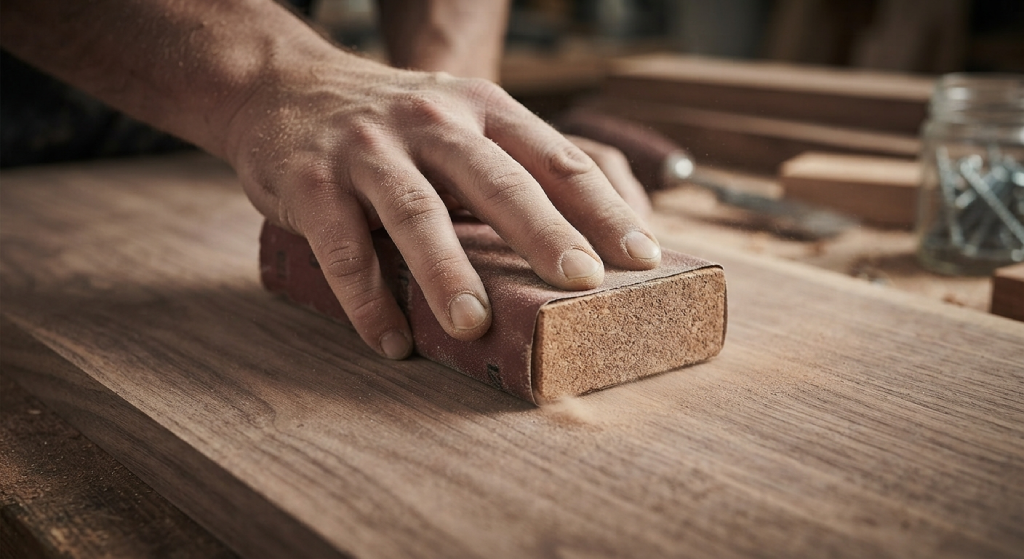
Another good time to sand rather than scrape is when working with veneer or thin wood layers. Scrapers can be too aggressive and risk cutting through a thin veneer sheet, while sandpaper, used carefully, allows more control over how much material comes off.
The surface left behind by a scraper looks and feels different from one left by sandpaper, and this difference matters more than people expect. A scraper leaves a cleaner, slightly polished surface because the blade cuts wood fibers cleanly rather than tearing or grinding them. Many woodworkers say a well-scraped surface actually looks smoother than a sanded one, even without using fine grit paper, because there is no fine scratch pattern left behind.
Sandpaper, by comparison, always leaves some level of scratch pattern, even at high grits. These scratches are often invisible to the eye but can show up once stain is applied, since stain settles into those tiny grooves and can make the surface look slightly hazy or uneven under certain lighting. This is why many professional finishers scrape first, then follow with a light final sanding pass, combining the clean cut of a scraper with the smooth touch of sandpaper.
Now let’s break down the direct comparison across the three factors that matter most on any real project: speed, smoothness, and control.
For removing large amounts of material quickly, especially thick paint or heavy old finish, scraping is often faster once you get the technique down. A sharp scraper can peel off a wide strip of old paint in one pass, something that would take several passes with sandpaper and multiple sheets. However, scraping has a learning curve. A dull or poorly angled scraper slows down significantly and can even gouge the wood, so speed depends heavily on skill and blade sharpness.
Sanding, especially with a power sander, is more consistent in terms of speed regardless of skill level. It might not remove thick paint as fast as a sharp scraper, but it works steadily and predictably, which makes it easier for beginners to get decent results without much practice.
As mentioned earlier, scraping tends to leave a smoother finish right off the bat, since it cuts cleanly rather than abrading the surface. Sanding requires working through multiple grits, from coarse to fine, to reach a similarly smooth result, which takes more time and more sandpaper.
That said, sanding gives you more control over the final texture. You can stop at a slightly rougher grit for a rustic look or keep going with finer grits for a glass-smooth surface. Scraping does not offer that same range of texture options since the blade cuts at a fairly consistent depth regardless of technique.
This is where the two methods really diverge. Sanding, especially by hand or with an orbital sander, gives you fine control over pressure and how much material you remove, which is helpful on delicate or uneven surfaces. Scraping requires more physical skill and a steady hand, since the blade angle and pressure directly affect how much material comes off and how clean the cut looks.
Experienced woodworkers often say scraping takes longer to master but rewards you with faster results once you get comfortable with it, while sanding is more forgiving for beginners but slower to reach a truly smooth finish.
Sanding works best for light surface prep, smoothing bare wood, removing minor scratches, and finishing touches before staining or sealing. It is also the better choice for curved or detailed surfaces where a flat scraper blade cannot easily follow the shape, since sandpaper and sanding sponges can bend and flex to match contours.
Flooring projects also lean heavily on sanding, particularly with large drum or belt sanders, since floors need an even, level surface across a wide area, something sandpaper handles more consistently than scraping ever could on that scale.
Scraping is the better pick for removing thick layers of old paint, stripping heavy varnish or shellac buildup, and working on flat surfaces like tabletops, doors, and trim where a straight blade can move smoothly across the wood. It also shines in situations where dust needs to be minimized, such as indoor restoration work or projects involving old lead paint.
Furniture restoration is another area where scraping often outperforms sanding, especially on antique pieces where preserving as much original wood as possible matters. A scraper removes finish without aggressively grinding into the wood grain, which helps protect delicate or valuable pieces.
The best approach usually comes down to three questions: how much material needs to come off, how delicate the wood or surface is, and how much time you have. If you are dealing with thick paint or old finish on a flat surface, start with scraping to remove the bulk of it quickly. If you are working with bare or lightly worn wood, sanding alone is probably enough.
For projects involving curves, detailed trim, or veneer, sanding is generally safer since scrapers can be too aggressive on delicate surfaces. And if you are short on time but dealing with heavy paint buildup, a chemical stripper combined with scraping might actually beat both methods on their own, though that is a topic for another guide.
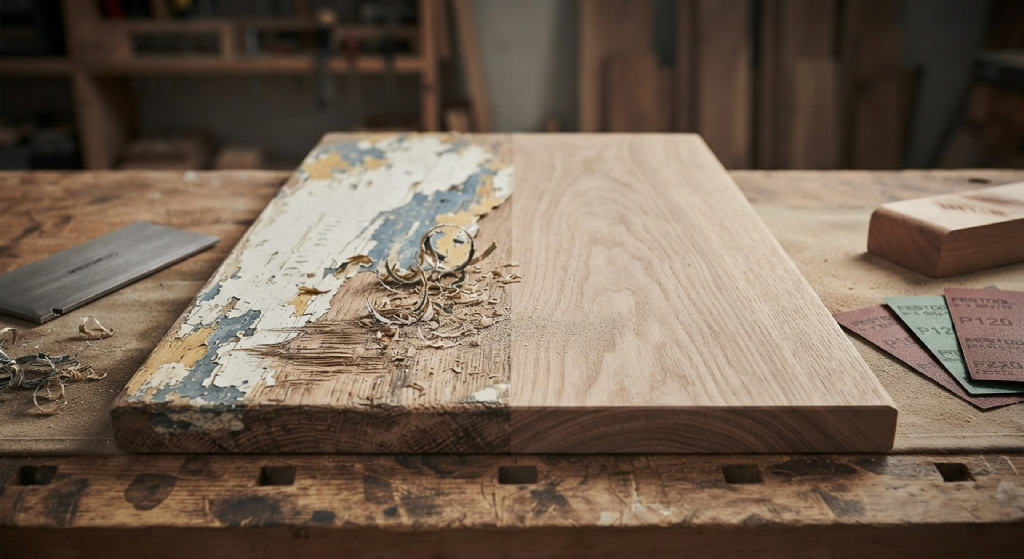
In most real-world projects, the best results come from using both methods together rather than picking just one. A common workflow looks like this: scrape off the bulk of the old paint or finish first, then follow up with sanding to smooth out any unevenness the scraper left behind and prepare the surface for stain or sealer.
This combination approach saves time compared to sanding alone, since you are not grinding through thick layers of old material with sandpaper. It also produces a better final surface than scraping alone, since the sanding pass smooths out any minor ridges or uneven spots the blade left behind. Many professional refinishers consider this two-step process the standard for restoring furniture and doors, rather than relying on just one method from start to finish.
Both sanding and scraping can leave marks on the wood if done carelessly, so a little technique goes a long way. When sanding, always work in the direction of the wood grain rather than across it, since sanding against the grain creates scratches that become very visible once stain is applied. Start with a coarser grit and move up gradually rather than jumping straight to fine paper, which helps avoid leaving deep marks that finer grits cannot fully remove.
When scraping, keep the blade sharp and hold it at a slight angle, usually around 45 to 60 degrees, to avoid digging into the wood and causing tear-out, which happens when the blade catches wood fibers and pulls up small chunks instead of cutting cleanly. A dull scraper is actually more likely to cause tear-out than a sharp one, since it requires more pressure to remove material, increasing the chance of gouging the surface.
Testing on a hidden or scrap section of wood before working on the visible surface is a simple habit that saves a lot of frustration, whether you are sanding or scraping.
Sanding creates a lot of fine dust, so wearing a dust mask or respirator is important, especially for larger projects or when working indoors without much ventilation. Eye protection is also a good idea, since dust and small wood particles can easily irritate the eyes during extended sanding sessions.
Scraping comes with its own risks, mainly related to sharp blades and the potential for lead paint exposure on older homes. Always wear cut-resistant gloves when scraping, since the blade can slip and cause injury if it catches on an uneven surface. If you suspect the paint you are removing might contain lead, use wet scraping methods to minimize dust and consider testing the paint first or consulting local guidelines on safe removal.
Good ventilation matters for both methods, especially when working with old finishes that may release fumes or fine particles into the air. Taking breaks, keeping tools sharp, and working at a steady pace rather than rushing also reduces the chance of accidents with either method.
The sanding vs scraping decision does not have to be complicated once you understand what each method does best. Scraping handles heavy paint and old finish removal efficiently, while sanding shines at smoothing surfaces and prepping wood for a new coat. In many cases, the smartest approach combines both, scraping away the bulk of old material first, then sanding to refine the surface before staining or sealing.
Whether you are restoring an antique dresser, refinishing hardwood floors, or stripping paint off an old door, matching the method to the job saves time and protects the wood underneath. Keep your tools sharp, work with the grain, and do not be afraid to switch between scraping and sanding as the project demands. That flexibility is often what separates a rushed, uneven finish from one that looks genuinely professional.
Is scraping faster than sanding for removing old paint?
Yes, in most cases scraping removes thick paint layers faster than sanding, especially with a sharp blade, though it does take some practice to master the technique without gouging the wood.
Can I use a scraper on all types of wood?
Scraping works well on most solid wood surfaces, but it should be used carefully on veneer or thin wood layers since the blade can cut through them too easily.
Do I need to sand after scraping old finish off?
Yes, a light sanding pass after scraping is usually recommended to smooth out any minor ridges the blade left behind and to prepare the surface for staining or sealing.
What grit sandpaper should I use after scraping?
Starting with a medium grit, around 120 to 150, works well for smoothing out scraper marks, followed by a finer grit if you want an extra smooth finish before staining.
Is scraping safer than sanding for removing lead paint?
Scraping, especially wet scraping, generally produces less airborne dust than sanding, which makes it a safer option when dealing with old paint that may contain lead.
Why does my scraper keep digging into the wood?
This usually happens when the blade is held at too steep an angle or when the blade is dull, both of which increase the chance of tear-out and gouging.
Can I skip sanding entirely and only use a scraper?
For flat surfaces with heavy old finish, scraping alone can leave a fairly smooth result, but most projects still benefit from a light final sanding pass for the best overall finish.