Physical Address
304 North Cardinal St.
Dorchester Center, MA 02124
Physical Address
304 North Cardinal St.
Dorchester Center, MA 02124

If you have ever pulled a nearly new sheet of sandpaper off the roll, used it for five minutes, and watched it stop cutting completely, you already know how frustrating clogged sandpaper can be. Knowing how to clean clogged sandpaper is one of those small skills that saves you real money over time, especially if you sand often or work with resinous wood. Instead of tossing a gummed-up sheet in the trash after one use, a few simple cleaning tricks can bring it back to life and keep it working like new for several more passes.
This guide is part of our broader series, The Complete Guide to Sanding Wood, and focuses specifically on one problem almost every woodworker runs into eventually: clogged abrasive. We will cover exactly why sandpaper clogs in the first place, how to spot it early, the best tools for cleaning it, and simple habits that help your paper last much longer before it needs replacing.
Sandpaper clogging happens when fine particles, usually wood dust, resin, or finish residue, get trapped between the abrasive grains on the paper’s surface. Once those tiny gaps fill up, the grit can no longer bite into the wood properly, and instead of cutting, it starts sliding across the surface without removing much material at all.
Softwoods like pine are notorious for clogging sandpaper quickly because of their high resin content. As you sand, the friction generates heat, which softens the resin and causes it to smear across the paper rather than turning into dry dust. This sticky residue builds up fast and can clog a sheet of sandpaper in just a few minutes of continuous use.
Sanding old paint or varnish causes a similar problem. These coatings often soften slightly from the heat of sanding, and instead of breaking into fine dust, they gum up and stick to the abrasive surface. Working with wet or slightly damp wood makes clogging even worse, since moisture combines with dust to form a paste that clings stubbornly to the grit.
Using too fine a grit for a job that needs heavier material removal also speeds up clogging. Fine grits have smaller gaps between abrasive particles, so they fill up faster than coarser grits when there is a lot of material coming off the wood surface.
Catching clogged sandpaper early makes cleaning far more effective, so it helps to know exactly what to look for. The most obvious sign is a sudden drop in cutting performance. If your sandpaper was working fine a few minutes ago and now barely seems to touch the wood, clogging is almost always the reason.
Visually, clogged sandpaper often has a shiny or smeared appearance where the grit used to look rough and textured. Running your finger lightly across the surface, you might feel a slightly waxy or gummy texture instead of the usual sharp, gritty feel of fresh abrasive.
Another sign is heat. Clogged sandpaper creates more friction without effectively removing material, which means the wood surface and the paper itself heat up faster than normal. If you notice the wood getting warm quickly or smell a faint burning odor, it is worth stopping to check your sandpaper before continuing.
Finally, dust buildup on the wood surface itself is a telltale sign. Instead of fine, loose sanding dust, you might notice small clumps or streaks forming, which is the clogged material being dragged across the surface rather than cut away cleanly.
You do not need anything expensive to clean clogged sandpaper effectively. A couple of simple, inexpensive tools handle the job well and are worth keeping in your workshop at all times.
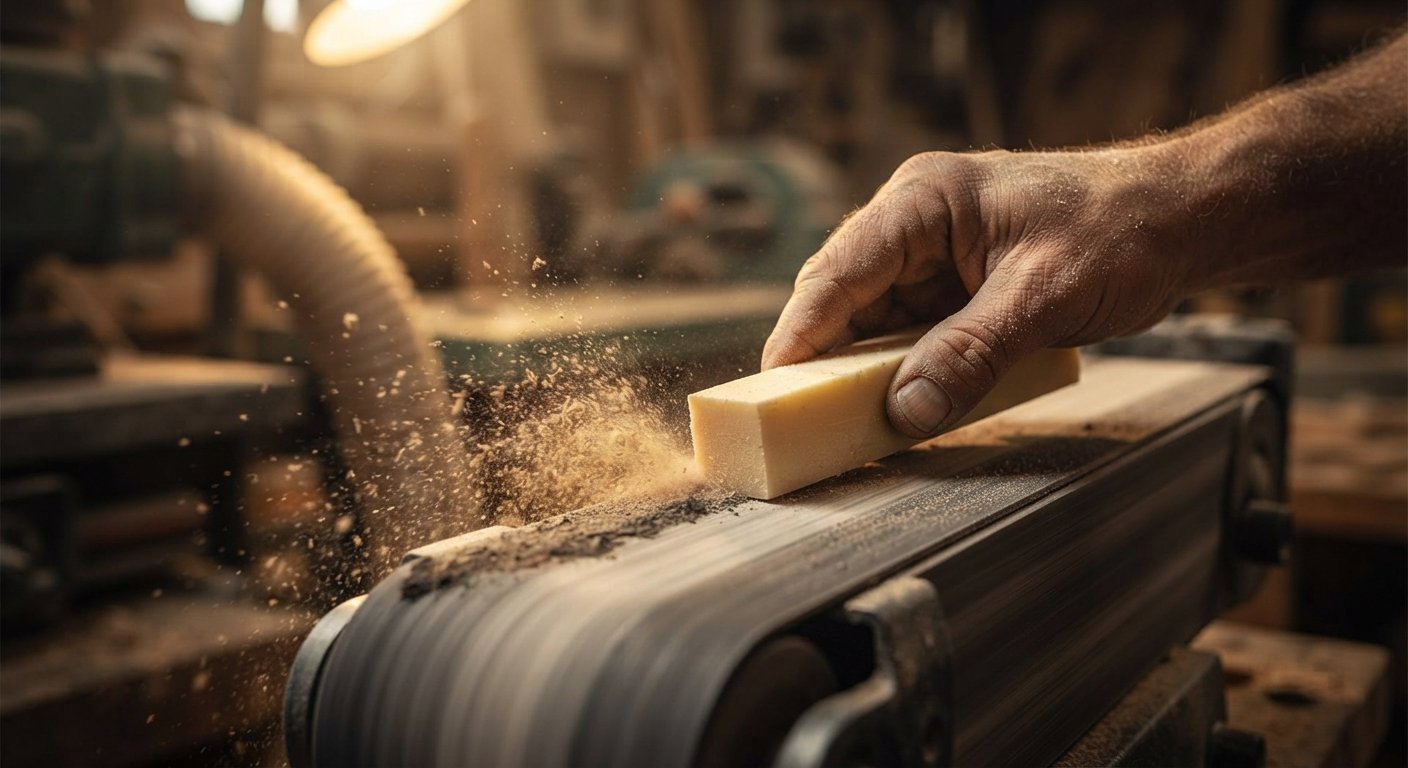
Cleaning sticks, sometimes called crepe rubber sticks, are one of the most effective tools for clearing clogged abrasive, especially on sanding belts and larger sheets. These sticks are made from a natural rubber compound that grips onto stuck particles and pulls them away from the grit without damaging the abrasive surface underneath.
To use one, simply hold the stick against the moving sanding belt or rub it firmly across a stationary sheet of sandpaper. The friction between the rubber and the clogged material loosens debris, which falls away as fine crumbs rather than staying stuck to the paper. 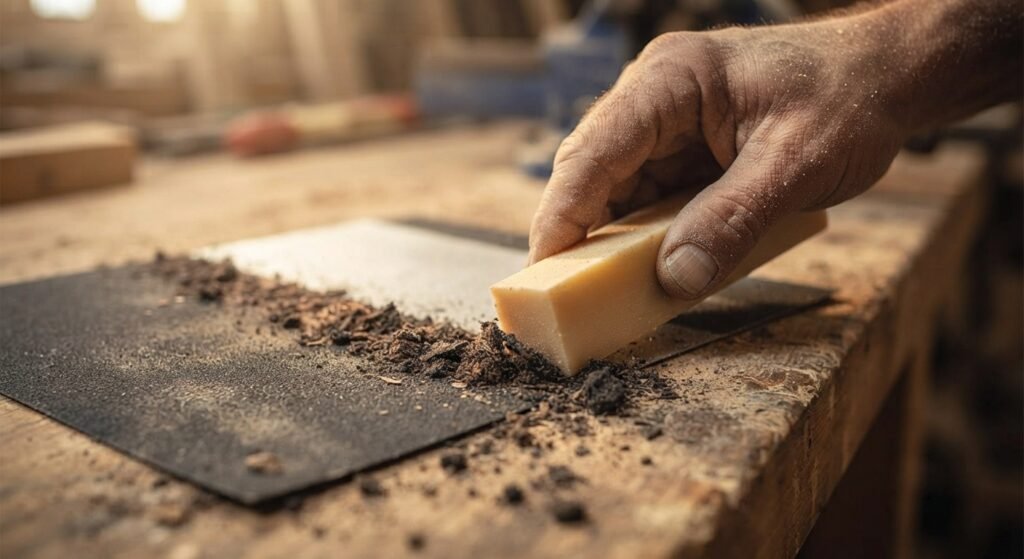 These sticks work particularly well on resin buildup from softwoods and are a staple tool in most production woodworking shops that run sanding machines all day.
A stiff-bristled brush, often made from brass or nylon, is another handy tool for clearing clogged sandpaper, especially for smaller sheets or detail sanding tools. Brushing across the grit in the direction the abrasive particles are oriented helps knock loose dust and debris without bending or damaging the paper backing.
Brass brushes tend to work a little better on stubborn buildup since the bristles are firmer, but they can be slightly more abrasive on delicate sandpaper, so nylon brushes are usually the safer choice for finer grits. Keeping a small brush near your sanding station makes it easy to give sandpaper a quick clean between passes without breaking your workflow.
Cleaning clogged sandpaper does not need to be complicated, and following a consistent method gets the best results every time. Start by removing the sandpaper from the sander, if it is a removable sheet or belt, so you can inspect it closely and clean it away from the machine.
Next, tap the sandpaper gently against a hard surface, like a workbench edge, to knock loose any loose debris sitting on top of the grit. This first step alone often removes a surprising amount of buildup before you even start scrubbing.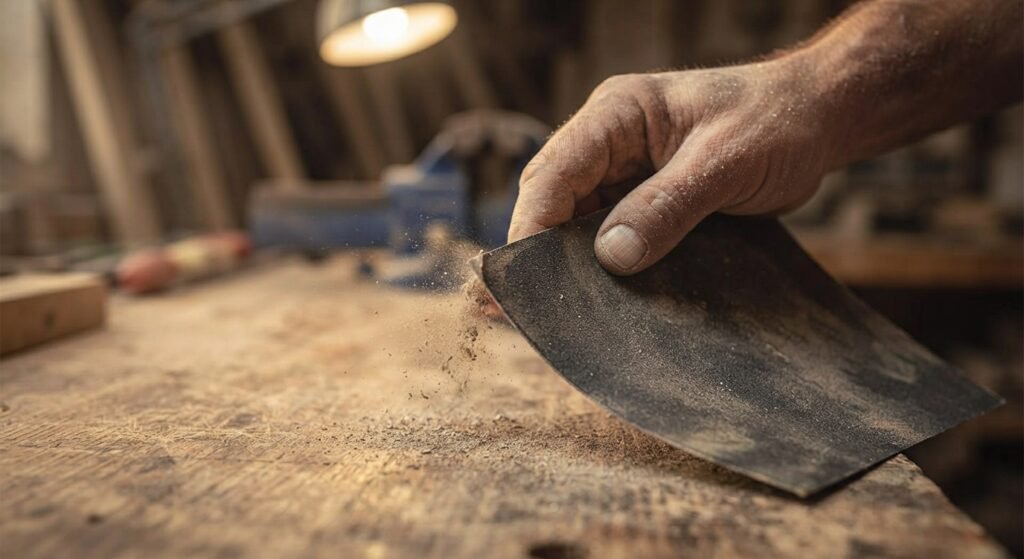
After tapping, use your cleaning stick or brush, working in the same direction as the grit pattern rather than against it, to avoid bending or tearing the abrasive particles. Apply steady, moderate pressure rather than scrubbing too hard, since aggressive cleaning can actually knock loose abrasive grains that are still good, shortening the paper’s overall lifespan.
Once you have gone over the entire surface, tap the sheet again to remove the loosened debris, then check the texture with your fingers. If it feels rough and gritty again rather than smooth and shiny, the sandpaper is ready to go back to work.
Resin buildup is one of the toughest types of clogging to deal with, since it tends to harden and stick more stubbornly than plain wood dust. For light resin buildup, a cleaning stick usually does the trick, but for heavier buildup, a slightly different approach works better.
Warming the sandpaper slightly, either by leaving it under a work light for a few minutes or briefly running a hair dryer over it, can soften hardened resin just enough to make it easier to scrape or brush away. Once softened, use your cleaning stick or brush as usual, and the resin should lift more easily than when it was fully hardened.
For wood dust alone, without resin, a simple tap against a hard surface combined with a quick brush is often enough. Compressed air is another useful option here, blowing dust out from between the grit particles without any physical contact that could damage the abrasive. This works especially well for fine grit sandpaper, which can be more delicate and prone to damage from aggressive brushing.
A trick some woodworkers use for stubborn resin is rubbing a small amount of talcum powder onto the sandpaper before use, which helps prevent resin from sticking to the grit in the first place. This is a preventive step rather than a cleaning one, but it pairs well with regular cleaning to keep resin buildup to a minimum from the start.
Cleaning sandpaper while it is still mounted on a power sander requires a bit more caution, but it is entirely doable and saves time compared to removing the sheet completely. For belt sanders, holding a cleaning stick against the moving belt for a few seconds, with the sander running at a steady speed, clears buildup quickly and gets you back to sanding almost immediately.
For orbital or random orbit sanders, turn the machine off first before cleaning, since these sanders vibrate rather than move in one direction, making it harder to clean safely while running. Once powered off, a quick brush across the pad or a few taps against a hard surface usually clears enough debris to continue.
Many production shops build cleaning breaks directly into their workflow, stopping every few minutes to quickly clean the belt or pad rather than waiting until performance noticeably drops. This habit keeps sanding consistent throughout a project rather than dealing with gradually worsening results as the sandpaper clogs more and more over time.
Beyond cleaning, a few simple habits help sandpaper last longer before it needs replacing at all. Choosing the right grit for the job matters more than people realize. Using a coarser grit for heavy material removal and saving fine grits for final smoothing prevents fine paper from clogging too quickly under heavy use.
Taking breaks during long sanding sessions also helps, since constant heat buildup from continuous sanding softens resin and finish residue faster, speeding up clogging. Short pauses let the wood and paper cool slightly, reducing how quickly debris sticks to the grit.
Storing sandpaper properly between uses makes a bigger difference than most people expect. Keeping sheets flat, away from humidity, and out of direct sunlight prevents the backing material from warping or weakening, which can cause abrasive particles to loosen prematurely. A simple folder or storage box keeps sandpaper organized by grit and protected from moisture in the workshop.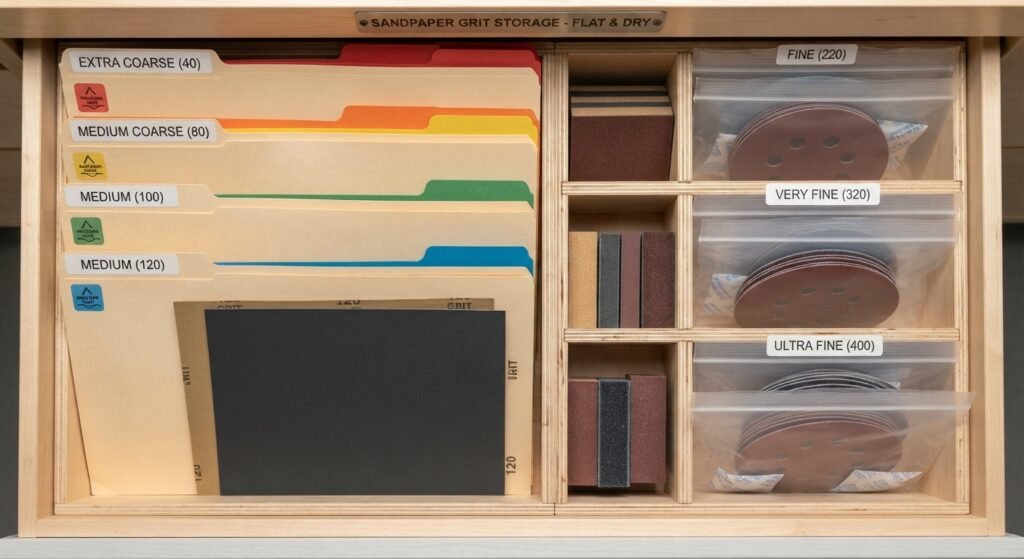
Using dust collection during sanding, whether through a shop vacuum attachment or a connected dust extraction system, also reduces how much loose dust settles back onto the sandpaper surface, cutting down on clogging significantly over a sanding session.
Even with regular cleaning, sandpaper eventually reaches the end of its usable life, and knowing when to stop trying to save it saves you time and frustration. If cleaning no longer restores cutting performance, meaning the paper still feels smooth or slides across the wood without removing material even after a thorough cleaning, it is time to replace it.
Visually, worn-out sandpaper often shows bald spots where the abrasive grains have completely worn away, exposing the backing material underneath.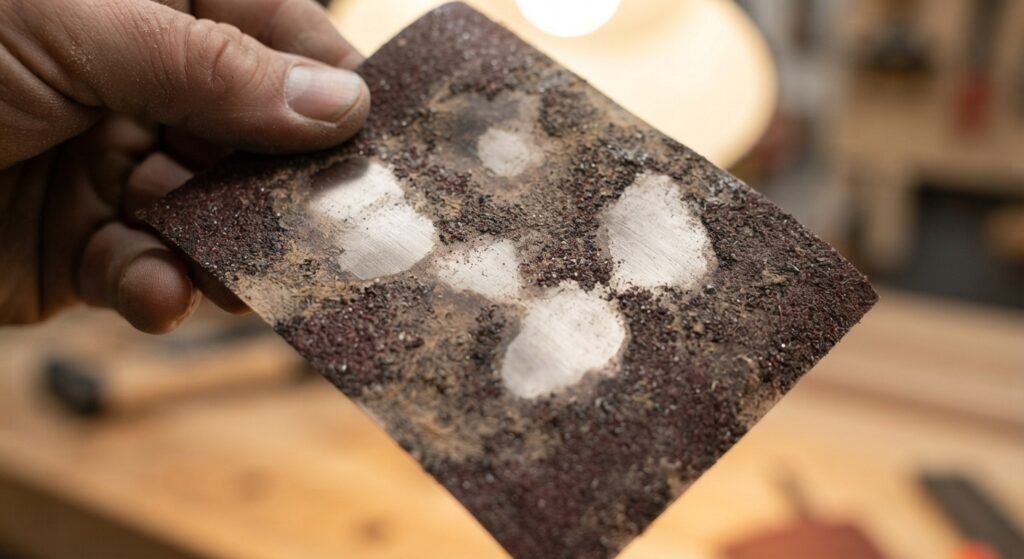 Once you see this, no amount of cleaning will bring the sheet back to working condition, since the actual cutting particles are gone rather than just covered in debris.
Torn or creased sandpaper is another sign it is time to move on. Even if the grit itself is still sharp, damage to the backing can cause uneven sanding or make the sheet unsafe to use on a power sander, where a torn edge could catch and tear further during use.
As a general guideline, if a sheet of sandpaper has been cleaned three or four times and continues to clog quickly after each cleaning, the abrasive particles themselves are likely dulling from repeated use, and replacing the sheet becomes more cost effective than continuing to clean it.
Knowing how to clean clogged sandpaper is a small skill that pays off every time you pick up a sanding block or run a power sander. A cleaning stick, a stiff brush, and a few minutes of care can turn a seemingly ruined sheet back into a useful tool, saving money and reducing waste in the process. Pay attention to the early signs of clogging, clean regularly rather than waiting until performance drops completely, and know when it is finally time to let a worn sheet go.
Building these small habits into your sanding routine makes every project smoother, both literally and in terms of how much time and money you spend on supplies. Keep a cleaning stick within reach next time you sand, and you will likely notice your sandpaper lasting far longer than it used to.
Can clogged sandpaper be reused after cleaning?
Yes, in most cases a cleaning stick or brush restores enough cutting ability to continue using the sandpaper, especially if it is cleaned before the clogging becomes too severe.
What is the best tool for cleaning a sanding belt?
A crepe rubber cleaning stick is widely considered the best tool for sanding belts, since it lifts trapped debris without damaging the abrasive grit underneath.
Why does my sandpaper clog faster on pine than other woods?
Pine and other softwoods contain more resin, which softens from sanding heat and sticks to the abrasive surface much faster than dry wood dust from hardwoods.
How often should I clean sandpaper while sanding?
It depends on the material, but checking every few minutes during heavy sanding, or as soon as you notice reduced cutting performance, keeps the paper working efficiently throughout a project.
Does cleaning sandpaper actually make it last longer?
Yes, regular cleaning removes trapped debris that reduces cutting ability, allowing you to get more use out of each sheet before the abrasive itself wears down completely.
Can I clean sandpaper with water?
Water can help with certain types of buildup, but it is not recommended for most sandpaper since moisture can weaken the paper backing and cause the abrasive grains to loosen prematurely.
How do I know if I should clean or replace my sandpaper?
If cleaning restores the rough, gritty texture and cutting performance, it is still usable, but if the surface stays smooth and shiny even after cleaning, or shows bald spots, it is time to replace it.