Physical Address
304 North Cardinal St.
Dorchester Center, MA 02124
Physical Address
304 North Cardinal St.
Dorchester Center, MA 02124

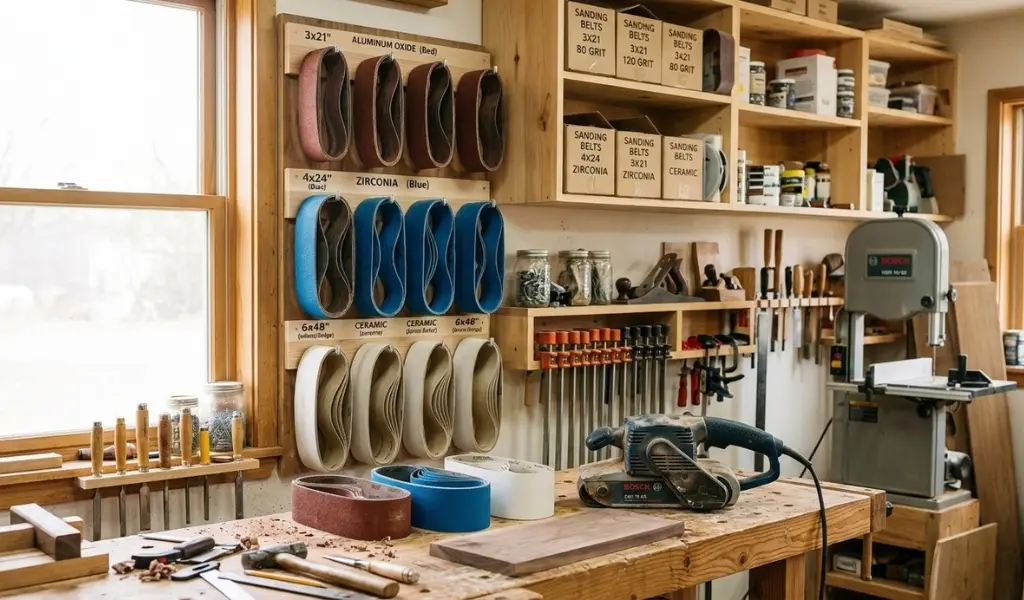
Every woodworking project lives or dies by its surface prep, and few tools handle that job faster than a sanding belt. Whether you’re flattening a rough-sawn slab, shaping a knife handle, or leveling a tabletop before finishing, the right belt sander and sanding belt combination can save you hours of tedious hand work.
But walk into any hardware store or scroll through an online tool aisle, and you’ll find a dizzying array of options: different sizes, different abrasive materials, different grits, and different backing types. Picking the wrong one doesn’t just slow you down it can gouge your workpiece, burn through material too fast, or leave a finish that needs redoing. If you’re new to the broader topic, our complete sanding guide covers wood sanding fundamentals across every method, from hand sanding to power tools.
This guide narrows the focus specifically to sanding belts. We’ll walk through how they work, what they’re made of, how to size them correctly for your sander, and how to choose the right grit for every project whether you’re working on furniture, cabinetry, or a custom knife blade.
A sanding belt is a continuous loop of abrasive material designed to run on a belt sander, cycling around two drums at high speed to remove material quickly and consistently. Unlike sheets of sandpaper, which wear unevenly and require frequent replacement, a sanding belt distributes friction across its entire surface as it rotates, giving you longer working sessions before you need to swap it out.
Sanding belts for woodworking are built for aggressive stock removal and fast leveling. They excel at flattening warped boards, stripping old finishes, shaping curved edges, and smoothing rough lumber before finer finishing begins. For anyone tackling heavy stock removal on a regular basis, a quality belt sander paired with the right abrasive belt is one of the most efficient combinations in the workshop.
Beyond general woodworking, high-performance sanding belts also show up in knife making, metalworking, and even plastic fabrication. Sanding belts for metal, for instance, use different abrasive grains than wood-specific belts, since metal generates more heat and requires abrasives that resist glazing.
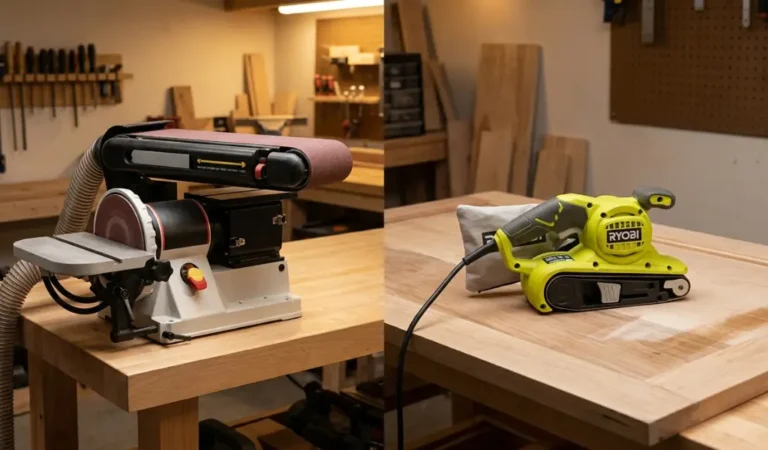
Belt sanders and orbital sanders solve different problems, and understanding the distinction helps you find the right belt and the right tool for the task at hand.
A belt sander uses a continuous abrasive belt sander running in one direction, making it ideal for rapid, heavy-duty material removal on flat or contoured surfaces. It’s the tool of choice when you need to flatten a rough surface fast or remove significant material before moving to finer grits.
A traditional orbital sander, by contrast, moves in small circular or elliptical patterns. It’s gentler, better suited for fine finishing work, and less likely to gouge a surface if you pause too long in one spot. Orbital sanders don’t use sanding belts at all they rely on adhesive-backed discs.
For most woodworking projects, the two tools work in tandem: a belt sander handles the heavy stock removal, while an orbital sander refines the surface afterward with progressively finer grits.
The abrasive material bonded to a sanding belt determines how aggressively it cuts, how long it lasts, and what kind of surface it’s best suited for.
Aluminum oxide is the most common belt material and the standard choice for general woodworking. An aluminum oxide sanding belt is durable, self-sharpening (meaning the abrasive grains fracture during use to expose fresh cutting edges), and cost-effective across a wide range of grits. Aluminum oxide belts perform well on softwoods and hardwoods alike, making them the default choice for most home improvement and carpentry projects. If you’re not sure where to start, a pack of aluminum oxide sanding belts in mixed grits is a safe, versatile investment.
Zirconia sanding belts are tougher and more heat-resistant than standard aluminum oxide belts. Zirconia is self-sharpening at a more aggressive rate, which makes it particularly well-suited to heavy stock removal on hardwoods, as well as some metalworking applications. Woodworkers doing repetitive, high-pressure sanding like leveling large panels or dimensioning rough lumber often reach for zirconia belts because they hold up longer under sustained heat and friction.
Ceramic belts sit at the premium end of the spectrum. Ceramic abrasive grains are engineered to fracture in a controlled way, continually exposing sharp edges throughout the belt’s life. This makes ceramic belts longer-lasting and more efficient for aggressive grinding belts work, though they typically cost more than aluminum oxide or zirconia options. For professional shops running wide belt sanders all day, the extended lifespan often justifies the higher price.
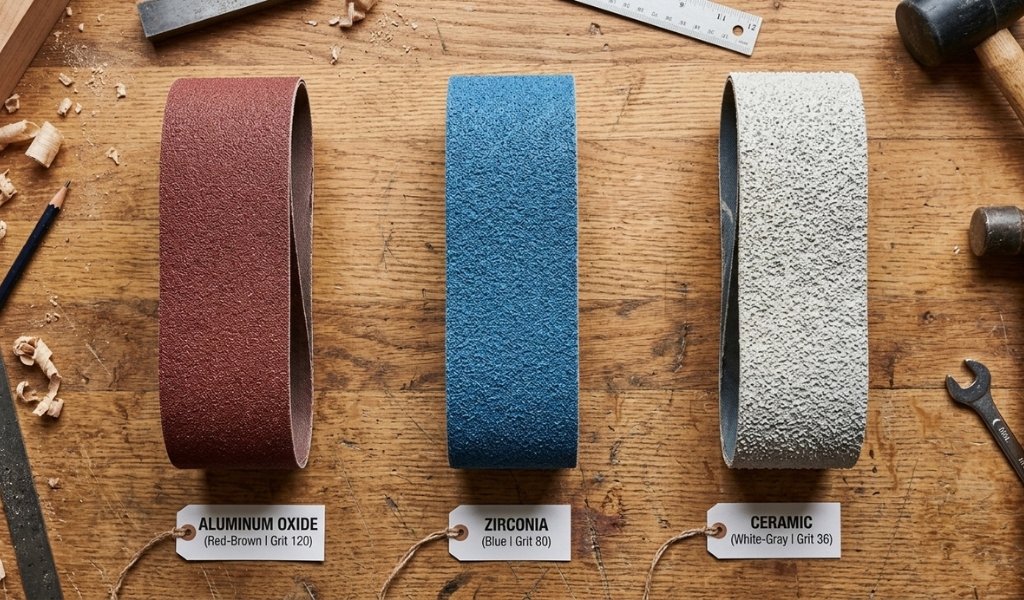
You may also come across silicon carbide belts, which are harder and sharper than aluminum oxide but more brittle. Silicon carbide is less common for general wood sanding belts but useful for finish work, plastic, and some metalworking tasks where a sharper, finer cut matters more than durability.
The backing material of a sanding belt affects its flexibility, durability, and resistance to tearing.
Cloth-backed belts are the standard for most sanding belts for belt sanders used in woodworking. Cloth backing is more flexible and far more resistant to tearing than paper, which makes it ideal for the constant flexing a belt undergoes as it cycles around the drums. Cloth-backed abrasive sanding belts also handle heavier pressure and rougher stock removal without failing prematurely.
Paper-backed belts are lighter and less expensive, but also more prone to tearing under heavy use. They’re generally reserved for lighter-duty finish sanding on smaller stationary sanders, rather than the aggressive stock removal that portable belt sanders are typically used for.
For most woodworking projects especially anything involving a portable belt sander cloth backing is the more reliable, longer-lasting choice.
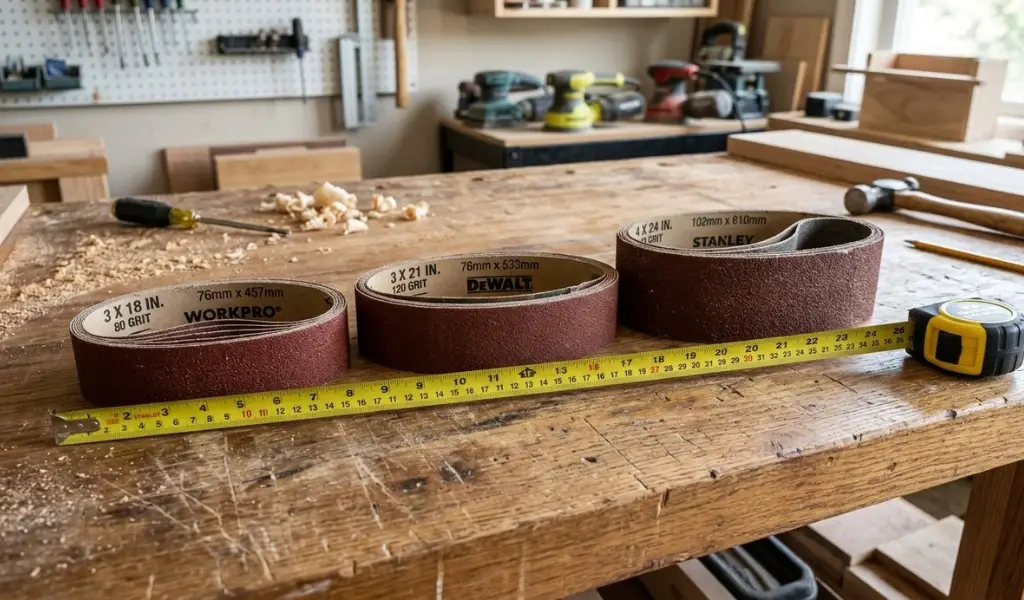
Belt size compatibility is non-negotiable: a belt that doesn’t match your sander’s drum width and belt length simply won’t fit. Portable belt sanders come in a few standard sizes:
Always check your sander’s manual or the size printed on the sander’s belt housing before ordering replacement belts portable belt sizes are not interchangeable.
Stationary and benchtop sanders typically accept wider, longer belts designed for more controlled, precision work:
At the industrial end of the spectrum, wide belt sanders and industrial wide belt sanders use belts that can span 24 to 52 inches or more, designed for high-volume production shops that need to flatten and finish large panels quickly. These wide belts are a different category entirely from portable and benchtop belts, both in cost and application.
If you’re unsure of your sander’s belt size, measure the belt’s width (the shorter dimension) and its total looped length (measured around the full loop, not just one side). Compare these numbers against standard sizes like 3×18, 3×21, 4×24, 4×36, and 6×48 to find your match.
Many suppliers also offer custom sanding belt sizes and custom belt options for specialized equipment, which is worth exploring if your sander uses a non-standard dimension. When in doubt, check your sander’s manufacturer documentation buying the wrong size is one of the most common (and avoidable) mistakes woodworkers make when restocking their abrasive belt supply.
Coarse grit sanding belts, typically ranging from 40 to 80 grit, are built for aggressive material removal. These grits are the right choice when you’re flattening a rough-sawn board, removing old paint or finish, or leveling a badly warped surface. A 40-grit aluminum oxide sanding belt will cut fast, but it also leaves deep scratches that must be addressed with progressively finer grits afterward.
Choose coarse grit if speed and stock removal matter more than surface finish at this stage of your project rough sanding is meant to be followed by refinement, not to produce a finished surface on its own.
Once the heavy lifting is done, medium grits (roughly 120 to 150) begin leveling out the scratches left by coarser belts. From there, fine grits (180 to 240 and beyond) refine the surface further, closing the grain and preparing the wood for stain or finish.
For fine finishing work, many woodworkers favor a fine grit aluminum oxide sanding belt or a zirconia sanding belt, depending on the wood species and desired smoothness. Belts in various grits are often sold together in a belt assortment an 18-pack aluminum oxide sanding belt set, for example, gives you a full range from coarse to fine without needing to order each grit separately.
The most frequent mistake in belt sanding is skipping grit stages. Jumping from 60 grit straight to 220 grit leaves deep scratches that the finer belt isn’t equipped to remove efficiently, and those imperfections often become visible once stain or finish is applied.
A reliable progression looks something like: 60 → 100 → 150 → 220, adjusting based on how rough your starting surface is. Skipping steps to save time almost always costs more time later, when you’re forced to backtrack to a coarser grit to fix a botched finish.
Sanding belts are directional most have an arrow printed on the inside of the belt indicating the correct direction of travel. Installing a belt backward reduces cutting efficiency and can cause premature wear.
Tracking refers to how well the belt runs centered on the drums as it rotates. Most belt sanders include a tracking adjustment knob or dial; if your belt drifts to one side during use, stop and adjust tracking before continuing; a mistracked belt can rub against the sander’s housing and damage both the belt and the tool.
Tension matters too. A belt that’s too loose will slip and generate excess heat, while one that’s too tight puts unnecessary strain on the sander’s motor and bearings. Most sanders have a spring-loaded tension mechanism that handles this automatically when the belt is installed correctly.
Sanding belts especially aluminum oxide belts working on softer, resinous woods can clog with sawdust and pitch over time, reducing cutting efficiency. A belt cleaning stick (a soft rubber block) can be pressed against a running belt to knock loose embedded debris and restore some cutting performance.
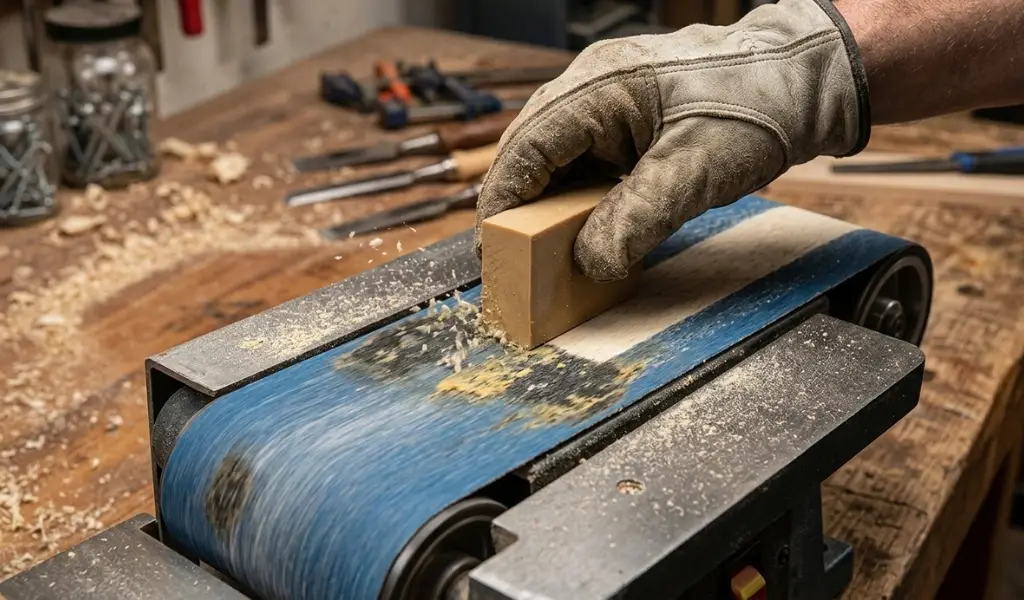
To extend the lifespan of your abrasive products, avoid applying excessive downward pressure, which generates heat and glazes the abrasive grains prematurely. Let the belt sander’s own weight and motion do the cutting. Rotating between two or three belts of the same grit during a large project also helps, giving each belt time to cool and shed built-up debris.
For most general woodworking projects, an aluminum oxide sanding belt offers the best balance of durability, cost, and performance across a wide range of grits. It’s a reliable, high-quality sanding belt option for everything from rough stock removal to fine finishing. For heavier-duty work on hardwoods, a zirconia sanding belt may last longer under sustained pressure.
Start with a coarse grit (40 to 80) if you’re removing significant material or old finish, then progress through medium grit (120 to 150) and finish with fine grit (180 to 240) for a smooth, stain-ready surface. Always work through the grits in sequence rather than skipping stages.
Check your sander’s manual or measure your current belt’s width and total looped length, then match it to standard sizes like 3×18, 3×21, 4×24 for portable sanders, or 4×36 and 6×48 for benchtop and stationary models. Buying the correct size is essential, since sanding belts for belt sanders are not interchangeable across different drum widths.
The main abrasive materials are aluminum oxide, zirconia, ceramic, and silicon carbide. Aluminum oxide is the most versatile and widely used for wood, zirconia offers greater durability for heavy stock removal, ceramic provides the longest lifespan for demanding industrial use, and silicon carbide suits finer finish work and non-wood materials.
Popular brands among woodworkers and hobbyists include POWERTEC, which offers a wide range of aluminum oxide belts and belt assortments at accessible price points, along with several other manufacturers producing premium sanding belts for both portable and stationary sanders. When choosing a brand, prioritize consistent results, fast shipping, and a track record of quality abrasive grains over price alone.
Choosing the right sanding belt comes down to matching three variables to your project: the abrasive material, the belt size, and the grit. Get those three right, and you’ll move through your woodworking projects faster, with fewer surprises and a more professional finish on the other end.
Keep a small assortment of grits and at least one or two belt materials on hand an aluminum oxide sanding belt for general use and a zirconia sanding belt for heavier jobs and you’ll be equipped to handle nearly any project that comes through your shop, from furniture repair to knife making and beyond.