Physical Address
304 North Cardinal St.
Dorchester Center, MA 02124
Physical Address
304 North Cardinal St.
Dorchester Center, MA 02124


Choosing the right abrasive tool can make or break a woodworking project and sanding sponges are one of the most underutilized tools in a woodworker’s shop. Whether you’re a professional carpenter or a weekend DIY enthusiast, understanding what is sanding and how the right tool supports that process is foundational knowledge. Sandpaper sheets have long dominated the workshop, but sanding sponges bring a level of flexibility, durability, and control that flat sandpaper simply cannot match.
This guide covers everything you need to know about sanding sponges for wood from how they’re built and what grits to use, to when they outperform traditional sandpaper and how to get the most out of each pad. By the end, you’ll know exactly which sponge to reach for on your next furniture project, deck refinish, or detailed woodworking job.
A sanding sponge is a hand-held abrasive tool built around a compressible foam core, with abrasive material bonded to its outer surfaces. Unlike rigid sanding blocks or flat sandpaper sheets, the flexible foam body conforms to the surface being sanded. This conformability is what makes the sanding sponge such a versatile tool across a wide range of wood profiles from flat panels to ornate furniture edges.
When you apply hand pressure and move the sponge across a wood surface, the abrasive particles cut into the grain, removing material and smoothing the surface progressively. The foam core distributes pressure evenly across the contact area, which reduces the risk of gouging or creating uneven spots, a common problem when using rigid blocks or applying inconsistent hand pressure with bare sandpaper.
Many sanding sponges are available in single angle and dual-angle designs, giving woodworkers better reach into corners and recessed details. Some professional-grade products, such as those in the 3M sanding sponge line, feature abrasive on all four sides, making a single sponge block a highly efficient multi-surface tool.
The performance of any sanding sponge comes down to two components: the flexible foam substrate and the abrasive coating bonded to it.
Flexible foam core: Most sanding sponges use open-cell polyurethane foam. This material compresses under pressure and springs back to its original shape, allowing the sponge to maintain consistent contact with curved, contoured, and irregular wood surfaces. The foam density varies by product softer foam is better for contour sanding, while a firmer foam block delivers more controlled material removal on flat surfaces.
Abrasive materials: The two most common abrasive materials used in sanding sponges are:
The abrasive grain is bonded to the foam using a resin adhesive that must remain flexible enough to bend with the foam without cracking or delaminating. Premium sanding sponge products maintain a consistent abrasive coating across the entire surface, ensuring uniform results throughout the life of the pad.
Selecting the correct grit is not a minor detail it directly determines the quality of your result and how much work each subsequent sanding stage requires. Here’s a breakdown of the full grit range for sanding sponges used in wood projects.
Coarse grit sanding sponges typically fall in the 40–80 grit range. These are the right tools when you need to remove significant material quickly, stripping old paint or varnish from furniture, leveling raised grain after water damage, or knocking down rough mill marks from lumber.
A coarse sponge removes material fast, but it also leaves deep scratch marks in the wood surface. These scratches must be worked out in subsequent sanding stages. Using a coarse grit sponge on already-smooth wood is a common mistake; you’ll create more work for yourself, not less. Reserve coarse grits for the jobs that genuinely need aggressive abrasion.
For stripping paint from detailed furniture profiles or carved moldings, a coarse flexible sanding sponge dramatically outperforms rigid sandpaper. The foam conforms to the profile, maintaining abrasive contact even through curves and recesses where flat sandpaper would bridge over the surface and skip areas.
Medium grit sponges typically 100–150 grit are the workhorses of most woodworking projects. After initial material removal with a coarse grit, medium grit sponges refine the surface by removing the scratch pattern left behind and progressively smoothing the wood grain.
This is also the go-to grit range for surface prep between coats of paint or finish. Lightly sanding a dried coat of paint or sealer with a medium grit sponge scuffs the surface just enough to promote adhesion for the next coat without removing so much material that you cut through to bare wood.
Medium grit sponges are particularly useful for furniture projects where you need to work across a mix of flat panels and shaped edges. A single sponge block can handle both in one pass, which a rigid sanding pad cannot do efficiently.
Fine grits (180–220) and superfine grits (240–400+) are reserved for final finishing stages. These grits remove the micro-scratches left by medium grit sanding, bringing the wood surface to a smooth, polished state that’s ready for staining, sealing, or applying a final topcoat.
Silicon carbide abrasives dominate this grit range because of their ability to cut cleanly without tearing the wood fiber. Fine and superfine sanding sponges are also ideal for wet sanding between finish coats a technique that creates an exceptionally smooth final surface with minimal dust.
When preparing wood for a clear finish, ending with a 220-grit sanding sponge is standard practice. For a near-glassy result on fine furniture, progressing up to 320 or 400 grit before the final coat makes a measurable difference in the quality of the finished piece.
The defining advantage of a sanding sponge over traditional sandpaper or a rigid sanding block is its ability to conform to non-flat surfaces. Wood rarely presents a purely flat sanding challenge; furniture legs, chair rails, routed edges, carved details, and inside corners all demand an abrasive that can follow the contour without bridging.
A rigid block cannot reach into concave curves. Bare sandpaper folded by hand tends to concentrate pressure unevenly and wears out quickly when worked into tight profiles. A flexible sanding sponge molds itself to the surface contour under light hand pressure, maintaining full abrasive contact throughout the stroke.
This makes sanding sponges the preferred tool for:
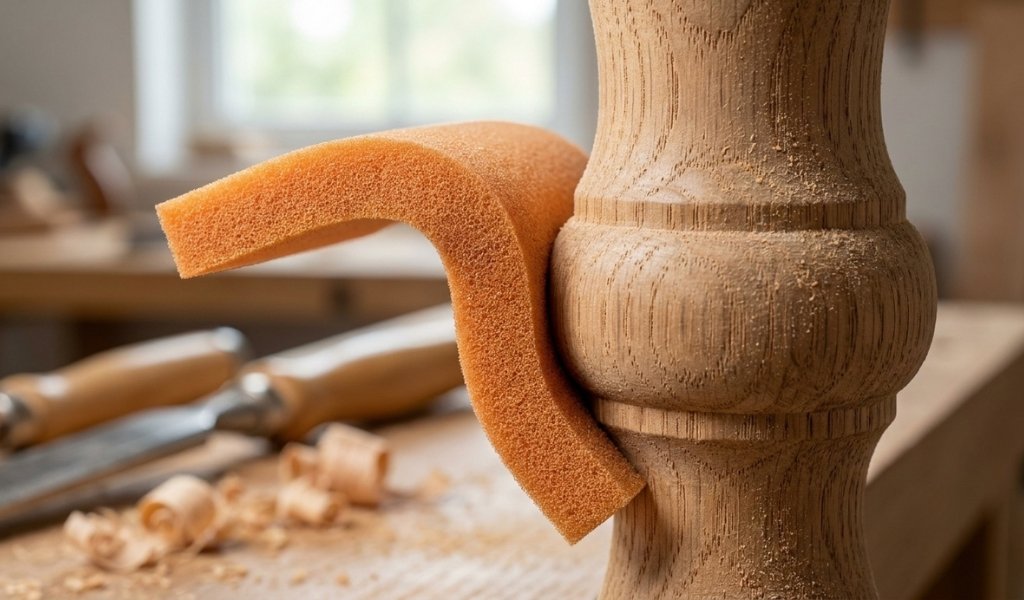
For professional cabinetmakers and furniture restorers, sanding sponges reduce the time spent on complex profiles significantly a job that might take 30 minutes with improvised sandpaper can be completed in 10 with the right sponge.
Most quality sanding sponges are rated for both wet and dry use, and the choice between the two methods depends on your project requirements.
Dry sanding is the standard approach for raw wood preparation. It’s fast, efficient, and works well through all grit stages. The primary downside is dust generation fine wood particles become airborne and settle on everything in the shop. Working with a shop vacuum and dust collection attachment reduces this significantly, but sanding sponges do inherently produce less airborne dust than sandpaper because the foam tends to trap particles rather than flinging them.
Wet sanding with a damp sponge is a technique used primarily during finishing stages. Introducing water (or a compatible lubricant) to the sanding surface reduces heat, prevents clogging, and produces a finer scratch pattern than the equivalent grit used dry. Between finish coats, wet sanding with a 320 or 400 grit sponge creates the kind of silky-smooth surface that makes a final topcoat look professionally applied.
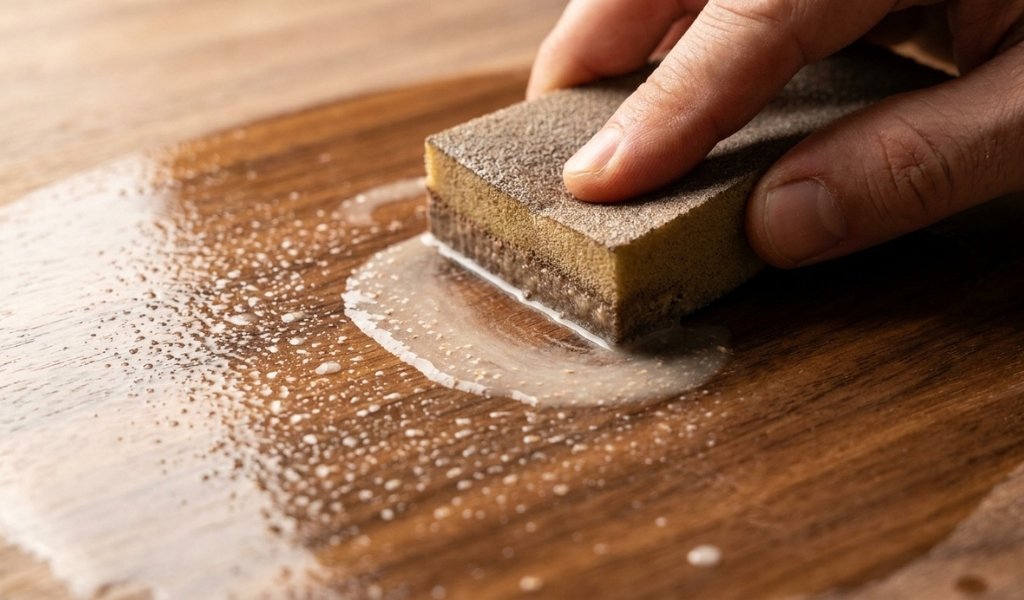
Because sanding sponges are foam-based and designed for washability, they handle wet sanding better than standard sandpaper, which degrades rapidly when soaked. Products specifically marketed as “wet or dry” sanding sponges use silicon carbide abrasives bonded with waterproof resin adhesive, making them durable through repeated wet use.
One of the most practical advantages of a sanding sponge is its washability. When the abrasive surface loads up with wood dust and debris a condition called clogging the sponge’s cutting efficiency drops off sharply. With sandpaper, a clogged sheet goes in the trash. With a sanding sponge, rinsing the sponge under water and working it lightly to flush out the debris restores a significant portion of its cutting ability.

This washable, reusable design extends the usable life of each sponge considerably. For a professional working through multiple furniture projects in a week, the cost savings compared to going through packs of sandpaper sheets are meaningful. A quality sanding sponge, properly maintained, can last through multiple projects before its abrasive surface is genuinely depleted.
The foam substrate also resists tearing better than paper-backed sandpaper. Edges hold up through repeated use without fraying, and the sponge maintains its structural integrity even when flexed repeatedly around curved surfaces. For woodworkers who order supplies in bulk, a pack of sanding sponges often represents better value per square inch of abrasive life than an equivalent pack of sandpaper sheets.
This isn’t a question with a single universal answer. The right tool depends on the task, the surface profile, and the working conditions. That said, there are specific situations where each tool earns a clear advantage.
When sanding by hand without a power tool the ergonomic difference between a sanding sponge and a sheet of sandpaper is significant. A bare sandpaper sheet has no structure; your fingers concentrate pressure at contact points, creating uneven sanding patterns. Wrapping sandpaper around a hard block solves the pressure distribution problem but introduces rigidity that defeats the purpose on contoured surfaces.
A sanding sponge solves both problems simultaneously. The foam body gives you a comfortable, secure grip. The flexible structure distributes your hand pressure across the entire contact surface. You can apply consistent, even pressure across flat panels and immediately transition to a curved edge without switching tools or repositioning your grip.
For extended hand-sanding sessions, the sponge also reduces hand fatigue. The foam compresses slightly under grip pressure, cushioning your hand against the abrasive feedback that comes from working bare sandpaper. Professional woodworkers and finishers who spend hours at the bench sanding furniture notice this difference quickly.
On a per-unit purchase price, a sanding sponge typically costs more than a comparable sheet of sandpaper. This leads some woodworkers to default to sandpaper as the more economical choice but this calculation ignores longevity.
A single quality sanding sponge, washed and maintained properly, can outlast a dozen or more sandpaper sheets through equivalent work. For furniture projects that require multiple sanding stages across complex profiles, the total cost per project often favors sanding sponges over sandpaper.
There’s also a productivity factor. Because sanding sponges conform to surface contours without requiring improvised techniques, they complete shaped surfaces faster. Time saved on a furniture project whether you’re working professionally or on a home shop build has real value. Products like the 3M sanding sponge range are widely available in home improvement stores and online, often sold as a set covering multiple grit levels, which makes it easy to stock the full range for any job.
For flat, large-surface work sanding a table top with a random orbital sander, for example sandpaper discs still hold the advantage. Power sanding pads are purpose-designed for machine use and cover large areas fast. The sanding sponge earns its place for hand work, detail areas, and finishing stages where power tools are too aggressive or imprecise.
Yes, sanding sponges are excellent for wood projects, particularly where the surface includes curves, profiles, or contours that rigid sandpaper cannot follow effectively. Their flexible foam construction conforms to the wood surface, delivering consistent abrasive contact and even material removal. For finishing stages and detail work, sanding sponges are often superior to traditional sandpaper.
On flat surfaces with power tools, sandpaper discs and sheets are generally more efficient. For hand sanding, contoured profiles, wet sanding between finish coats, and extended use, sanding sponges typically deliver comparable or better results than sandpaper. They also last longer due to washability, which improves their overall value on furniture and detailed woodworking projects.
Not necessarily for standard dry sanding of raw wood. Wet sanding is most beneficial during finishing stages between coats of paint, lacquer, or varnish where it reduces heat, prevents clogging, and produces a finer scratch pattern. Always confirm that your specific sponge product is rated for wet use before introducing water, as not all sanding sponges are designed for wet applications.
The correct grit depends on your project stage. Start with 80–100 grit for stripping or leveling, move to 120–150 grit for surface prep and smoothing, and finish with 180–220 grit before applying stain or a topcoat. For sanding between finish coats, use 320–400 grit. Always progress through grits sequentially skipping grits leaves scratch patterns that are difficult to remove in later stages.
Yes. Rinsing a clogged sanding sponge under running water and working it gently to flush out trapped debris restores a significant portion of its cutting ability. Quality sanding sponges can be washed and reused multiple times before the abrasive surface is fully depleted. This washability is one of the key advantages sanding sponges hold over traditional sandpaper, particularly for professional woodworkers and carpenters working across multiple projects.